How can brands thrive in the age of Amazon
While Amazon might be impossible to compete with, what it can’t do is specialise in everything. A series of SEO experts examined how brands can be successful in a new world of search.
Izzy Ashton
Deputy Editor, BITE Creativebrief“We’re left with a new world that revolves entirely around the consumer.” Callum Campbell, CEO of Linnworks set out the challenges facing brands when it comes to search marketing at Organic’s latest event. The reality, he believes is, that while “selling is tough…the opportunity is like never before.”
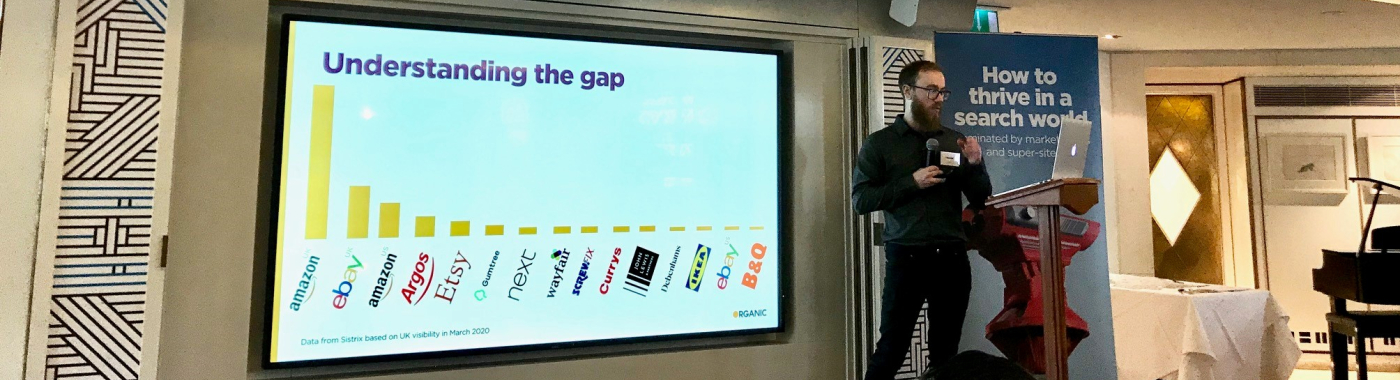
Campbell was speaking as part of an event hosted by Organic to examine how brands can thrive in a search world dominated by marketplaces and ‘super-sets’. In other words, can or even should, brands compete with the likes of Amazon? How does brand behaviour need to shift to accommodate for a marketplace that is, as Joe Ford, Head of Natural Search at Organic explained, significantly more visible than its next competitor. While Amazon has 2,500 visibility points, eBay, the second biggest marketplace doesn’t even have half that while Argos’ visibility, in third place, is 86% smaller than Amazon’s, Ford explains.
Amazon are winning by putting convenience not consumer at the heart of their offering.
Rebecca Steel
In this new world, says Campbell, “consumer expectations are sky high; demand is fragmented.” Consumers are doing their research before they buy; they’re deciding exactly where they want to buy and then they’re expecting their purchase to be delivered directly to them. So how do brands navigate this? Campbell offers three steps. One, own your brand because, as he adds, “in this new work, brand ownership is everything.” Two, define your marketplace strategy. Campbell believes that brands should “treat marketplaces as a marketing channel.” And three, brands need to build operational capability.
Rebecca Steel, SEO Manager at John Lewis fundamentally believes that brands need to “remember there is a consumer at the end of the key word.” As a 150-year-old brand, John Lewis’ biggest day to day rival is Google as pure plays reign supreme. The problem, she adds, is that “Amazon are winning by putting convenience not consumer at the heart of their offering,” something she believes is fundamentally wrong with the system. Steel also revealed that the SEO team are beginning to work more closely with the editorial team to “not just sell but inspire the consumer.”
KEY TAKE OUTS
- “Show users and Google you are the expert on your products.” Ford believes that brand success lies in demonstrating expertise, through understanding your product strengths and communicating them clearly and effectively for your consumer.
- “I think we’re going to see a challenge to Amazon’s business model,” says Campbell. Marketplaces are beginning to emerge that offer brands the space to represent themselves on the platform. At the same time, more category specific marketplaces are emerging. Both of these new developments have the ability to “chip away at Amazon,” adds Campbell.
- “We need a shift away from convenience as the ultimate consumer value towards sustainability and responsibility,” Steel concluded, highlighting the environmental responsibility that every brand now has alongside their commercial targets.
- “SEO isn’t won or lost in isolation,” added Dan Patmore, Senior Natural Search Manager at Argos. For Patmore, much of the way the industry talks about itself is simply unsubstantiated noise. What brands and businesses must do, he believes, is “stop splitting SEO from consumer.”