Interviews
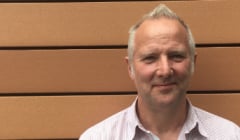
James Myers, Group Managing Director, TVC Group
“Being channel neutral will be more important than ever. What won't change is the story and narrative will be key."
Managing Partner & Founder, ORM

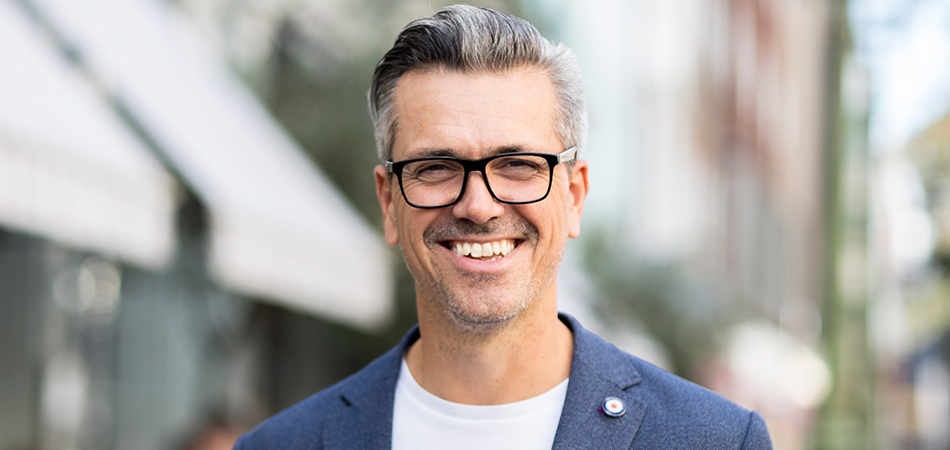
Career to date:
1999, Founder & Managing Partner, ORM
1996, Managing Director, The Premium Music Company
1993, Director / Partner, Lithogroove
1986, Graphic Designer
Peter Gough: It’s changed over the years as we’ve got bigger. Today I’m in charge of our revenue. And my focus is more about New Business because, if the founder can’t sell the company then no one can. I enjoy meeting new businesses and talking to them about how we can support them.
My background is a designer, so I miss that but, as we get bigger, we’ve employed much better designers than me!
Peter Gough: I’ve always been interested in technology because I grew up in a time when home computing was becoming significant. I was always interested in design but more two-dimensional, graphic design. Alongside that, I grew up with technology becoming part of our lives.
Then I got into graphic design, got a job straight away, didn’t go to college. I think I’m the only person at ORM who doesn’t have a degree! I became an apprentice graphic designer and that was important because it meant I could learn on the job.
I went in as a traditional graphic designer when it was sketching, drawing boards, pen and paper – no computers apart from typesetting. Within three or four years I watched the whole industry transform and digital technology take over. That became a theme throughout my life where every industry I served as a designer got transformed by digital. That was massive because once digital took over and became part of the design and print sector, thousands of jobs went but also our roles changed.
“That became a theme throughout my life where every industry I served as a designer got transformed by digital. That was massive because once digital took over...thousands of jobs went but also our roles changed."
Peter Gough: I had a few businesses previously, so I’ve always enjoyed running my own business, being in charge of my own destiny. I’d done my time, worked at a few agencies, learnt the trade, gone through my apprenticeship in graphic design.
In the late 90s, I had a music business. It was music packaging and had a record label as well. Being a designer, I was less interested in the music itself, I was more interested in the packaging. I left that business and I was thinking what to do. In ‘98/’99, I’d been watching the World Wide Web mature. I was getting really into it and I saw some pretty bad design. I started ORM purely to bring great design to the web as we knew it: Web 1.0.
There was definitely a market to get the work. Our first clients were Ministry of Sound because of my music background so we got quite quickly into the music industry, which was trying new things with the web, emails, CDs and multimedia.
Nowadays, I wouldn’t say it’s about great design [at ORM]. It’s more about transformation, design and tech and the strategy around that, but we still want to deliver something that enhances a customer experience.
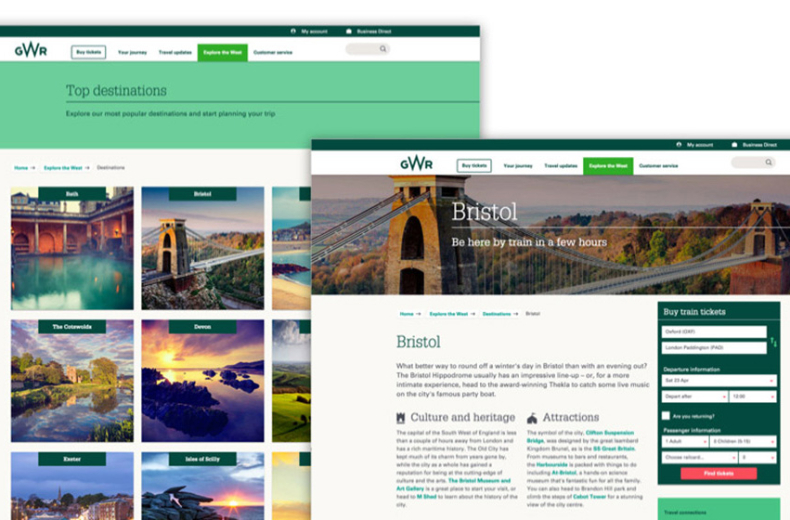
Peter Gough: We’ve had a very big transformation project for Arriva Trains with one of their train operators Chiltern Railways. We built a whole layer of technology. It enables ticket purchasing, retailing, it’s got the marketing websites, the single customer view. Websites are a very small part of it now – it’s about what powers that experience. This technology that powers it makes it personalised and makes that experience seamless across devices. It’s [device] agnostic in the sense that this architecture can power anything from apps to websites to whatever the new technology is. That’s the space we’re in now, more transformation technology.
We get more excited by good UX than good creative. We focus on the functional, getting people through goals and tasks. It’s trying to make things work and make them work better. They’re challenges that the [rail] industry’s created over the last twenty years and the only way we can solve that is through transformative design and technology.
Peter Gough: As a designer I think people like IDEO are my favourite type of agency, because they’re fortunate enough to try and solve big social or governmental problems. They get engaged at a high-level and I’d love to be doing more of that. We certainly do innovation and prototyping for our clients but sometimes they’re not solving the bigger challenge. To do that you’ve got to go to government level. I think IDEO cuts through at that level and I admire agencies like that.
It’s interesting, our space now isn’t agencies, it’s consultancies. We call ourselves a digital consultancy deliberately because we’re more strategically led now. It used to be UX led because it was the UX strategy that determined the product. Now it’s the business strategy because you’ve got to think, “how’s digital going to help you achieve your business ambitions and goals?” That’s what we focus on now: strategy before technology.
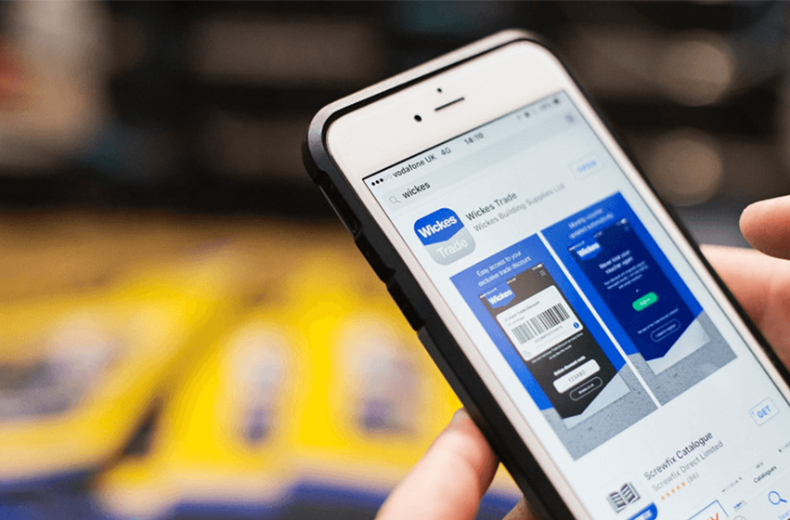
Peter Gough: That’s why I’m still not bored, even after 18 years at ORM: it will always change. My phone from when I started was a Nokia 5110. And in 2007 when the iPhone came out, it was a massive game changer. I love things like that that change our behaviour. If you had told me when I started this company that I’d have a supercomputer like this in my pocket I wouldn’t believe you.
I’m less interested in the technology, I’m more interested in behaviours. I’m more interested in how it changes us. We deliberately focus on sectors that are still going through transformation. I’m not interested in Nike, in adidas. We want to work with brands who are struggling or trying to change.
If you sit there as a business and don’t do anything about change, you’ll fail. Because in every sector these digital start-ups are disrupting because they can; they’ve got technology. Every sector now is under threat.
Amazon spotted the gaps and they’re willing to take the risks. They’ve become so powerful that they can do what they want. It’s scary in a way. There’s certain sides of digital that I’m not proud of but what I do like is that these businesses are changing us, and I don’t think that’s a bad thing.
“If you sit there as a business and don't do anything about change, you'll fail. Because in every sector these digital start-ups are disrupting because they can; they've got technology."
Peter Gough: I might be in charge of revenue, but I am still a designer. We have to put quality before revenue. We enjoy what we do. What I’d like to be doing is more work for more interesting clients with more interesting people.
We want to be a top thirty digital agency and in this day and age that’s quite big because the top 5 are all huge consultancies or networked agencies. We could stay as we are, but we’re more ambitious than that. One thing we want to do is work for more global sized businesses and look at their global strategy.
We can be a bit choosy who we work with. We do have certain ethics and morals around who we want to work with and who we won’t work with.
We focus on specific sectors and we’ve chosen them deliberately as a strategy. We don’t work for Pure Plays, that’s a thing we chant a lot around here. We like bricks and mortar businesses because that makes the customer experience more interesting. I like that online, offline customer journey.
Peter Gough: I hate it. What other industry does it, it’s nuts?! It frustrates me. We know cost of sale and how much a pitch costs, like most agencies will. If we’re going to put a hundred grand into a pitch, we’ve got to be sure we’re going to win it, or we might as well go and buy a Ferrari, lend it round the whole business and have a great time, trash the Ferrari and write it off because that’s exactly what we’re doing if we enter a pitch that we don’t believe we’re going to win or we only stand a small chance of winning. What’s the point? Why make everyone work late and at weekends on a bet we might not win?
Last year was the most pitches we turned down. I felt quite proud for turning them down because I don’t think we ever would have won them. We ended up having more conversations by not pitching. I’m not a fan of them [pitches]; we’ve got to do them, but we’ve just got to pick the right ones. I don’t see it ever changing.
Peter Gough: I admire people who’ve grown businesses exponentially. I like dreamers, so people like Elon Musk because they make a business and sell it for a lot of money, but it’s about going onto something bigger. There’s always a bigger dream. That was only ever a chapter of their life.
I like seeing more women in tech. It’s naturally a more male dominated space and it’s great to see more CEOs like at Hewlett Packard, IBM and the number two at Facebook, Sheryl Sandberg. Diversity is something we’re trying to address here at ORM – in the boardroom, there’s too many men. There’s not enough senior women in our industry. I think if we’ve got a more equal balance, we might not all just think about money and space and Ferraris. We might think about better causes.
I think one thing why I’ve persevered at this is because I enjoy seeing people join here and actually I quite enjoy them go on to further develop their careers, as it’s part of their journey. I was once told, always employ people who are better than you. I’ve always lived by that.
Customers want to know more about the social, economic and environmental impact of brands. How do you evaluate that in the brands that you choose to work with?
Transport’s an interesting sector. From a consumer point of view, the reputation’s no good. If you talk about an environment point of view, trains are a good thing. But we’re not making it easy. The customer experience isn’t good enough at the moment.
We talk a lot about operational efficiencies because digital is a massive driver of that. When we’re dealing with big organisations, we seriously have to consider what that means and the impact. We’re well aware that we could be building something that might be streamlining their business.
We’ve got a client that’s a housing association. It’s an interesting sector that I’m glad we’re in, because I think there’s a lot of problems that we can solve.
This housing association, one of their objectives is to drive operational efficiency with digital technology. What they want to do is free up their people for more valuable face-to-face interactions, being a face for the brand. Suddenly your reputation goes up and your value as a brand increases. That’s a good thing for me. Obviously, there are always going to be conversations around how digital might make certain roles redundant. That will always play on your mind. But I think it will also open other opportunities for roles or jobs within that business.
Looks like you need to create a Creativebrief account to perform this action.
Create account Sign inLooks like you need to create a Creativebrief account to perform this action.
Create account Sign in