‘Values are important and actually about growth’
In the era of misinformation, Imogen Fox shares how The Guardian is staying true to its values.

Georgie Moreton
Deputy Editor, BITE CreativebriefIn the era of fake news and misinformation, credible news is more important than ever. Yet traditional media organisations are facing both extreme scrutiny and financial strain.
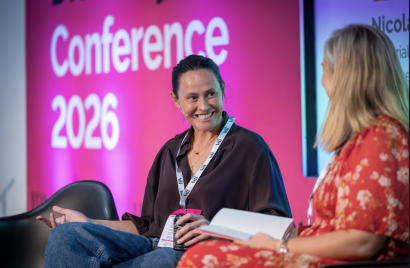
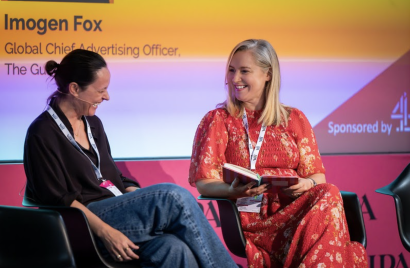
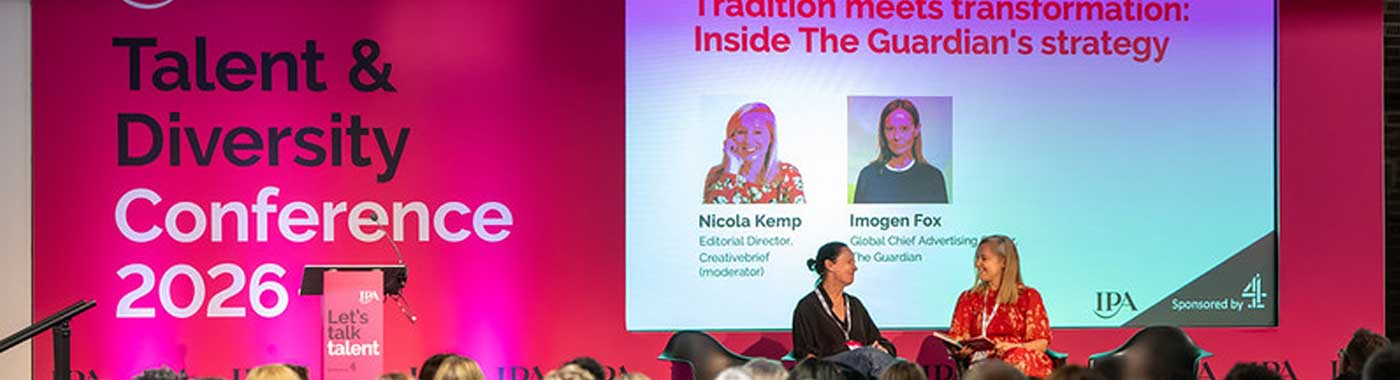
Integrity in the age of misinformation is something that The Guardian is putting front and centre. At the IPA Talent & Diversity Conference, Nicola Kemp, Editorial Director at Creativebrief, sat down with Imogen Fox, Global Chief Advertising Officer at The Guardian, to discuss how The Guardian is staying true to its values whilst driving cultural transformation and holding power to account.
An ethos of transparency and integrity
The Guardian is an organisation clear in its values, steadfast in its mission to: ‘give a voice to the powerless and hold power to account.’
Its strong positioning and commitment to progressive politics has resulted in loyal readership. The brand has over 1 million digital supporters from over 180 countries around the world, which helps the organisation to run.
“Values are important to the brand and actually about growth,” explains Imogen Fox, Global Chief Advertising Officer at The Guardian. The supporter strategy can only be upheld by ensuring that the organisation stays true to its values. Readers remain loyal and want to donate because the brand aligns with its values.
You can't as a brand hold people to account and not do it yourself.
Imogen Fox, Global Chief Advertising Officer at The Guardian.
However, this can mean making difficult decisions that cost money in the short term. The Guardian doesn’t run advertising for fossil fuels or gambling brands, which can be difficult around events like the World Cup. But Fox insists that in the long term it is important: “Values also help to attract talent, believable and credible,” she says.
As an extension of the brand’s commitment to transparency, The Guardian also shares pay data. “You can't as a brand hold people to account and not do it yourself,” explains Fox. Adding: “It’s hard to publish when it's not perfect.”
Yet, being open about the journey the organisation is on has helped make progress. The organisation’s gender pay gap has improved from 11% to 1.9%.
Reflecting society while repositioning for progress
Having a strong brand identity means The Guardian readers are easily stereotyped, but Fox is passionate about pushing for progress when it comes to representation and encouraging the brands that work with the brand to seek to reach new audiences.
She points to the example of English Heritage shunning stereotypes by following a group of Muslim women to Stonehenge to show that their locations are for everyone. While Tesco’s commitment to shifting its positioning from being a corporate to a consistent community partner shows that reflecting people and society matters.
“Brands are too concerned with ticking boxes,” Fox says. She explains: “Brands need to be authentic to what they believe.” This means thinking about who is behind the camera and who is in the room at the ideation phase.
“Brands need to be concerned about how they treat their employees first, and then how they are presented,” says Fox.
Learning and evolving
At a time when the media ecosystem is ever-evolving, AI has brought with it a new host of challenges and opportunities for both advertisers and
Journalism is something only humans can do.
Imogen Fox, Global Chief Advertising Officer at The Guardian.
Fox shares that The Guardian continues to believe in human talent, but is upskilling teams and investing in education to ensure that people have a baseline of understanding. The organisation has a ‘framework of transparency around how AI is used’. Ensuring that while human talent is championed, the organisation is open to innovation. “Journalism is something only humans can do,” says Fox.
No stranger to embracing change, her own squiggly career journey began in editorial. While she is open about the fact that there may be gaps in her knowledge when it comes to advertising, she shares that this means she is also ‘free of prejudice’ and open to doing things differently.
As a journalist, Fox knows how stories are put together and would pitch ideas into an editor.
She urges talent to think about their skills and how they are transferable.
At a time of constant change, it’s easy to feel fatigued or left behind. At a time when talent can feel burnt out, Fox says it is important to: “remind people what's good and what they enjoy.” Remembering that the ‘fundamentals don’t change’ and sticking by your values ensures the industry can successfully make work it is proud of and that pushes for better.