The secret to winning in the experience economy: brand sensuality
Publicis London’s immersive ‘Rare Minds’ event featuring artist and perfumer Paul Schütze showcased a simple truth: brand differentiation is created less by what’s said and more by how you engage the senses.
Dom Boyd
Chief Strategy Officer Publicis LondonThe Publicis mantra is ‘find the rare’, a mantra that helps brands embrace new opportunities through fresh thinking. Our Rare Minds sessions set out to do exactly that by lifting the lid on things we think we know to reveal something we don’t. The topic du jour this time was brand sensuality. Or to put it differently, how brands that fulfil the senses, ‘the animal side of human nature’, are the ones that create the strongest competitive advantage.
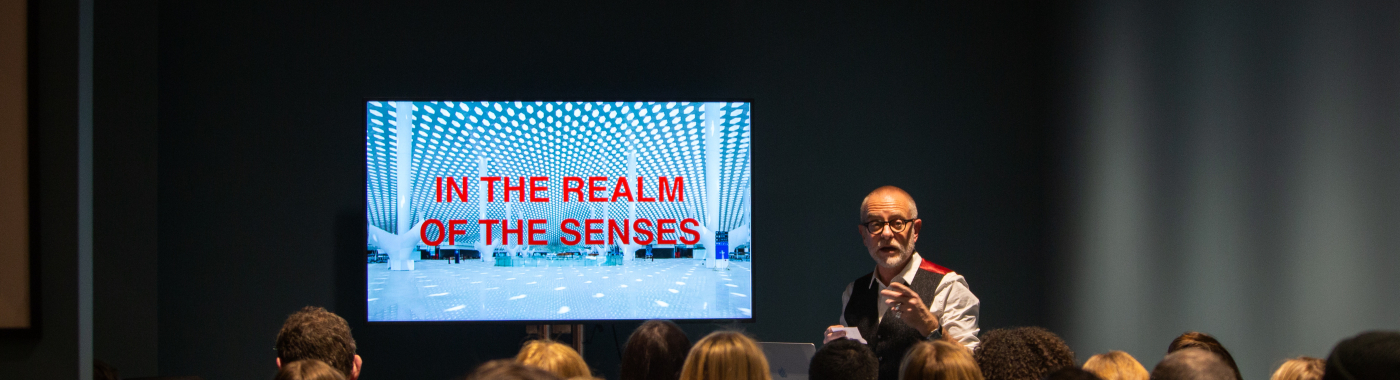
Hosted by Australian artist, music composer and perfumer Paul Schütze, the evening itself was designed as an immersive trip, featuring art soundscapes, bespoke cocktails, and an interactive scent experiment. The range of unexpected experiences made Paul’s point more powerfully then any PowerPoint presentation ever could: when we engage the senses it’s far more memorable.
Paul went on to articulate why this is. Neuroscience shows our senses are a shortcut to our emotions, and our emotions are what encode brand memories. In fact, as he put it, “our bodies remember”. And it’s these memories which shape our behaviours. In fact, as Paul pointed out, we’re very eye-biased. Yet we’ve 21 other senses including responsiveness to sound, smell, pressure, temperature, orientation, balance, acceleration, colour and vibration. All of these have the power to encode brand memories.
This has big implications for brands in the digital economy. Firstly, our feelings are what determine our actions. So, we need to think not just about what brands say, but about what we want our brand to make people feel. It’s about creating moments, not just messages. Secondly, shift from thinking about creating functionally-driven experiences and ‘jobs to be done’, to thinking about brand environments with ‘feelings to be evoked’ using a range of sensory stimuli beyond just the visual. And thirdly, put more thought into how our brand transitions between feelings across different touchpoints and within a user journey, because it’s the moments of transition between different senses that drive emotional peaks. These moments are when we can guide people’s behaviours.
In a retail context where on and offline are radically shifting, these insights offered a fresh perspective on how brands in all kinds of category can gain competitive advantage, through applying emotionally-led brand thinking to every aspect the user journey.
SPEAKERS
Paul Schütze, artist, perfumer and multi-sensory experiential consultant
Dom Boyd, Chief Strategy Officer, Publicis London
KEY TAKE OUTS
- Feelings determine actions. Neuroscience from people like Daniel Kahnemann shows time and again that while we think we’re rational creatures, in reality we’re emotionally hardwired. Our thoughts and actions are determined by our feelings. The opportunity for brands is to define exactly what they want people to feel.
- The body remembers. Our bodies are finely-tuned feeling machines that pick up, translate and encode thousands of pieces of sensory information each second. The feelings each of these sensory inputs creates is what encodes brand memories.
- Environments guide behaviours. What we see is a small part of what we feel. In fact, we’ve over 21 senses. The implication is brands need to think not just about creating functional ‘experiences’ but instead about how they create ‘environments’ which strongly embed their brand feelings to shape behaviours.
- Orchestrate the senses. Every sense has the potential to strengthen brand power, but they work hardest when orchestrated together as acts. The brands which use their environment to create mystery, anticipation, surprise, delight and reward will be those that win.
- The transition moment is the transformation moment. Strung together, these acts create an experience arc. But it’s the transitions between these acts which create the power to change behaviour through emotional peaks. Brands should think carefully about the role each act plays in shaping their unique experience across every moment in the user journey. It’s about creating powerful brand moments, not just messages.
About
Dom is a recent APG Chair and Publicis CSO. He joined Publicis in 2017, where he oversees strategic planning for clients including Tourism Ireland, Cathay Pacific, P&O Ferries and lastminute.com. Prior to joining Publicis he spent 10 years at adamandeveDDB developing iconic campaigns for the likes of John Lewis Partnership, Volkswagen, Aviva & Lloyds. He’s a champion of using Behavioral Science which has helped win over 5 IPA Effectiveness Awards for brands including Direct Line and Teacher Recruitment. He counts DJing and bringing up two kids as a continuous work in progress.