“Turbulence makes you resilient”: Gabby Logan MBE on the cultural power of women’s sport
The sports presenter opened up about new narratives in women sport, the power of being yourself and the importance of participation.

Izzy Ashton
Deputy Editor, BITE CreativebriefThe hope and opportunity afforded by the 2012 London Olympic Games might feel like a lifetime ago. But for Gabby Logan MBE, the event hasn’t lost its glow.
She points to the huge increase in participation in sport after big events like the Olympics and Women’s World Cup, something she feels should be promoted to children: “get people loving the game [at an early age]; they will become the audience.” Not everyone will end up as a player but, if you encourage kids to play sport, you’ll drum up passion and confidence where there may not have been any.
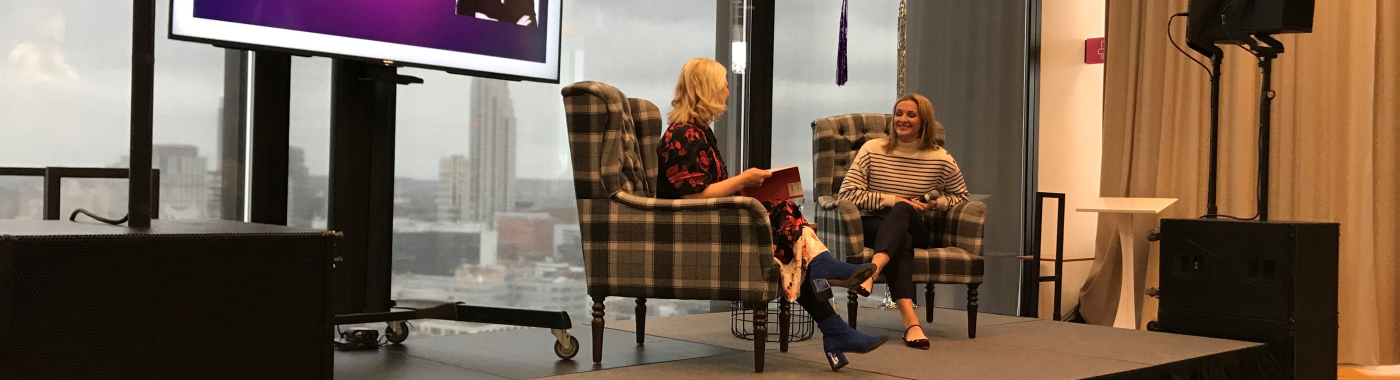
Logan, who is currently co-hosting Back of The Net, a new weekly premiere league show on Amazon Prime, was speaking at an International Women’s Day event hosted by the Women@Amazon employee affinity group. Interviewed by BITE’s Managing Editor Nicola Kemp, Logan spoke about her own career trajectory and that of women’s sport since she first started in 1996 at Sky.
In a year in which the International Women’s Day focus is #EachForEqual, Logan was a powerful force to have on stage, reminding the audience of the importance of retaining who you truly are at work. She pointed to the “ladette” culture of the nineties in TV and how, as her confidence grew, she made a decision not to go along with it. It was in these moments of flux in her career that she truly realised that she’d chosen the right job: “Turbulence makes you resilient.”
The importance of sport for children
Logan talked passionately about the importance of sport for the next generation, pointing out that school is the place where most kids play sport. It is through sport, Logan adds, that “life skills are learnt.” She believes that it is vital to “create opportunity and shift government policy.” This starts with investing in the grassroots game, which has a direct impact on who can access sport.
Live sport is so brilliant because the narrative changes; someone else turns out to be the hero.
Gabby Logan MBE
Representation, both on screen and behind it
Logan spoke about how, while girls fall out of team sport around the age of 13 or 14, the Olympics remind people how many sports are out there. After England netball’s success at the Commonwealth games there was a huge resurgence in the sport amongst young women. It’s these moments that swing culture because, Logan believes, “if you talk about it around sport, the conversation will filter into everything else.”
Shifting the lens
Logan also highlighted the shift in representation that she sees on the other side of the camera. As support of women’s sport only grows, so too do the opportunities for a more diverse range of creatives. As Logan said, “It’s happening behind the lens too; we want the studio to reflect the audience.” She talked about a time when she stood in for Gary Lineker on Match of the Day; that day, the programme had a female host, editor, director and pundit. For her that was a reflective moment that showed just how far the industry has come since she started out.
Logan celebrated those she’s worked with who choose to tell different stories, to champion narratives that otherwise wouldn’t be heard. She spoke about an editor she worked alongside who believed passionately in empowering strong women. He chose to tell the stories of women who had come back to sport after having children, a narrative that wasn’t traditionally focused on. Change the narrative and you open-up sport to a whole new audience.
KEY TAKE OUTS
- “It’s the journey, the mistakes, which are opportunities to learn.” Logan points out that 99.9% of sports players fail; that doesn’t stop them trying because playing is half the fun. She reminded the audience not to “be afraid to give something a go.”
- “You’re only as happy as your least happy child: the saying is bulletproof,” said Logan as she answered an audience question about how she balances her success at work with success as a parent – she has twins aged 14. The reality is, she says, “there are so many different ways to bring up a family.” She’s just figuring out what works best for hers.
- “Live sport is so brilliant because the narrative changes; someone else turns out to be the hero.” For Logan, the stories she’s seen and been part of telling over her career have been total “pinch-me moments”, from Beth Tweddle’s iconic gold medal in gymnastics to Liverpool’s 2005 Champions League final comeback and Dina Asher-Smith and Katarina Johnson-Thompson winning sprint golds.
- “We are incorporating conversations about women’s menstrual cycles and how they affect sport and performance.” Logan highlighted the fundamental shift that has taken place in what conversations occur in the realm of women’s sport. She pointed out that the England women’s football head coach Phil Neville is now looking at his team’s menstrual cycles and training around them.
- “We are not going to fill Wembley with only women; we have to appeal to sports lovers,” says Logan of the challenge of opening up women’s sport to a broader audience. But, she adds, “the standard of women’s sport has gone up and so people are drawn in because it’s an attractive proposition.”