What will be the key trends at Cannes 2026?
Industry leaders have their say on what will top the agenda at the industries’ biggest celebration of creativity.

Georgie Moreton
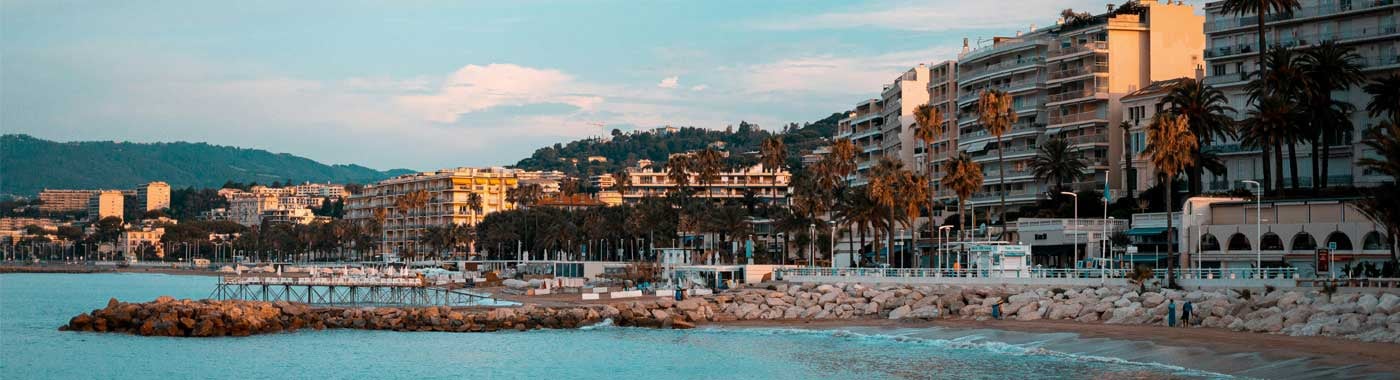
Deputy Editor, BITE CreativebriefIn a matter of weeks, the advertising industry will swap questionably air-conditioned offices and sweaty tube lines for La Croisette.
Yet more than sunshine and rosé drinking, Cannes Lions is a celebration of the best in creativity and an opportunity for the industry to get together to discuss the work.
Seizing the rare opportunity to gather insights from some of the industry’s greatest minds, Cannes Lions is a celebration of the work that pushes boundaries and successfully drives growth. From AI to humour, to the importance of digital and customer experience, the trends on show in the work will no doubt shape the year ahead for marketing leaders.
With this in mind we asked the industry, what will be the key trends at Cannes 2026?
Eloise Smith

Executive Creative Director
OLIVER UKAt Cannes, I suspect two new Lions will say more about the industry than a hundred panel discussions:
AI Craft and Creative Brand.
The mood around AI feels different this year. Less like a party trick. More like a craft conversation – moving on from whether AI belongs in the creative process to whether it’s making the work better. That’s a far more exciting question, and it’s producing far more weird and wonderful answers.
Agentic systems that adapt in real time aren’t replacing creative ambition. Instead, they’re expanding what’s possible and what it means to be a creative. Our ability to get to what’s interesting has never been faster or richer.
The Creative Brand Lion matters for a different reason entirely. In a world of infinite content, much of it AI-generated or creator-led, brand coherence becomes the ultimate creative advantage. The ability to be distinctive and yet consistent across platforms, creators and communities isn’t a constraint on creativity, it’s the foundation of it.
The strongest brands have always known this. Now Cannes is saying it out loud. Which feels timely, because in a year of consolidation, contraction and questioning what agencies are actually for, rebuilding the case for craft and brand isn’t just creatively exciting. It’s existential.
Rob Doubal and Laurence Thomson

Global Joint Chief Creative Officers
M+C Saatchi GroupMetamorphosis. Kafka wrote about a man who woke up one morning and transformed into something unrecognisable. He didn't choose it. It just happened. There has been more change in our industry in the last 12 months than in the previous 12 years. Cannes Lions 2026 is where we will begin to see how that change is affecting the output of the industry.
Chaos is often currency. And in that disruption, something interesting is happening. New collabs, new shapes of work, green shoots in the rubble.
We believe it will be a good year for creativity. Humour, partnership, and entertainment will be key trends.
The creative industries responded to last year’s global political chaos, as they often do, with humour. There were some great Super Bowl spots – an event which became a battle ground for the AI companies.
In the run up to the World Cup and Olympics, sport is enjoying a purple patch, with endorsements, sponsorship and brand partnerships causing a lot of the excitement.
And then, a return to craft. Some entries this year remind us of the quality of work found in the nineties. A respect for analogue, perhaps reflecting Gen Z’s backlash against the AI aesthetic.
The industry isn't evolving. It's morphing into something new. And it’s exciting.
Teemu Suviala

Global Chief Creative Officer
LandorCannes 2026 finds the marketing industry catching its breath, trying to figure out what's next, once again. Here are my predictions for the key trends we'll see by La Croisette.
1. From outputs to living systems
The era of fixed platforms is over. The most exciting thinking treats brands and campaigns as systems, not static deliverables. Marketing that behaves like a product. Ideas that generate infinite expressions, all from one same thought. The shift is from one-off outputs to adaptive, evolving operating systems and idea engines powered by taste and real human judgement.
2. AI as amplifier, not author
How do we use AI without losing our soul? We will hear POVs on how we'll let it clear the drudgery, widen our exploration, and accelerate imagination and execution. But the driving vision will be that it all must be human-led. A thousand options mean nothing without the ability to choose the one that makes you feel something.
3. The glory of human imperfection
This is the counterweight to the algorithmic slop. It's the tangential leap. The happy accident. The unpredictable, gloriously unreasonable idea. There will be talks and works championing analogue constraints, singular creative vision, and the refusal to optimise yourself into invisibility as a creative. Imperfection will be applauded as the signal that broadcasts craft, intent, and a bold point of view.
4. Originality as the ultimate differentiator
Underneath the tech talk and the trend-gazing, one truth endures: bold, original ideas remain the thing. The idea is still the machine that makes the art. Everything else is in service of it.
Paddy Smith

Chief Creative Officer
Born SocialThe big trend I’m hoping to see is a rise in tactility and craft that’s deeply rooted in the real world: the making of real things that have weight and texture, or craft that pulls deeply from the human experience. I imagine the Palais will be awash with physical creations, real-life experiences, brand collabs and special builds, with reward rightly granted to those who’ve worked to prove that human-centric creative is alive and well - and, importantly, effective.
This will go hand in hand with a real focus on simplicity and sacrifice, especially when it comes to distinctive brand assets. I can imagine we’ll see dozens of new ways to reimagine logos, packaging and product in ways that don’t feel like traditional ads, creatively camouflaging them within culturally rich campaigns and executions.
Finally, I’m imagining that we’ll see a continuation of last year’s trend of humour, lightness and levity as emotional frontrunners, as brands consistently seek surprise as a standout strategy. Record highs of “silliness” sprinkled across everything - from the softening of scripts, the selection of creators and the choice of music, all the way to the more obvious absurd activations.
Lucy Basden-Smith

Managing Director
FuseWith the launch of the Lions Sport category at Cannes, the industry is finally recognising the commercial power of creativity in sports marketing. In a fragmented landscape, sport remains one of the few spaces where brands can build genuine connections.
In a category already rich in drama and bravery, I’m excited to see work that draws on unexpected insights and moves beyond traditional sports tropes. While global sports like football will dominate, especially in a World Cup year, I hope to see a broader range of disciplines represented, with brands and rights holders pushing the boundaries of what sport can deliver.
AI will inevitably shape conversations at Cannes, so it will be interesting to see how it’s been used to enhance outcomes while keeping human creativity at the core.
Ultimately, the strongest work will come from brands that truly understand fandom as a culture, not a channel - showing how they’ve meaningfully embedded themselves in sport, rather than simply buying into it.
Mike Ellery

Chief Creative Officer
Sparks GlobalGlobal creative minds colliding on the sunny Croisette, rosé in hand, and discussing the biggest shifts in the industry is what Cannes Lions is all about.
Last year, AI dominated every conversation. But this year, we expect the focus to evolve from the ongoing fear around AI replacing creativity, to how brands can build trust, relevance and emotional connection in a world increasingly shaped by agents and algorithms.
For experiential marketing, that shift creates a major opportunity. As pressure mounts to prove ROI, AI tools will help quantify the business impact of live experiences through behavioural measurement, predictive insights and real-time performance tracking. The conversation will move from “experiential is valuable” to proving exactly how and why it can drive significant results for brands and attendees.
Sustainability should also remain high on the Cannes agenda, but will take on a more pragmatic tone. As economic pressures and geopolitical uncertainty reshape consumer priorities, brands are moving away from idealistic messaging toward practical optimism. We expect to see less of a focus on “saving the planet” and more on helping people navigate everyday reality in more thoughtful, achievable and accessible ways.
Nadine Heggie

Vice President, Brand Partnerships
National GeographicAs Cannes Lions 2026 approaches, one thing is clear: audiences are becoming more discerning about what they watch and who they trust. That is making premium storytelling environments more valuable than ever. In a market saturated with content, trust and authenticity have become powerful differentiators — and emotionally resonant storytelling, like National Geographic’s, gives brands something increasingly rare: real credibility in a trusted environment.
David Sheldrick

Founder and CEO
Seed Studio AIWe have spent long enough working with AI to watch the industry go from scepticism, to panic, to fascination. The fascination era will produce the most interesting work advertising has ever seen.
The brief has changed. Art directors and copywriters no longer self-edit based on what production can deliver. At Cannes this year, we will see work that was built without those boundaries, and the award-winning creative will reflect it.
AI does not just enable great work. It makes average work inexcusable. The baseline has risen. The only way to stand out now is genuine originality.
But the biggest story at Cannes 2026 is this: production value no longer signals agency size.
A three-person studio can now produce work indistinguishable from a 300-person network. At Cannes 2026, the quality of execution will tell you almost nothing about budget or headcount. It will tell you everything about the quality of the idea.
The agencies moving fastest have built one habit: when a significant AI development drops, they get their best people in a room, ask two questions (is this useful, and how do we implement it?), and move. Do not try to build proprietary AI. Let the frontier labs fight it out and implement what works for you. Agility beats infrastructure every time.
Kate Cox

CEO
Bray LeinoCannes 2026 will be defined by a creative industry trying to rebalance technology, trust and humanity all at once. AI will dominate the conversation again, but the focus is shifting from pure generation to orchestration, with AI shaping experiences, journeys and interfaces in real time. At the same time, ‘human-made’ is becoming a premium signal. As AI-generated content floods every channel, originality, craft and transparency will matter more than ever.
The main trend at Cannes will be the large holding companies positioning themselves as leaders in AI adoption, while also reinforcing the idea that the traditional agency model still holds all the answers. In reality, Cannes will show how real innovation is coming from mid-sized agencies that have democratised routes into production previously reserved for the biggest players. Strategic thinking and human judgement still matter, but the barriers to creativity have never been lower.
Livity data, in partnership with Google, shows AI adoption among teens is near universal, but many already want clearer labelling of AI-generated content. That tension between automation and authenticity will define much of the work on show.
Social will finally be recognised as the strategic front door for brands, not just the place ideas are distributed afterwards. The creator economy is evolving from authentic vibe signalling into measurable brand-building, even as algorithms flatten culture into an endless stream of content slop.
The winners at Cannes will be the brands connecting creativity, commerce, community and culture into experiences that feel authentic, relatable and unmistakably human.