

Fuel Your Imagination
White Stuff campaign celebrates the Lionesses who blazed the trail
The Still Roaring campaign honoured the pioneers of women’s football.
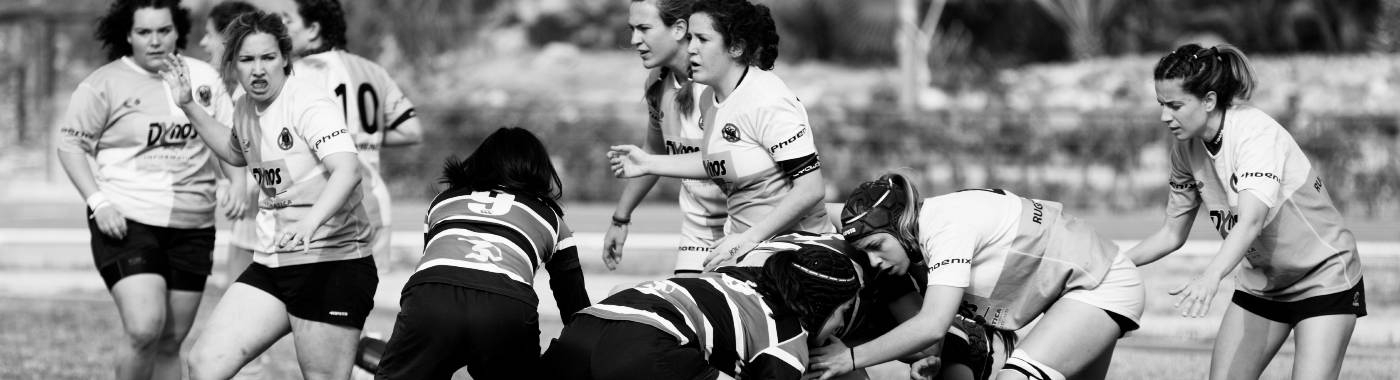
We asked industry experts if 2025 will bring much-needed marketing momentum to the women’s game.

In 1991, four pioneering women, Deborah Griffin, Sue Dorrington, Alice Cooper and Mary Forsyth, took it upon themselves to organise the first ever Women’s Rugby World Cup. The women, who were all members of Richmond Rugby Club, organised the Cup in their spare time.
At the time, the International Rugby Board told them that women’s rugby is a ‘participation and not a spectators sport.’ Thankfully, they ignored these ‘experts’.
While such moronic attitudes mercifully belong to a bygone age, arguably women’s rugby still has a long way to go to challenge stereotypes on and off the field. When it comes to the participation gap, Rugby remains inaccessible to many girls. If girls are never offered the opportunity to participate at a grassroots level, it will be increasingly challenging to level the playing field.
According to the Women in Sport, in England, there are almost 860000 fewer girls than boys participating in team sports like football and rugby. However, according to Mastercard and the University of Bath’s ‘Future of Rugby’ report published in 2023, female participation levels are at an all-time high, totalling 2.7 million players globally - a +28% increase in registered female players since 2017.
Yet research from the WST report, co-funded by O2 and the RFU, reveals that the gender awareness gap in rugby has reduced by 10% in the last year. While audiences for the women’s game are at an all-time high, the gap still sits at 15%, showing that there is still work to be done to increase player visibility and audience engagement.
The research shows that there is a significant marketing gap. Although the Red Roses have won the past six consecutive Guinness Women’s Six Nations tournaments, 63% of rugby union fans aren’t yet able to name a player on England’s women’s team.
The Rugby Football Union has forecasted that 2025 will provide a £156 million uplift to the UK economy. It will be the first time since 2010 that England has hosted the event. With all eyes on the Red Roses, we asked industry experts if the World Cup will be a tipping point for women’s rugby sponsorship?

WRWC 2025 is well-positioned for success. The increasing competitiveness of teams, growth in audiences and rising performance standards have made women’s rugby more commercially attractive. With record-breaking attendance in 2022 and an expanded 16-team format, the tournament has a strong foundation.
Major brands like Mastercard, DHL, and Capgemini already support World Rugby, and further investment from industries beyond sport - such as finance, tech and FMCG - could boost the tournament’s commercial impact. However, for sponsorship to be truly effective, brands must allocate significant activation budgets to create high-impact, bespoke campaigns. While rugby’s venue distribution across the UK may present challenges for large-scale activations, creative approaches can overcome this.
Broadcast deals and media rights will also be crucial. Prime-time coverage, consistent programming and high production values will enhance sponsor visibility and ensure strong ROI. Additionally, the rise in player and team endorsements will drive personal brand equity, further elevating the sport. The ultimate test will be whether investment remains strong post-tournament.

Women’s rugby continues to grow exponentially and has recently been supercharged by emerging superstars and the Paris Olympics, so the timing of the 2025 Women’s World Cup is impeccable.
Described in sponsorship circles as the biggest iteration yet, and supported by a wealth of impressive statistics, the WRWC is poised to be a triumph. However, are sponsors set to capitalise?
The brand line-up is certainly impressive, and World Rugby’s new flexible approach will enable partners to maximise their rights. Gone are rigid partnership packages, replaced with a flexible suite of assets tailored precisely to partner objectives.
However, even the most sponsor-allergic fan would see old friends on the media backdrops. Knowing women’s rugby attracts a more family focussed audience, how will rugby mainstays such as Gallagher, Capgemini, and Asahi approach this?
If the broadcast and digital projections ring true, from an AVE standpoint each partner will see a handsome return, yet we know AVE alone is a dated appraisal method.
To see true partnership effectiveness, brands will need to resonate directly with the fans, developing rapport. To do this, they’ll need to invest and create content and experiences to engage familial audiences.
Not every team has an IIona Maher, so star power alone won’t drive content, brands will need to deep dive into their audiences to capture attention.
Equally, brands will need to flip the rights schedule. The traditional value drivers (LED, backdrops etc.) can take a back seat whilst the ticketing, grassroots programmes, experiential, and other 'Money Can’t Buys', will help partners develop genuine relationships with women’s rugby fans.
The stage is set, and the stats speak for themselves. If partners invest across their rights schedule, the tournament can be a catalyst to drive increased sponsorship interest and investment into women’s rugby.

The appeal of women’s elite sports and its athletes is at an all-time high, with global revenue projected to hit £2bn this year. Last year’s revenue hit £1bn for the first time and with 2025 including major tournaments across different sports, we are witnessing a trend of greater investment from brands that is reshaping the playing field.
The Women’s Rugby World Cup is one of those flagship moments, and the signs are encouraging, with over 275,000 tickets sold, dwarfing the previous tournament record of 150,000, with a Twickenham final expected to comfortably surpass the highest attended one-day women’s rugby event in history.
Brands are cottoning on to the opportunities, aiming to form deeper, more meaningful partnerships with leagues and athletes, headlined by the sport’s biggest star, Ilona Maher, penning a long-term deal with Adidas. Capitalising on the American’s incredible on-field skill and infectious personality that has gained her the highest social following of any rugby player, major players from beauty, fashion, healthcare and beyond, including L’Oreal, New Era, Secret, and Puala’s Choice are tapping into the role athletes play as influencers to reach new, culturally relevant audiences.
With research from the Women’s Sport Trust showing that 4 in 5 brand decision makers are likely to invest in women’s sport sponsorship in the next three years, the trend of investment into sponsorship of women’s sport shows no signs of slowing, which will be vital to preserving the health and sustainability of the sport, from the biggest stage at the Women’s Rugby World Cup this summer, down to the grassroots of the game.

2025 is set to be one of the biggest years in women’s rugby history. The Six Nations is in full flow, we’ve seen record PWR attendance, and the Women’s Rugby World Cup — hosted in England this summer — has already achieved record ticket sales. Interest is at an all-time high, so the World Cup is almost guaranteed to be a tipping point for the game itself. But will this translate into economic growth?
The sport's popularity is growing at an impressive pace because of role models like Ilona Maher and Ellie Kildunne, as well as Maud Muir, Shaunagh Brown, and Sadia Kebaya — who we’ve added to our For The Love Of Rugby presenting roster — drawing more eyes to games. And in turn, big names like Guinness and Mastercard are partnering with major tournaments, and businesses including Capgemini, Gallagher, and ChildFund Rugby are funding programmes to support the next generation of rugby stars.
But for the Women’s Rugby World Cup to truly be a tipping point for sponsorship, we need more businesses to put their money where their mouths are. Many brands want to say and do the right thing, but without the cash injections to back it up. On For the Love of Rugby, we’re fortunate to be backed by Sage throughout the Women’s Six Nations, but we’re yet to secure a sponsor for our World Cup coverage.
We want the 2025 Women’s Rugby World Cup to be a game changer for the sport, just as the 2022 Euros were for women’s football. But to achieve that, women’s rugby needs authentic, meaningful investment — and there’s no better time than the present.

This should absolutely be the tipping point moment. All the pieces are in place. But a lot of the power to fit them together correctly lies in the hands of brands. Because we’re up against the same old issue as all women’s sports: the lack of both visibility and investment.
Ilona Maher has done an unbelievable job in driving awareness of the sport, transcending the game and almost single-handedly taking it to new audiences (even my decidedly-sport-indifferent eldest found himself at a Harlequins v Bristol Bears game one cold February evening – purely for Ilona). Yet, as impressive as she is, she is still only one person, and recent research from O2 and the Women’s Sport Trust shows that 63% of rugby union fans still aren’t able to name a single player on the England women’s team.
It’s a positive sign on the road towards parity that brands such as Asahi and Gallagher have come onboard, both with strong existing associations with the men's game. Even more excitingly we’re seeing brands like Wilkinson Sword - who don’t have a history in the men’s game - signing deals.
But we need more. Much more. If we want fans to keep coming back, we need to be telling the stories of these brilliant women, building narratives around the sport to entice fans and make them feel included in the stories of the clubs and the players.
And it’s the brands who hold the keys to this. By investing in partnerships, putting players in the spotlight, telling their stories and making them heroes. And it can’t just be for a moment in time. It needs to be an ongoing commitment, one that will reap future rewards. Getting ahead of the curve is everything. So what are you waiting for?
Looks like you need to create a Creativebrief account to perform this action.
Create account Sign inLooks like you need to create a Creativebrief account to perform this action.
Create account Sign in