Creators are key to building community with Generation Z
McCann London teamed up with Snapchat to bust the outdated myths surrounding connecting with Generation Z consumers.

Nicola Kemp
Editorial Director CreativebriefThere are few generations as stereotyped as Generation Z. Stereotypes which risk stopping brands from authentically connecting with Gen Z audiences.
To help bridge this gap, McCann Truth Central, McCann’s global creative intelligence unit, has unveiled researchdesigned to help marketing leaders understand the way that this generation is rewriting the rules of culture, creativity, and connection.
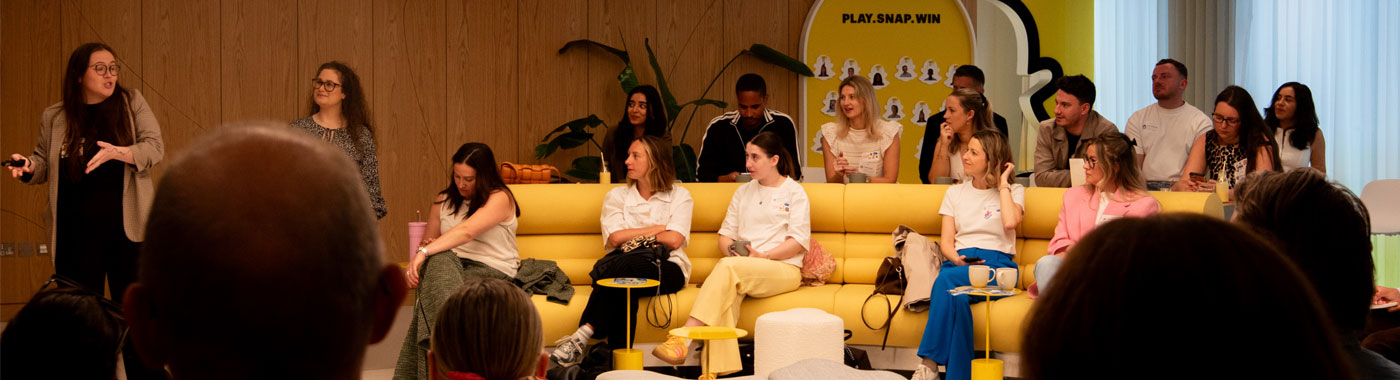
To discuss the findings of the report, McCann held an event with Snap for senior marketers to better understand the nuances of connecting with Generation Z audiences.
Gen Z relies on their favourite creators to tell them what’s new, now and next. Brands that can forge long-term relationships with authentic creators will unlock Gen Z’s brand loyalty.
Crystal Malachias, Global Co-Managing Director of McCann Content Studios and Global Head of Influencer for McCann
Creators hold the key to connecting with Gen Z
The event highlighted the multifaceted nature of Generation Z consumers and underlined the importance of uncovering the passions of your specific target audience, ensuring brands speak in a language that Generation Z understands.
According to McCann Truth Central’s research, Generation Z wants meaningful connections. Treating creators as long-term brand advocates can support genuine and real connections with consumers.
Crystal Malachias, Global Co-Managing Director of McCann Content Studios and Global Head of Influencer for McCann, explained: “Creators are key for brands wanting to build a sense of community with their Gen Z audiences. Their influence on consumer spend can’t be understated.”
She continued: “Gen Z relies on their favourite creators to tell them what’s new, now and next. Brands that can forge long-term relationships with authentic creators will unlock Gen Z’s brand loyalty.”
The event also successfully busted the myth that Gen Z lacks attention. There is nothing wrong with Gen Z’s attention span. They’re just selective in how they spend it, so brands need to make those first few seconds of an ad really count.
There is good news for creative storytelling too, with the research highlighting the truth that Generation Z are more narrative-driven than ever, making meaningful brand narratives key to engagement.
With driving that engagement at the top of the agenda, here are the key takeaways to better engage with Generation Z audiences.
Generation Z is not a monolith
Generation Z is the most diverse generation yet, shaped by their subcultures, micro-trends and niche interests.
Brands need to evolve beyond just targeting ‘Gen Z’ or ‘18-24 year olds’. This generation is uniquely defined by their passions and interests, and is more likely than any other generation to identify as their communities. 55% of British Gen Z identify as gamers, compared to 29% of the UK general population. 36% identify as crafters, compared to 23% of the UK general population.
Their identities also overlap and intersect, and brands should identify which communities exist within their target demographic. Ultimately, unique identity and expression are a core pillar for Gen Z, with 85% of British Gen Z saying ‘it is important for me to express my individual identity.’
What this means for brands: A one-size-fits-all approach to this generation will not have an impact. If you want to engage Gen Z in an authentic and meaningful way, you’ll need to align with one of their niche interests.
The key question for marketing leaders to ask is: Are you understanding your audience beyond their birth year by uncovering new passions and affinities?
Gen Z are seeking spaces – and platforms – for real, genuine and unfiltered connection, looking for quality over quantity both online and in person.
Jess Francis, Research Director at McCann Truth Central
Gen Z are the most socially connected generation…or are they?
This generation, more than any other, feels lonely and disconnected. Being young is all about going out, right? Well, not according to McCann’s research, which found 71% of British 18-24 year olds would rather stay at home than go out.
Far from being the most connected generation, 60% of Gen Z say they ‘often feel lonely despite being surrounded by family and friends.’ This compares to 43% of the general population, making Gen Z the loneliest and disconnected generation.
However, 72% of Gen Z agree that the connections they make online can be as meaningful as those in real life, which provides an opportunity for brands to reach young people and connect with them.
Jess Francis, Research Director at McCann Truth Central, explained: “Gen Z is on the hunt for meaningful connection in today’s world, we see that with the rise of IRL events from book clubs to having errand dates to even London’s own Lonely Girls Club.”
She continued: “However, they aren’t discarding the digital space anytime soon. If anything, their IRL activities are fuelling their time online. Gen Z are seeking spaces – and platforms – for real, genuine and unfiltered connection, looking for quality over quantity both online and in person.”
What this means for brands: Snap’s data suggests that the number 1 reason most people use Snap’s platform is to connect to close family and friends – for Gen Z connections are being fulfilled by the platform and brands that can tap into this need for connection and meet Gen Z where they are, will be better placed to engage with them.
The key question for marketing leaders to ask is: Young people are on the hunt for meaningful connections. How is your brand showing up in places where connection is real and genuine?
Relationships with creators are meaningful
The accepted myth is that Generation Z only has a surface level relationship with creators. In fact, creators may be even more influential than their parents.
Creators are part of Generation Z’s inner circle and are deeply influential in every aspect of their lives, including their purchasing decisions.
Nearly 1 in 3 (31%) of Generation Z globally say influencers have had more impact on their life choices than their parents have. In Britain, 26% of Generation Z say that influencers have had more impact on their life choices than their parents.
Almost half (48%) of Generation Z say that watching creators allows them to escape their reality, which compares with 39% of Millennials, 24% Gen X and 11% Baby Boomers.
Crystal Malachias, Global Co-Managing Director at McCann Content Studios and McCann’s Global Head of Influencer, explained: “Gen Z have a deeply personal relationship with creators. Creators are community focused and understand how to connect with their communities in a meaningful way, engaging in a constant feedback loop with their communities that deepens their emotional bond. The sense of community they provide can act as a halo effect for the brands as part of long-term creator partnerships.”
Snap research found that 57% of Snapchatters follow creators on snap to look at their favourite creator’s daily life – connecting with them in a similar way to family and friends
What this means for brands: Snap found that of all the generations, creators are most effective at getting Gen Z to make a purchase with 82% of 12-26 year olds buying something because of creator content they saw on the platform.
The key question for marketing leaders to ask is: Are you treating creators as short-term endorsers or long-term brand advocates?
But aren’t Gen Z short on attention? Not quite. They are just highly selective.
Their attention is hard to capture because Generation Z is highly selective. They are, however, prepared to engage deeply with what matters to them. After all, this is the generation that dives deep on their favourite artists’ easter eggs, were raised in the era of Marvel Cinematic Universe, and have an obsession with all-things true crime.
It is true that Generation Z do love digestible, snackable pieces of content, with 47% saying they prefer short-form content – the highest of any other generation. And although Snap research found that Gen Z had the lowest overall attention across generations, they did have the highest active attention in the first 8s of an ad.
This is a generation that appreciates a good story. 72% of British Gen Zs say ‘they don’t like ads in general, but there are some ads they really love, ' which suggests that when ads are done right, Gen Z is engaged.
What this means for brands: First impressions matter and when they’re given content that is worth their time, Gen Z are willing to focus.
The key question for marketing leaders to ask is: How can you make your brand feel like a world Generation Z wants to explore and spend time in?
Ok, but don’t Gen Z lack brand loyalty? Not according to the research…
McCann’s research found that each new generation displays a higher brand awareness and loyalty than the previous generation. Millennials and Gen Z show the highest levels of brand awareness and loyalty when adjusted for their population sizes in the dataset, indicating these generations are most engaged with brands.
On average, Generation Z and Millennials have 1.5 times higher brand awareness and loyalty compared to other generations. 74% of British Generation Z describes themselves as ‘brand loyal,’ with 72% believing the brands they buy say something about their identity.
What this means for brands: Brand narratives are essential to capturing and retaining loyalty. Generation Z believes their brands say something about them, so for brands wanting to engage Generation Z it’s about making Generation Z feel seen, entertained and valued and brands can do this by speaking Generation Z’s language.
The key questions for marketing leaders to ask are: What story does your brand add to Generation Z’s life?
To find out more about the research please click here.