Beyond the booth: Reimagining B2B events
Events can help B2B brands craft and own their own narrative.

Tom Gray
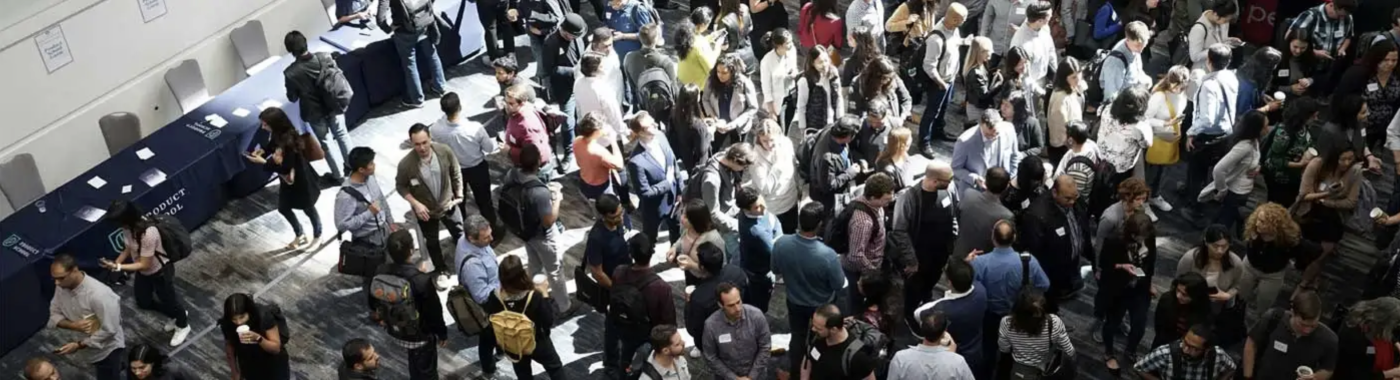
Chief Strategy OfficerPicture the scene: A sprawling convention centre, hundreds of booths, you’re navigating a cacophony of messages, your stepcount is in the tens of thousands, and the ultimate prize is a fleeting badge scan and a desperate hunt for a decent coffee.
For decades, the convention and trade show has been the accepted norm for B2B experiential marketing, but a new shape of customer and prospect engagement has emerged: inspired by the experience economy, with owned events and pop-ups that borrow from the best of entertainment and fandom.
These owned events are highly customer-centric, rich in product and brand immersion, and create a community around the brand in ways that traditional booths simply can’t do.
It represents a fundamental rebalancing of the B2B marketing portfolio. The question for today’s CMO is no longer simply "Which shows should we attend?" but rather, "Should we be building our own stage?"
For a growing number of leading B2B brands, the answer is a resounding yes, for three key reasons:
Owning the narrative
At a trade show, you are one voice in a crowd. By hosting a proprietary event, brands can control the end-to-end experience and the narrative within it. This is particularly powerful for brands with large product offerings, or complementary services: when you own the full event, you can give customers a more holistic understanding of your offer, improving customer knowledge and understanding - enabling customers to get more from the product, while also increasing potential for cross-sell, retention and lifetime value.
Salesforce, with its iconic Dreamforce, is no longer just participating in the industry conversation; it is hosting it. The entire event becomes an immersive vehicle for its vision, shaping the market in its image, and showing how its products and services enable it.
The data dividend
The traditional trade show offers a pretty shallow data pool: usually a list of names and titles with little context. An owned event, by contrast, is a first-party data goldmine. It provides a rich, textured understanding of client intent: which sessions did your key prospect attend? What questions did they ask in the app? Which of your experts did they meet? This intelligence transforms a sales follow-up from a cold call into a strategic continuation of a warm conversation.
Ford Pro designed its Fleet Showcase event as a blend of education, networking and entertainment - giving customers a deeper understanding of the products and support platforms through interactive sessions that in turn surfaced rich customer insights into what customers really need, and how they use the product and service ecosystem.
The community flywheel
Finally, and perhaps most importantly, is the shift from lead funnel to community creation. An annual flagship event like HubSpot’s INBOUND or Visa’s Payments Forum creates a powerful centre of gravity, turning disparate customers and partners into a cohesive and loyal ecosystem. The goal is not a one-off transaction, but the cultivation of a community that delivers value for attendees long after the event ends, fuelling advocacy and long-term growth.
By building a community around the brand, creating a space where the whole ecosystem can interact, the brand creates significant wins for its customers, driving up the value of attendance and the underlying value of the platform.
Owned events as part of an integrated strategy
Does this mean the death of the traditional trade show? Not at all. For a brand entering a new market, the scale and reach of an industry-wide event are invaluable. Their genius lies in the power of serendipity - the fortuitous, unplanned collisions between people and ideas that can spark new partnerships and open new doors. The trade show remains the most efficient vehicle for broad-stroke visibility and discovery.
However, for ambitious B2B brands that have established brand gravity and market share, an owned experiential event can be a concentrated investment that will create deep engagement and impact with the audiences that have high potential.
How to know if owned events are right for you
This strategy signals a shift from short-term lead generation to long-term platform building. For CMOs evaluating this path, the decision rests on a few key characteristics of the business and the brand. This is not a strategy for everyone, but for those who fit the profile, it’s a powerful tool. Here’s how to tell:
- Your model is built on recurring relationships. You’re a business whose success is measured in Net Revenue Retention. Your goal is to fight churn and expand customer lifetime value, enriching the use of product and ecosystem.
- You have a point of view, not just a product. You have a vision for the industry that extends beyond your feature set, giving you something meaningful to talk about, and a space for customers to bring their own businesses into that vision
- Customer education is a key pillar of your engagement strategy. The more that your customers understand your offering, the greater value they can get from it, with a corresponding increase in cross-sell and loyalty.
- You have achieved sufficient brand gravity. You have an existing core of customers and advocates who provide the initial energy and social proof to draw others in.
- You have organisational buy-in. Your CEO is ready to be on stage, your head of sales sees it as a critical tool for deal acceleration, and the entire company views it as a strategic imperative, not just a marketing line item.
If your brand aligns with this profile, now might be the time to explore what a wholly-owned B2B experience might look like for your customers, prospects and collaborators within your sector, creating a space and an experience that can shift the dial on customer engagement and lay the foundation for sector and industry leadership.

About
Tom Gray is Chief Strategy Officer at Imagination and is focused on evolving Imagination’s business and those of our clients. He specialises in helping businesses and brands to develop game changing propositions, products, services and campaigns that can create sustainable growth. His experience spans the BBC, deep tech start-ups and boutique Innovation consultancy Fahrenheit 212. He has worked with clients ranging from IKEA to Land Rover, Shell, HSBC and Diageo He is an Associate of the Imperial College Business Design Studio and lectures MBA students on Design Thinking for Business.