Trend
Britain doesn't have a creativity problem, it has a confidence problem
Andy Nairn shares the importance of nurturing creative thinking.
In 2026, Patricia Lefébure is closing tabs and making space for the thoughts that matter.

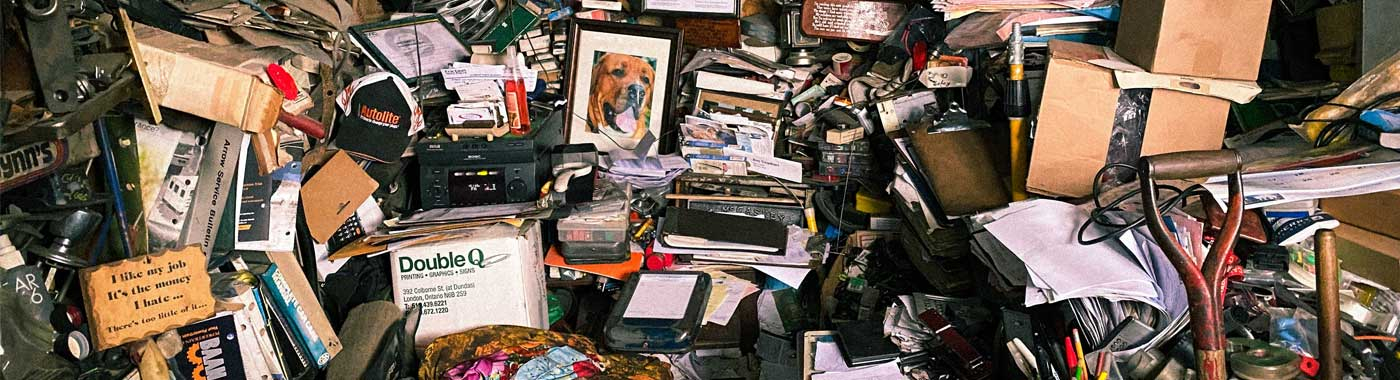
Where I live, the high street is lined with estate agents’ offices, all sleek glass fronts, spotless desks and enormous screens displaying homes I definitely can’t afford. Except for one. In this particular office, you can barely get through the door. It’s a mountain of boxes, teetering piles of paper and filing systems that feel more archaeological than administrative, and genuinely makes you wonder how on earth they rent or sell anything.
On a recent walk past said office, it dawned on me: that chaotic little space was no more cluttered than my own laptop desktop and internet browser. A sprawling mess of open tabs and abandoned intentions. Half-read articles. Research for projects I may never start. Recipes I’ll never cook but for some reason absolutely cannot lose. A flight I looked up once while procrastinating. A reference I meant to send and absolutely did not.
These tabs, these little windows into my best intentions, form a sort of mental constellation that somehow makes sense to me. And only me. If a stranger were to see them, they’d assume I was either very interesting or very unwell. Possibly both.
When I dug further into my psyche, I realised that my digital clutter isn’t just confined to my screen, it has taken up permanent residence in my mind - without my active consent. So for 2026, I’ve given myself a resolution that feels both radical and embarrassingly basic: declutter my tabs, declutter my brain.
It started innocently enough. I’d open a tab for research. Then one for context. Then one for comparison. Then another because I’d spotted something vaguely connected that might be helpful. Soon, I was running a full-scale archaeological dig within my browser. The idea that I’ll return to these tabs is charmingly optimistic, like believing I’ll suddenly become the sort of person who folds laundry immediately or deletes photos that are out of focus. But once a tab crosses the 48-hour mark, it becomes digital dust. I’m not keeping these tabs open because I’ll revisit them. I’m keeping them because closing them feels like abandoning a train of thought that might yet prove useful.
The reality is, not every idea is worth holding onto.
Patricia Lefébure, Creative Director, eight&four
Part of the problem is something called ‘cognitive offloading’, basically using our screens as an extra brain. It feels helpful, but it just means we end up saving far more than we can actually process. And while hopping between tabs can feel productive, the science says otherwise: a University of Sussex study found that people who multitask a lot, in fact, have less grey matter in the part of the brain linked to focus.
The reality is, not every idea is worth holding onto. Some links are only brief moments in time. A spark that did what it needed to do and didn’t have to go any further. As a creative director, I love that feeling when ideas hit, those little “oh!” realisations that open everything up. Tabs became my way of chasing those highs, trying to preserve them in their perfect eureka form before their relevancy dimmed.
But let’s be honest, when you’ve got 39 tabs open, you’re not preserving ideas. You’re drowning them.
When the mind is faced with too many open loops, it becomes less of a creative engine and more of a messy storage cupboard with a flickering lightbulb. Decluttering tabs isn’t simply an exercise in tidiness; it’s about creating mental space for ideas that actually matter. Letting a tab go doesn’t mean it never had any value. It just means it doesn’t need to be carried forward. Some ideas were never meant to survive into the next day, and that’s perfectly fine.
My new ritual is simple: at the end of every day, I close anything that doesn’t genuinely deserve to be open tomorrow. About 75% of tabs don’t make the cut. And yet, I don’t miss them. I do not lie awake at night wondering: ‘What about that article on medieval pigments?’. The space they leave behind becomes creative oxygen.
This ritual has another benefit. It forces me to weigh up what actually matters. And creative discipline, I’ve learnt, begins with such decisions. Suddenly the ideas that matter have room to breathe. I can now find things. My computer fan (which previously screamed like it was preparing for take-off) has an audibly calmer nervous system.
And my mind feels… spacious.
Like someone has quietly opened a window. And let the air of inspiration flow in.
So here’s my 2026 promise to myself:
I will not build a personality out of half-finished tabs.
I will let go of the digital clutter masking as productivity.
I will choose curation over accumulation.
I will make space for thoughts that matter instead of hoarding ones that don’t.
Because the more tabs I close, the more room I have for the ones that truly count.
As Executive Creative Director Patricia is the senior creative lead across eight&four’s complete agency portfolio, overseeing a studio team of 50+ social creatives, copywriters, video editors and animators. In 2018 she launched eight&four's end-to-end content creation offering.
Looks like you need to create a Creativebrief account to perform this action.
Create account Sign inLooks like you need to create a Creativebrief account to perform this action.
Create account Sign in