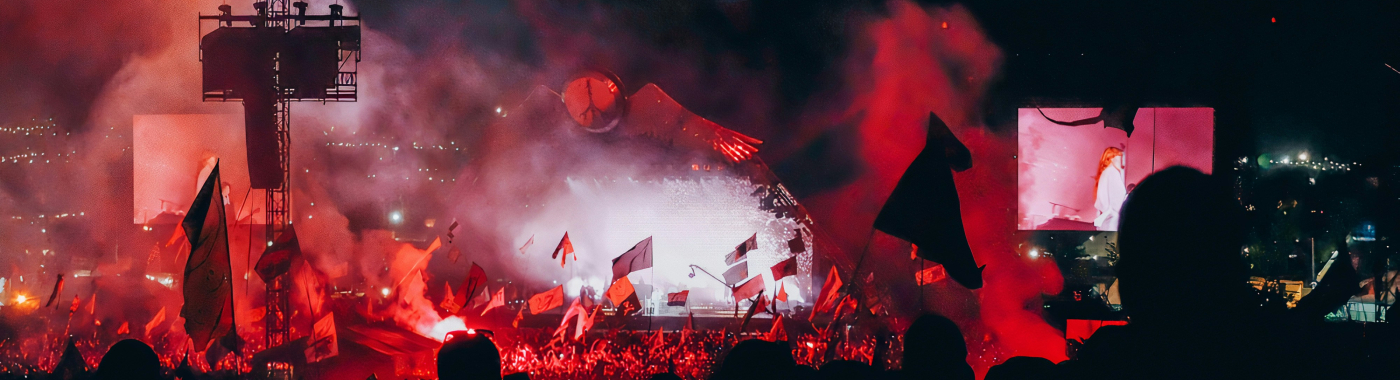
Picture over 100,000 people singing along to their favourite brands, surrounded by friends old and new, creating memories that will last a lifetime. These are the raw, emotional moments Glastonbury is built on. For brands, they present a brilliant chance to become part of that story – from the main stage to the campsites, there are countless ways to make their mark.
Look at Land Rover. As the festival’s official vehicle partner, it will chauffeur artists to the Pyramid Stage. A smart move from the brand, and one likely to show up in sleek social media footage and press coverage from the festival. A great example of building brand prestige through association, without saying a word.
But Glastonbury isn’t just about headliners. It’s the fans who make the festival, and the brands that win are those solving their problems. Take Vodafone, the official connectivity partner, with its festival app offering live location tracking and step counting. After all, with the amount of walking fans do, it’s basically a workout - and getting lost is a rite of passage. It’s useful, appreciated, and ideal for keeping the brand front of mind after the festival.
There are also ways to elevate the experience in the lead-up to it. This year, Brothers Cider tapped into the pre-Glasto buzz with a QR code promo on cans, giving fans the chance to win tickets and festival goods. And on-site, food and beverage vendors have a huge opportunity for sensory-led sampling, showing how their products can add to the moments fans love.
These activations feel like natural extensions of the festival itself. But how can brands build experiences that resonate long after the final set?
From sponsorships to storytelling
The most impactful brands at Glastonbury don’t just show up – they leave a legacy.
Take Co-op’s on-site pop-up store. More than a convenience, it’s a lifeline for festival-goers. But it goes further: by donating proceeds to local charities, the retailer reinforces its role as a community-first brand. It’s a simple, tangible action that tells a bigger story of purpose and staying power.
Glastonbury has a long-standing tradition of activism and action, with Greenpeace’s legendary stage a beacon for ethically minded attendees. It provides sponsors with a platform for purpose-led storytelling to bring their brands to life in a space designed to attract like-minded audiences.
Spotify takes another route, helping people take home something new from the festival. Its app provides users recommendations on artists they might enjoy based on their listening habits, helping fans fall in love with new music and use the event to broaden their horizons.
Partnerships like these allow brands to create a sustainable impact. But at its core, Glastonbury is still about the magic of the moment and the music, creativity, and stories that outlast the mud.
Real-life experiences
And who better to tell those stories than the people living them? Creators are cultural connectors with built-in audiences and distinct voices. They help diverse brands show up authentically, without forcing it.
Fashion brands have traditionally been leading the game, fostering innovative partnerships with performers and trend-setters, such as Barbour’s campaign with Alexa Chung, set to inspire wardrobe choices for many fans.
And then there’s Dr. Martens, a staple of festival style. Long after the final set, the brand often stays in circulation through creator recaps, outfit diaries, and nostalgic reflections on festival fashions as fans reminisce about their festival looks
Add, don’t Interrupt
Glastonbury isn’t just a festival, it’s a cultural moment. And a unique one too; an event almost blissfully free of the advertising influx that has overtaken many other festivals. This means that brands can achieve exposure and impact at an unrivalled scale.
The opportunity is huge, as long as brands can rise to meet fans’ expectations. The partnerships that truly resonate are the ones that entertain, inspire, and deliver real value.
It’s no longer enough to just show up. Brands have to earn their place. Only then do they become part of the story, the vibe, and the memories fans take home with them.