
Hot Pick
Fila’s brand refresh combines style and sport
‘Bellissimo’, by Sid Lee, visualises Fila’s focus while showcasing the Fall/Winter 2024 collection

Sports branding and narratives are growing more complex and encompassing communities.

With a major summer of sport on the horizon, there’s a shift in how teams and organisations are telling their stories.
Sports team branding tends to lean heavily on national and visual identity. Flags, colours and symbols did much of the work, creating a clear and immediate sense of belonging. The narrative was simple: this is where we’re from, and this is who we represent.
That clarity still matters. But increasingly, it’s no longer enough.
Today’s audiences don’t always see themselves reflected in singular, fixed ideas of identity. They move between cultures, communities and perspectives more fluidly. Sport, in turn, is beginning to reflect that. The result is a move away from rigid expressions of national pride towards something more human to connect with.
Traditional brand building might rely on singular narratives. A slogan with a visual style that can be applied consistently across every touchpoint.
Fans are no longer passive recipients of brand messaging. They actively participate in it, responding in real time across social platforms, communities and cultural moments.
Beth Andlaw, Co-Founder at FORM Brands Studio
But sport works a little differently. While it’s united by the shared feeling of being a fan, it doesn’t play out as one single story. It’s made up of lots of different voices and perspectives at once.
A national team represents athletes (and fans) from different regions, disciplines, backgrounds and lived experiences, whose stories don’t follow a single journey. Trying to compress that into one fixed expression can flatten the richness that makes sport exciting in the first place.
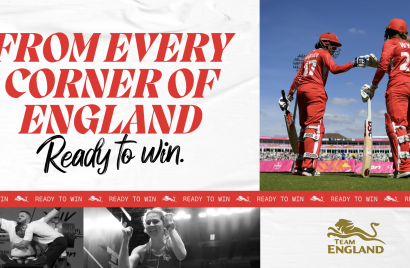
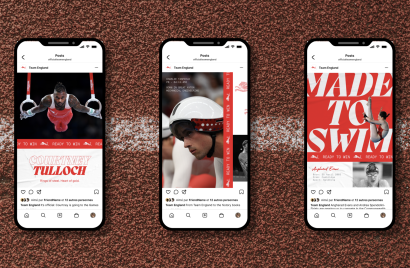
This insight from athletes was central to our rebrand of Team England for the Commonwealth Games.
Rather than creating a single, fixed expression of ‘England’, the identity was designed as a system that could flex across different areas, sports and perspectives.
The verbal identity, built around the brand idea of ‘Ready to Win’, wasn’t designed as a fixed campaign line. It’s more of a flexible framework that can adapt to different moments, whether that’s personal, collective, local or tied to a specific sport. The intention wasn’t to create one perfect sentence, but a foundation for many.
It’s an approach that reflects how brands need to work more broadly. Today, they operate in continuous conversation rather than purely fixed campaigns.
Fans are no longer passive recipients of brand messaging. They actively participate in it, responding in real time across social platforms, communities and cultural moments.
You see it in everything from fan-run accounts and match-day TikToks to the way moments are clipped, memed and shared within minutes. The story of a game is constantly being reshaped by the people watching it.
More flexible ways of building a brand leave space for people to take part, to express what a team or moment means to them.
That matters in sport, where the emotional connection runs deep but feels different for everyone. For some, it’s about national pride; for others, it’s about individual athletes, personal journeys, or the successes they share with friends and family.
For institutions like national sports teams, this evolution is particularly significant. These brands carry history, meaning and expectation. But they also need to remain relevant to new generations of athletes and audiences.
A fixed identity risks becoming outdated or exclusionary, but a flexible one has the capacity to grow. This doesn’t mean losing a sense of core identity. In fact, the opposite is true. The strongest systems are anchored in clear principles, but allow those principles to be expressed in different ways.
In the case of Team England, that means holding onto a sense of pride and ambition, while allowing space for different voices, stories and perspectives to shape how that is communicated.
Ultimately, the shift in sports branding is about moving from representation to connection. It’s no longer enough for a brand to declare what it stands for; it needs to create space for people to see themselves within it.
Flexible storytelling systems make that possible. They reflect the reality that identity, whether national or personal, is not singular or static.
Sport has always been about more than just competition. It’s about people, stories and shared moments. As branding evolves, the way those stories are told is becoming just as dynamic as the audiences they’re speaking to.
Beth Andlaw is one of the cofounders of FORM. She is a brand communications director and strategist with a passion for issues-based and cause-driven campaigns that drive real change. With experience at some of London’s top communications agencies, she brings a wealth of expertise in brand strategy and crisis communications to her work. Beth believes in the power of strategic brand messaging to impact society, creating clear, resonant narratives that brands can confidently take to market. Known for her pragmatic yet optimistic approach, she works closely with clients to uncover the heart of their brand challenges, crafting future-focused directions rooted in actionable strategy.
Looks like you need to create a Creativebrief account to perform this action.
Create account Sign inLooks like you need to create a Creativebrief account to perform this action.
Create account Sign in