
Hot Pick
Havas UK
Department for Education
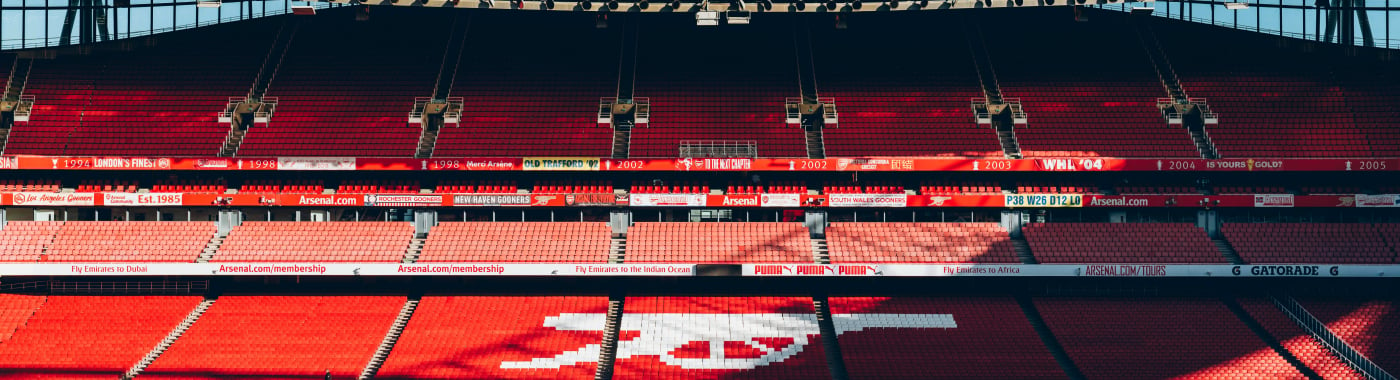
Arsenal's sucess is the result of decades of commitment, writes Masibu Manima.

The next time someone asks me how to measure cultural resonance I will be referencing the celebrations from London to Nairobi following Arsenal winning the Premier League.
From hundreds of thousands gathering outside the Emirates Stadium on a Tuesday night, to the 1.5million people at the parade, these are all strong signals of what Arsenal means to so many communities.
This did not happen because of a single campaign. It happened because of decades of consistent, culturally intelligent decisions made with genuine conviction.
Most brands treat cultural marketing as a campaign bolt-on.
Masibu Manima, Founding Partner, VSSL37
Most brands treat cultural marketing as a campaign bolt-on. They show up around big cultural moments then quietly disappear until the next brief. It is a pattern that communities notice. And it is costing brands one of the most valuable assets in modern marketing: sustained belonging.
This is not a diversity conversation. It is a commercial one.
Arsène Wenger arrived at Arsenal in 1996 with a different way of seeing football. Shaped by his years in France and Japan, he brought in a healthier diet, financial prudence and a youth system which backed players from countries English football had overlooked.
The results are well documented. Wenger constructed one of the most dominant teams in the history of the sport. During the 2003–2004 season, Arsenal went the entire 38-game league campaign undefeated. Amongst that team was a generation of French and African players who became cultural icons, transforming Arsenal into one of the most loved clubs across Africa and its diaspora.
Wenger's legacy is part of a long history of Arsenal having chosen the longer, more inclusive road.
Arsenal were among the earliest investors in women's football in England, building Arsenal Women into a dominant force long before the WSL became commercially attractive. That commitment paid back in fanbase growth, sponsorship value and a cultural identity that feels earned rather than manufactured.
In the summer of 2025, Eberechi Eze, a boyhood Arsenal fan who was released by the club at 13, was on the verge of signing for local rivals Tottenham Hotspur. He decided to make one final call to Mikel Arteta and Arsenal were interested.
He later became the first player to score a hat trick at the North London Derby. No transfer fee manufactures that kind of pull to a club. It is the return on decades of cultural investment, and it is still paying off.
Now ask yourself: how many CMOs are building that kind of equity?
The average brand's approach to cultural marketing looks nothing like this. It looks like a reactive calendar. A brief that arrives six weeks before a cultural moment.
The communities on the receiving end are not fooled. They can feel the difference between a brand that has shown up consistently and one that has arrived with a tote bag and a hashtag. And they are making purchasing decisions accordingly.
One of the reasons cultural investment struggles under CFO scrutiny is that the briefs were never grounded in commercial and strategic alignment. Cultural partners are brought in late, handed a moment to activate, then asked to prove ROI on work they had no hand in shaping. It is an impossible standard, and brands have created it themselves.
Long term investment in culture-forward partners is not an act of faith.
Masibu Manima, Founding Partner, VSSL37
Wenger did not just reshape what happened on the pitch. He changed how Arsenal thought about talent, global markets and what the club stood for commercially.
That is the model CMOs need to bring into their organisations.
Long term investment in culture-forward partners is not an act of faith. The right partners should be able to measure both the short and long term value of their work, tracking how cultural equity translates commercially over time. But to do that, they need to be inside the strategy from the start. Present when annual plans are set. Aligned to the commercial vision of the business, not briefed on the edge of it.
It gives culture-forward partners the context to speak fluently to both the CMO and the CFO, translating cultural investment into language that holds up in a boardroom as convincingly as it lands in culture. That is the conversation most organisations are missing. The insight exists, those who have them aren’t in the conversations early enough.
The brands that will win the next decade are not the ones that show up loudest at cultural moments. They are the ones that have been quietly building equity in communities long before those moments arrive.
Wenger did not set out to build Arsenal's African and diaspora fanbase. He backed the best players he could find, guided by a genuine understanding of the world beyond the traditional market. The fanbase, the legacy, the pull that made a player choose belonging over convenience decades later, all of it followed because the conviction was structural, not seasonal.
That is the standard CMOs should be holding themselves to.
Masibu Manima is a founding partner of VSSL37 (pronounced veh·sl thirty seven) a modular creative agency merging data with creative work at the intersection of sport and culture. Manima is responsible for the agency's measurement framework, which enables partners to better align and measure cultural resonance with commercial upside. Alongside his work at VSSL37 Manima is Managing Director of Translate Culture, which he founded in 2019 to bridge the gap between performance marketing and cultural relevance. Since then, the agency has generated over £100M in revenue for consumer brands across the US and UK through data and culturally informed paid advertising.
Looks like you need to create a Creativebrief account to perform this action.
Create account Sign inLooks like you need to create a Creativebrief account to perform this action.
Create account Sign in