Why I am bored of entertainment
In a media-first world, entertainment should be table stakes, writes Will Poskett.

Will Poskett
Strategist and Founder DefiantLet’s be honest. If there’s one thing our industry loves more than award shows, rosé in Cannes, or the occasional scandal, it’s the almighty buzzword. Over the last twenty years, I’ve seen them all. From “transmedia” and “omnichannel” to QR codes and “always on”. And as we look ahead to 2026 and beyond, one word seems to be racing to the top of the hype charts: entertainment.
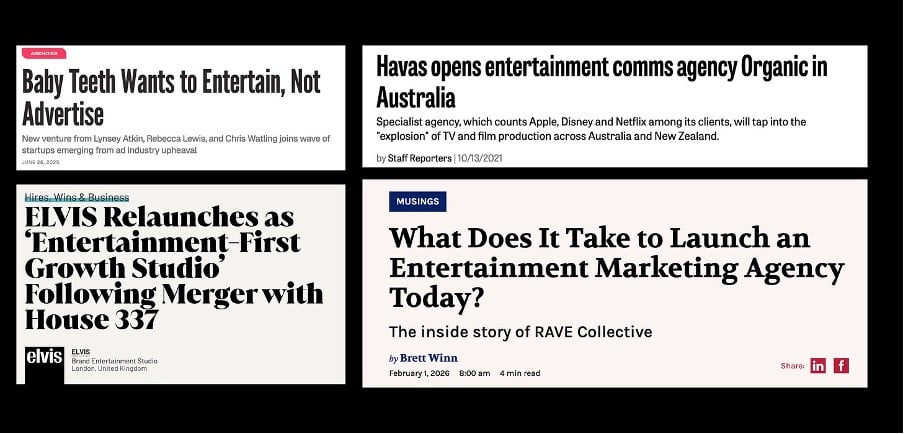
Every week, it feels like another startup agency proclaims that they want to “entertain, not advertise”. Or another holding group owned network jumps on the entertainment bandwagon in a desperate attempt to stay relevant.
Yet despite all this sudden hype, it mostly leaves me rolling my eyes.
Why? Because the idea of entertainment is nothing new. In fact, it is table stakes. The best advertising is, and always has been, entertaining.
As Paul Feldwick writes in Why Does the Pedlar Sing?: “The most effective advertising has always been rooted in entertainment and showmanship, rather than just rational, verbal arguments.”
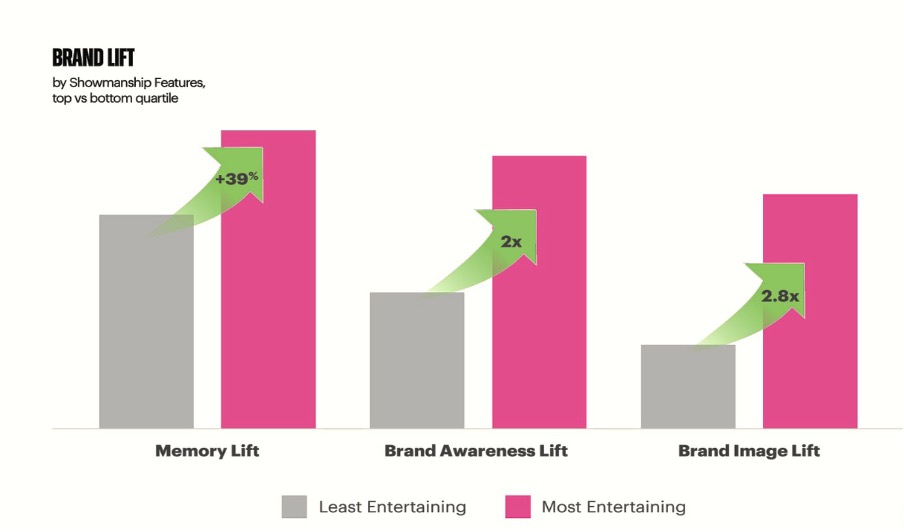
More recently, the team at System1 have proven the same thing at scale. By analysing the greatest ads of all time, they’ve shown that the most entertaining work consistently outperforms, driving stronger brand recall, higher awareness, and greater commercial impact.
Entertainment might get you noticed for a moment. It does not guarantee that people will care, share, talk, or advocate.
Will Poskett, Strategist and Founder at Defiant
And here’s the most inconvenient truth of all. Much of the great work from our past, from Cadbury’s Gorilla to Guinness Surfer, is still far more entertaining than the vast majority of AI-generated, performance marketing slop produced today.
So if entertainment is so important, what’s my issue?
My concern is that it doesn’t go far enough.
It doesn’t go far enough to address the massive technological and media shifts reshaping our world. We now live in an environment where attention spans have collapsed by 73% in the past decade alone. Where audiences are overwhelmed with content. Where distribution is fragmented. Where algorithms decide what gets seen. And where buying reach no longer guarantees impact.
In this world, being “entertaining” is necessary. But it is no longer sufficient.
Entertainment might get you noticed for a moment. It does not guarantee that people will care, share, talk, or advocate. It does not guarantee earned attention. And it certainly does not guarantee growth.
It is for this reason that we at Defiant decided to look beyond the industry’s default answer of “just make it entertaining” and search for something richer.
We spent months speaking to marketing leaders at Liquid Death, e.l.f. Beauty, Mid-Day Squares, Currys and LEGO. Leaders who are consistently winning what we call the war on attention. Not by shouting louder. Not by buying more media. But by building fame, conversation, and cultural presence that travels without paid support.
What we discovered is that in today’s landscape, entertainment is only the entry point.
The real advantage lies in what comes next.
A new breed of brands
In our report, we came to name this new breed of companies ‘Blockbuster Brands’ ones who are winning outsized share of voice, attention and market share. But what sits behind that advantage is not bigger budgets or louder advertising. It is their ability to consistently generate earned attention. Attention that people choose, share and talk about. So what did we find about these brands? And how do they manage to thrive in this modern world?
First, they not only acknowledge but take advantage of the rapidly changing media landscape. They have clocked onto something I first pointed to back in 2023: total viewership across TikTok and YouTube has already eclipsed TV for watch time in both the UK and the US. Collective viewing has all but collapsed. Even buzzy hits like White Lotus, Traitors, or the much hyped Gavin & Stacey reunion now pull in only a fraction of the audiences once considered standard. In the 90s, Friends regularly drew numbers that dwarf even today’s biggest finales.
What this means for brands is simple. There is no longer a single place to ‘buy attention’ at scale. There is no guaranteed mass audience waiting to be reached. Attention now has to be earned in fragments, across platforms, moments and communities. Blockbuster Brands understand that in this environment, fame is built through shareable ideas, cultural relevance and conversation, not just media spend.
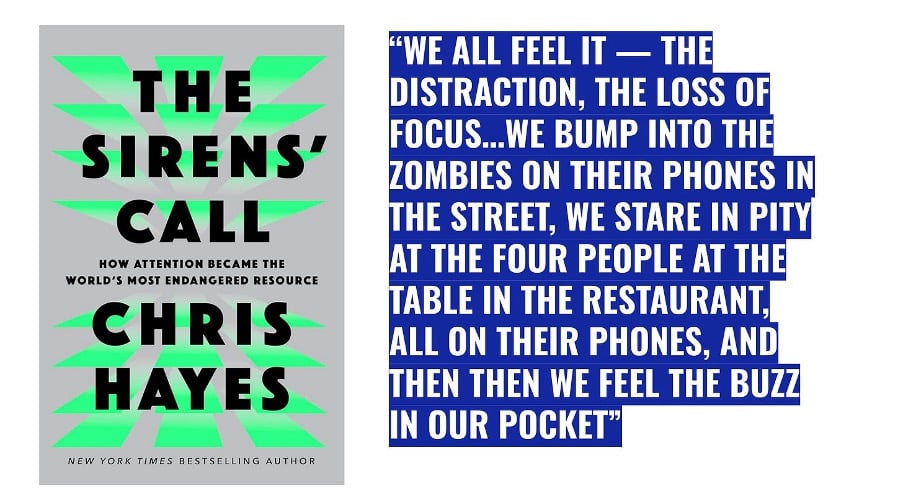
Second, they know that fame remains the biggest driver of brand growth but that it has never been harder to achieve. We live in a world where distraction is the default and attention is the scarcest currency of all. In the past decade alone, attention spans have collapsed by 73%, a number that shocks no one who feels the twitch to check their phone every thirty seconds. In this context, paid reach delivers diminishing returns. You can buy impressions, but you cannot buy meaning. You cannot buy advocacy. You cannot buy cultural relevance. If the world’s most acclaimed TV shows struggle to command collective attention, what chance do brands have without something genuinely worth talking about? Today, fame is not rented. It is earned.
Third, they understand that both of these shifts are driven by one seismic change: the complete democratisation of media. In just a decade, we have moved from a world ruled by a handful of broadcast giants to one where anyone with a phone, Wi Fi and free editing software can build an audience. Most of that content now lives on YouTube and TikTok, platforms that dwarf the old gatekeepers. YouTube is effectively the biggest TV channel on earth and is on track to out earn Disney.
This has rewired how influence works. Power has shifted from institutions to individuals, from publishers to creators, from advertisers to communities. Earned media is no longer a by product of campaigns. It is the primary growth engine.By understanding these shifts, Blockbuster Brands operate in a fundamentally different way.
What they do differently
On the surface brands like Mid-Day Squares, Liquid Death, e.l.f. Beauty, and LEGO could not be more different. Yet look closer, and a clear common thread emerges.
Today, every person is a publisher. Every creator is a competitor. The barriers to entry have collapsed. And this is the truth: Blockbuster Brands grasp better than anyone. They are not just in the business of energy drinks, snack bars, or toys. They are in the business of media.
And that shift changes everything.
These brands do not simply buy media. They become media. They do not just rent attention. They create it. To be clear, they still invest in paid advertising. But their outsized impact comes from behaving like media companies in their own right, not just media buyers.
This is the bigger truth most of the industry is still missing.
These brands are not merely focused on entertainment. Entertainment is table stakes. As history shows, the best advertising has always been entertaining. What sets Blockbuster Brands apart is what comes next.
They are building media ecosystems. They are thinking like publishers. They are acting like broadcasters, studios, and platforms.
They create shows, not just campaigns. They think in terms of audiences, not consumers. They design work that people actively choose to follow, watch, and share. They build meme shaped ideas that stop the scroll and trigger conversation. They understand algorithms and design for them. And they scale reach not just through spend, but through partnerships, creators, and cultural moments.
This is how earned attention compounds.
It is why, after three decades working with some of the world’s most awarded agencies and most valuable brands, we chose to build something different.
A model that dares to be Defiant.
We defy the operating system. In a world of fragmented media, where people skip ads, block brands, and tune out the ordinary, a different kind of answer is required. We do not just solve communications problems. We solve business problems. And we do not stop at traditional advertising. We work across brand IP, partnerships, platforms, and content properties. Ideas shaped to travel. Systems designed to win the war on attention.
We also defy traditional talent models.
While many agencies rely on homogenous creative departments, we have built something genuinely different. We combine award winning strategists, creatives, and designers with a modern, diverse roster of creators, BAFTA winning comedy writers, and cultural specialists. Brought upstream. Involved early. Embedded where they matter most.
Because in a media-first world, who makes the work matters as much as what gets made.
Blockbuster Brands
Take a look at Defiant’s deeper dive into the brands Winning the War on Attention here.

About
Will Poskett is the founder of Defiant, a strategy-led creative agency. His agency works with the likes of Beavertown Brewery, Clipper Tea, Kallo, and Bella Italia.