Why personalisation in brand experiences is the next frontier
Marketing leaders from Diageo and Tommy Hilfiger discussed how AI will supercharge personalisation at scale and how to win without creeping consumers out.

Nicola Kemp
Editorial Director CreativebriefIf personalisation is the next frontier in brand experiences, then marketing leaders must walk a tightrope between tailoring products to consumers' individual needs and coming across as creepy. Yet while most consumers have felt stalked across the web by a pair of shoes they didn’t commit to buying, progressive brands are using AI to supercharge personalisation at scale with both creativity and consideration.
At SXSW London, Patricia Borges, Global Managing Director of Gins and Rums at Diageo, revealed the journey that Tanqueray has been on to take personalisation to the next level.
“We are creating unexpected, remarkable consumer experiences,” she explained. Taking personalisation to the next level, with agency VML London, the ‘Cocktail of Dreams’ created bespoke individual cocktails based on consumers' unconscious preferences and desires.
Three ‘dreamers’ went through a series of sleep and psychological exercises with the team at Myndplay, who took data from these processes to uncover their desires. The data was then translated into unique cocktails by Tanqueray’s tastemakers.
“We asked if we could take personalisation to the next level and understand the subconscious mind,” Borges explained, adding: “Dreams are the small hidden door to the soul.” She urged marketing leaders to be ‘bold in the use of data to be different to consumers.’
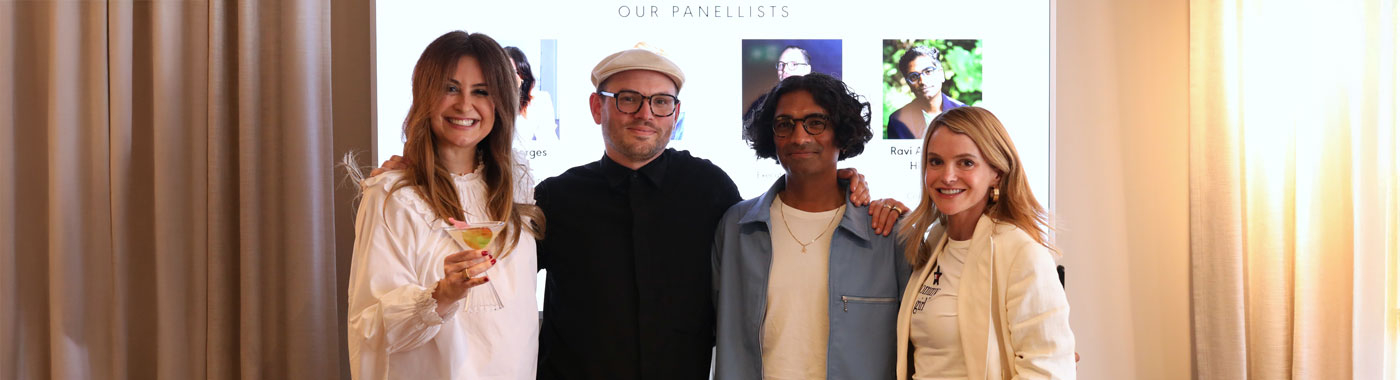
Borges was hosting a panel to delve into the opportunity that personalisation affords for marketing innovation. The panel of Emily Teele, Senior Vice President EMEA Marketing at Tommy Hilfiger, Ravi Amaratunga Hitchcock, Co-Founder at Sour Soup and Pascal Rotteveel, Executive Creative Director at Dentsu Lab EMEA, saw each bring a different lens to the wide-ranging discussion.
Tommy Hilfiger’s Teele urged the audience to recognise how broad personalisation can be. For example, when Sephora uses technology to enable consumers to match their foundation shade to their skin, essentially, personalisation is a fashion tool. This consumer-first approach ensures that brands create personalisation with people’s experience and how they interact with the product, front of mind.
“It is all about keeping pace, pushing boundaries and pushing consumer expectations forward,” she explained.
The interesting thing about personalisation is the thin line between being useful and being creepy.
Amaratunga Hitchcock, Co-Founder at Sour Soup
The fine line between personalisation and creeping on consumers
Sour Soup’s Hitchcock was quick to name the elephant in the room: what some brands would advocate as consumer-first personalisation, some people might find a bit creepy. In the age of Mountainhead, where there is a mass-market consumer facing narrative centred on tech titans sacrificing people for profit, brands need to tread carefully.
“For me, the interesting thing about personalisation is the thin line between being useful and being creepy,” he explained. Noting a shift to an era where brands not only have to build trust but also be relentless in proving their worth to consumers.
Teele shared the challenges of Uber sharing the Top 5 places you visit with users. On the one hand, it could be boring, on the other, it could make consumers feel under surveillance. Not every brand has the light touch of a Spotify playlist. An illicit playlist of cheesy music is far less damaging than an illicit affair.
Dentsu Lab’s Rotteveel was quick to highlight the fact that the playing field for personalisation is not the same for every brand. “You have to balance that the brand does not feel like Big Brother, with Uber it could seem creepy. The context in which personal information is used is important.”
Personalisation with value
Borges underlined the importance of really understanding consumer behaviour in driving forward personalisation that adds value
Teele shared that within the fashion sector, fit finders are really valuable to consumers. “Discovery, delight and value [are key to successful personalisation]. When you hit all three, you win,” she added.
Yet what is the balance between reflecting consumers' real wants and needs, with the growth that can come with stretching people beyond their comfort zones? Hitchcock was passionate in his belief, through an editorial lens, that brands should embrace the opportunity to surprise and delight. “There is an opportunity to surprise people with a 10% risk level,” he shared. Noting that brands such as the New York Times take such an approach.
It is an interesting conversation at a time of increased media polarisation. While a personalised, tailored algorithm might create a perfect bubble of agreement, a more curated editorial lens might place the kind of unexpected, mind-expanding features that build long-term, challenging and creatively rich relationships with readers.
How personalisation builds fandoms
“At Diageo, we use personalisation to drive brand experience,” shared Borges, sparking agreement with Teele, who shared how Nike used connected data to reward brand loyalists. “These things are good in theory, but hard in practice with GDPR,” she shared.
Sharing the core question for marketing leaders looking to supercharge personalisation, Teele explained: “How do you create something even better than the customer could imagine. That is the sweet spot.”
Yet, equally, Teele noted that the shift towards personalisation is not just about technology; instead, she points to the example of hotel concierge services as a stand-out example of a brand living and breathing the hotel experience.
At Diageo we use personalisation to drive brand experience
Patricia Borges, Global Managing Director of Gins and Rums at Diageo
Moving beyond brand categories
“We are a gin brand, but we are also a style brand. We go beyond the category,” Borges explains. She views this ‘blurring of the lines’ between product categories as a creative jumping off point, which means that the brand’s platforms include Design Week in Milan. It also means it does not stick to the confines of category norms.
“It is in the fringes where we can really challenge,” added Rotteveel, who notes that when a brand sees itself as a lifestyle brand rather than a beverage brand, it opens up the opportunity to see the world through a different lens.
Yet the panel agreed it can be challenging to access the sophisticated measurement necessary to prove the return on investment of different approaches.
Teele noted that many brands are pressed to prove ROI at scale. A focus which in turn can limit the appetite for both personalisation and experimentation. To tackle this challenge, Teele advocates for an ‘experimentation budget’, moving to a place where 70% of your marketing spend is measurable and 30% is experimental.
When personalised experiences are the differentiator for many brands, this experimentation can have a disproportionate impact on loyalty and brand awareness. While the AI innovation on the horizon will be a game changer for both creative personalisation at scale and its measurability.
Teele shared the example of a fashion brand using AI to show a customer what clothes would look like at every stage of a pregnancy, as an example of a creatively expansive application.
While personalisation demands different approaches from different brands, a blend of hyper-personalisation with the ability to surprise and subvert consumer expectations remains universal. While AI will bring unprecedented scale to creative solutions, ideas rooted in a deep understanding of your consumer, even when that consumer is asleep, remain the key to success.