
Hot Pick
Havas UK
Department for Education
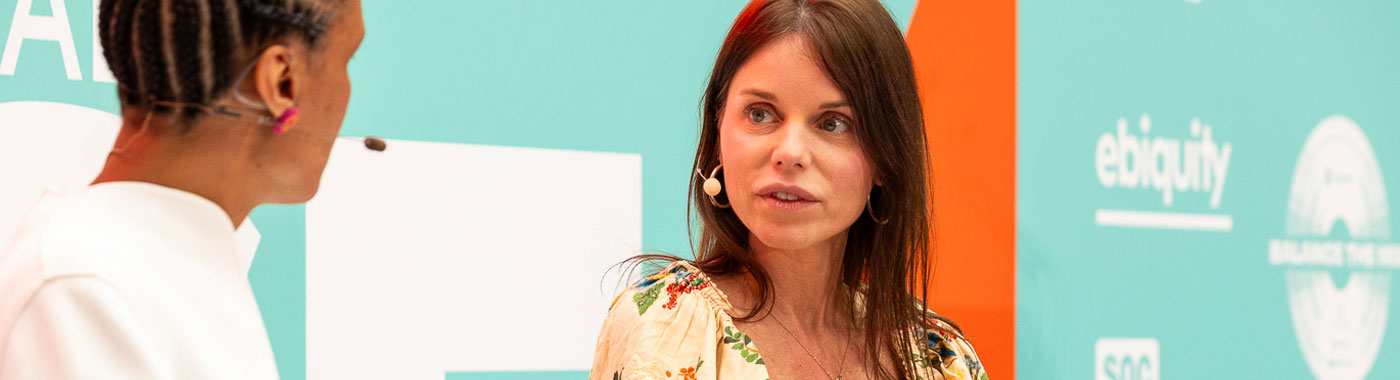
Tati Lindenberg, VP of marketing at Unilever for Dirt is Good, believes that inclusive marketing makes brands more credible and recognisable.

For over twenty years, Persil has spotlighted the fact that dirt and stains are something to be celebrated.
This year, its ‘Dirt is Good’ platform teamed up with Arsenal Football Club to tackle the stigma that surrounds period stains.
“We have proved over the last decade that inclusive marketing can make brands more credible and more recognisable.”
At Creative Equal’s RISE conference, Tati Lindenberg, VP of marketing at Unilever for Dirt is Good, lifted the lid on the brand’s groundbreaking campaign tackling period stains with Arsenal.
In a thought-provoking conversation with Debbie Tembo, Partner at Creative Equals, Lindenberg, explained the year-long journey the brand embarked on to create the genre-defying work.
Lindenberg shared that the brand’s research revealed that 6 out of 10 girls fear playing sport because of period leaks.
As a mother of grassroots girls footballers, Tembo credited Lindberg for successfully changing the narrative for women and girls. This effort was also recognised by consumers who took to social media to thank the brand for investing in making a positive impact on female footballers.
Lindenberg explained that sports as a stage for change has been a key platform for the brand.
As well as understanding the sporting community, the campaign is rooted in category insights. 80% of girls and women throw away sports clothing because of period stains. 68% didn’t know how to remove them.
When the team decided to make sport the vehicle for the campaign, they gravitated to Arsenal’s Women’s Team because of the shared values.
The Unilever team spent a great deal of time with the Arsenal to really understand the community. So much so that, as Lindenberg revealed, the strapline ‘Every stain is part of the game’ came from one of the players.
Tembo noted that many brands fail to make progress on progressive marketing because they get stuck in the territory of ‘do we have permission to play in the space?’
For Lindenberg, the campaign was rooted in two guiding principles. Firstly, the team decided they would make a campaign focused on women’s football that would not compare them to men. “Women are different and that’s ok,” she shared.
The second guiding principle was that many campaigns and products are helping some women play while on their period, from period pants to teams shifting from wearing white shorts to blue to better hide their stains. The fundamental issue is one of shame.
Lindenberg explains: “The deeper issue is that it falls on the women to hide, to take the burden and we decided this campaign should be about freedom.”
“Freedom is the core of Dirt is Good. Freedom is a choice. If you want to hide it, hide it. If you don’t want to play, don’t play. But if you want to play, play,” she added.
Changing the narrative surrounding period stains is complex. Lindenberg shared that players said they were afraid that if they got a period leak, the next day’s press would not focus on the goal they had scored, but the fact they had a leak.
“We knew we could only do this and create systemic change if we did it with women and by women,” said Lindenberg. Yet she also noted that every stage of the creative process and campaign was created alongside men.
“We worked with Ian Wright because we wanted a male audience to speak about the campaign. We created a number of different activities to educate to include men,” she added.
Tembo noted that the majority of grassroots football coaches are primarily men, making their inclusion vital to impact.
Crediting the brand for successfully shifting the narrative, she added: “I love how the brand has built inclusion throughout the entire process.”
As one of the world’s most enduring and successful brand platforms, ‘Dirt is Good’s partnership with Arsenal underlines how inclusion can help brands write brave new chapters.
Photo Credit: Bronac McNeill
Looks like you need to create a Creativebrief account to perform this action.
Create account Sign inLooks like you need to create a Creativebrief account to perform this action.
Create account Sign in