Hot Pick
Havas UK
Department for Education
The Edge Brands are Missing research underlines the enduring power of doing good by society in polarising times.

A fleeting glance at the news underlines that Britain is an increasingly divided nation. Yet while the recent local election placed division in the spotlight, looking beyond alarmist headlines is crucial for marketers looking to drive long-term growth.
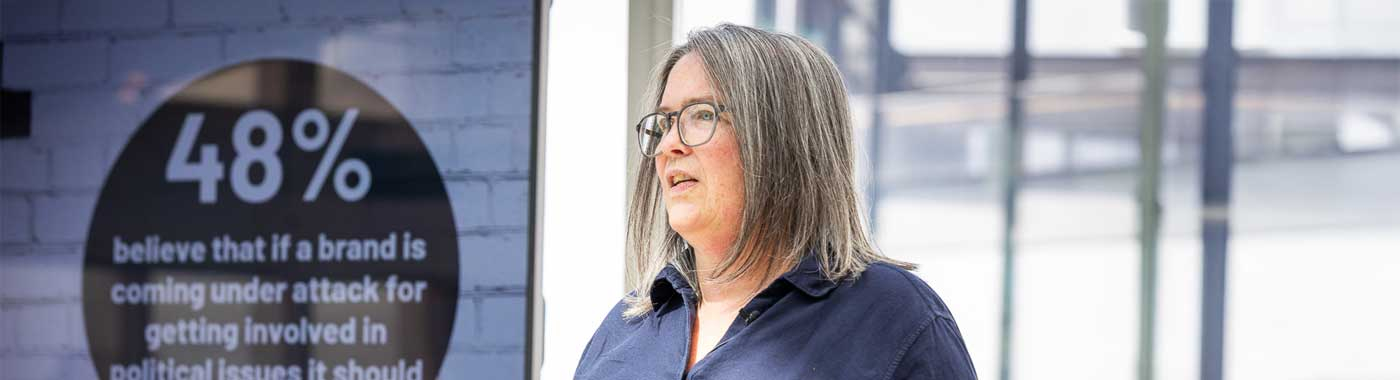
At Creative Equals' RISE conference, Eleanor Thornton-Firkin, Head of Creative Excellence, UK at Ipsos, lifted the lid on Ipsos’ latest research, ‘The Edge Brands are Missing.’
She explained: “People want you to do the right thing for them, their community and connecting what people care about with what your brand cares about is good for business.” Thornton-Firkin shared that in the current climate, progressive brands should ask: ‘If politics divides us, what keeps us together?’
Ipsos’ survey of 4,200 people found that 78% of people are committed to a cause. The average number of causes consumers are committed to is six. Britain remains a nation of people who care.
Whether that cause is striving to reduce carbon, or preserving British values and traditions, people care about society. 83% of people think that brands can support good causes and still make money.
The research underlined the resilience of purpose-driven marketing, but the roadmap ahead for brands can feel contradictory.
Connecting what people care about with what your brand cares about is good for business.
Eleanor Thornton-Firkin, Head of Creative Excellence, UK at Ipsos
52% of people believe brands should steer clear of political or social issues. However, 48% say that if a brand is coming under attack for being involved in a social issue, it should not back down. While the same percentage of people (48%) actively search out brands that have a positive impact on society.
Brand behaviour still drives purchase decisions. 29% of people have boycotted a brand that has behaved badly.
Ipsos explored the causes that people want different categories of brands to get involved in. Thornton-Firkin pointed to ‘lots of commonalities’ across sectors.
People care about acting to reduce plastic wastage, maximising recycling, ensuring workers are being paid a fair wage and ensuring ethical work practices.
Ipsos identified four different brand archetypes that show how brands can have a positive impact on society and grow.
‘Action Brands’ were identified as the most prominent type of brands that people feel have a positive impact on society. These include ethical toilet paper brand Who Gives A Crap and fairtrade chocolate brand Tony’s Chocoloney.
‘Heartlands brands’ are those that build strong relationships with the communities around them, such as Tesco, which supports eliminating food poverty.
‘Marketing-led brands’ such as Dove and Nike use their marketing platform to make a positive impact on society.
‘The Unifiers’ bring communities together, such as Cadbury and Greggs. Thorton-Firkin explains this type of brand “can and do preserve British values, but they can also champion fair trade. These brands can be popular and positive for everyone.”
At a time when purpose and profit are in danger of being treated as mutually exclusive pursuits, Ipsos' research is a powerful reminder that the two are intrinsically linked.
Thorton-Firkin added: “Everyone cares about something and there is an opportunity to build on that and really grow your brand.”
Photo credit: Bronac McNeill Photography
Looks like you need to create a Creativebrief account to perform this action.
Create account Sign inLooks like you need to create a Creativebrief account to perform this action.
Create account Sign in