Voices
Purposeful partnerships
At Creative Equals’ RISE, brand leaders from Guinness, Sure and Tony’s Chocolonely explored how to build growth through partnerships.

Industry leaders discuss talent, inclusion and representation to drive both progression and growth.

At a time when budgets are squeezed and the endless news cycle of doom and gloom can make looking away feel like an act of self-care, it is important to remember that collectively putting our heads in the sand is not an easy out.
At the IPA Talent & Diversity Conference, industry leaders gathered to ensure that diversity and inclusion is not slipping down the agenda. Talking all things talent, inclusion and representation to push the industry to do better, even when times are tough, the conference underlined the importance of inclusivity as a driver of growth as well as essential to societal progression.
Here are five lessons from the day.
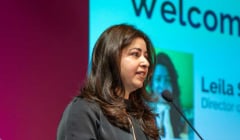
To begin the day, Leila Siddiqi, Director of D&I IPA and Xavier Rees, Group CEO at AMV BBDO and IPA Chair, Talent Leadership Group, contextualised the importance of speaking about talent and diversity at a time of global division.
Pointing to the fact that ‘this is a less welcome conversation than it was five years ago’, Rees urged the industry to: “Reject insularity and speak up for inclusion.”
He shared insights from the latest Edelman Trust Barometer, which reports a ‘global descent into insularity’, with 70% of respondents saying they are unwilling to trust someone who has different values, information, life experiences or backgrounds.
While the report’s findings are worrying, the distrust is paired with a rise in trust in communities and people we know personally. A finding which makes it even more important to speak to one another and build back trust. The IPA’s iList aims to bring individual trailblazers driving change and trust to the fore.
Reject insularity and speak up for inclusion.
Xavier Rees, Group CEO at AMV BBDO and IPA Chair, Talent Leadership Group
“We must come together to bring positive change,” said Siddiqi. She shared that while there is a lot of progress to be made, the latest data from the All In Census shows progress. 40% of C-suite leaders are women and there is more diverse talent in entry-level roles. Now is the time to accelerate this pace.
Pushing for progress is not just good for building a more progressive society, it is also essential to business.
“Inclusive marketing is the single biggest driver of growth,” said Siddiqi, pointing to Unstereotype Alliance data, which found that brands with more inclusive advertising practices sell more - 3.46% higher shorter-term sales and 16.26% higher longer-term sales.
Speaking with Nicola Kemp, Editorial Director at Creativebrief, Imogen Fox, Global Chief Advertising Officer at The Guardian, brought this idea to life in a session outlining how sticking to its values has helped The Guardian to thrive.
The Guardian doesn’t run advertising from fossil fuels or gambling brands, which can be difficult around events like the World Cup. In the short term, decisions like this cost the brand, but in the long term, it pays off. The Guardian’s supporter strategy has over 1 million digital supporters from more than 180 countries around the world, which helps the organisation to run.
“Values are important to the brand and actually about growth,” Fox says.
Inclusive advertising doesn’t just mean representation on screen; it also matters who is behind the camera and how we are reaching audiences.
Tobi Oredein, CEO and Founder at Black Ballad and Bonita Samuels, Inclusive Planning and Culture Lead at Essence Mediacom, spoke with Melda Simon, UK Lead at the Unstereotype Alliance at UN Women, about the importance of community media.
Inclusive marketing is the single biggest driver of growth.
Leila Siddiqi, Director of D&I IPA
Quoting business leader, Emma Grede, Oredein shared that a brand's biggest challenge today is not ‘for audiences to understand the brand, it is actually for brands to understand the audience.’
She pointed to the importance of community media like Black Ballad in helping solve this challenge through its deep understanding of its audience of Black women. “Brands borrow that knowledge reaching the audience where they are,” explained Oredein.
“Community media helps brands to show up in an authentic way,” added Samuels. She explained that investing in community media is a strategic choice that ensures cultural credibility in the planning stages. “People buy from a brand when they feel understood,” Samuels said, adding: “Show up in their worlds.”
Oredein shared the example of Black Ballad’s work with This Girl Can. By knowing that the Black Ballad audience saw health and wellbeing as its second biggest driver, and that 63% are adopting a new hobby, the brand decided to create a joyful ballet class for Black women. An unexpected creative decision which was unlocked by listening to the suggestions from Black Ballad. The collaboration was a huge success.
Despite being hesitant to pick a more niche sport like ballet, Black Ballad knew that its readers were interested in gaining access to new spaces not traditionally for them, resulting in a successful campaign with 507,000 impressions. “You should be going where they are, not expect them to come to you,” said Oredein.
Sport England’s commitment to engaging with community has been key to the success of This Girl Can. Kate Peers, Head of Campaigns and Strategic Lead at Sport England, explained that the campaign started 11 years ago, following research into the gender activity gap, which found that the least active in society face the most barriers.
“Women didn't feel welcome or represented,” explained Peers, adding that this sparked the brand’s ethos that: “belonging starts with inclusion.”
Following several sector-wide conversations to understand the changes that could be made to break down barriers like a lack of income, no childcare space and a lack of women’s classes, the resulting campaign has successfully brought women back to sport.
Access is one of the biggest barriers to creating a more inclusive work place and work as a result. The IPA’s iList aims to bring individual trailblazers driving change to the fore, to help them continue in their work to make change.
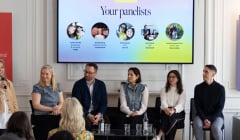
Julian Douglas, Group CEO at VCCP, Claire Hollands, CEO at Saatchi & Saatchi, Sally Keane, Director of Sales UK at Spotify and Harjot Singh, Global Chief Strategy Officer at McCann, sat down to discuss the iList and share in the joy of seeing people make change.
Come on the journey with us.
Amy Jenkins, Sales Leader at Channel 4
Many of the people who made the list do not have diversity and inclusion in their day job, the panel remarked on how inspiring it is to see people pushing to move the needle forward, making progress out of care.
While the iList spotlights and celebrates the people doing the work, Singh urged the industry to do all we can to improve access. “Actively think of inclusivity as a design principle,” Singh says. Adding: “Support, actively remove friction and think about what you are doing to redesign the system.”
Access is also essential in helping new talent to enter the industry. “Look at the last five people you promoted in your business, the entry routes they came from, and if they all came from the same place, think about new pathways,” said Douglas.
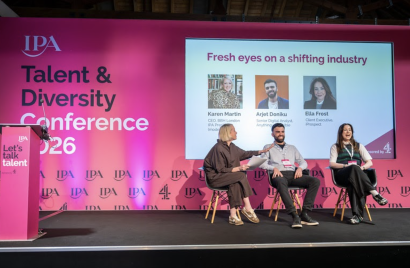
Karen Martin, CEO at BBH London and IPA President, spoke with Gen Z talent, with Ella Frost, Client Executive at iProspect and Arjet Doniku, Senior Digital Analyst at Anything is Possible, sharing with the audience how to better connect with young talent.
Doniku entered the industry through an apprenticeship scheme, while Frost was introduced to Dentsu in college at a taster day. Opening up new pathways will help the duo gain new perspectives, but the pair urged that more regional and clearer next steps are needed.
An inspiring keynote from Sir Tristram Hunt, Museum Director at the Victoria and Albert Museum, explored the ways the museum is connecting young people to material culture. Collaboration with luxury fashion is drawing in audiences while the V&A East is ‘energising creativity’ through cultural exhibitions like ‘Music is Black’ to tell new stories. The museum is a case study in changing with the times while staying true to its values.
Speakers from Channel 4 shared their learnings from the long-standing Paralympic campaigns. Adapting to a movement that is forever evolving and changing means ‘learning, adapting and listening to feedback.’
Amy Jenkins, Sales Leader at Channel 4, shared the broadcaster's ‘continued commitment to accessibility’. She candidly shared that during the Milano Cortina Paralympic Games, Channel 4 missed its 100% target for accessible ads, landing instead at 65%. The learnings from the games show that accessibility needs to be embedded into the creative process. To help improve the stats, Channel 4 has mandated closed captions on ads since March. “Come on the journey with us,” urged Jenkins.
While there is a lot to celebrate when it comes to how inclusive marketing is driving cultural impact and is good for business, Lynne Deason, Head of Creative Excellence at Kantar, urged the industry to keep the pace.
Despite the stats around inclusive advertising driving business, she pointed to the fact that adverts featuring women in non-traditional roles are declining and that body diversity in advertising has halved. “We must not lose momentum,” shared Deason, adding: “Every brand can tell inclusive stories in representation.”
Looks like you need to create a Creativebrief account to perform this action.
Create account Sign inLooks like you need to create a Creativebrief account to perform this action.
Create account Sign in