Marketing lessons from Autistic Barbie
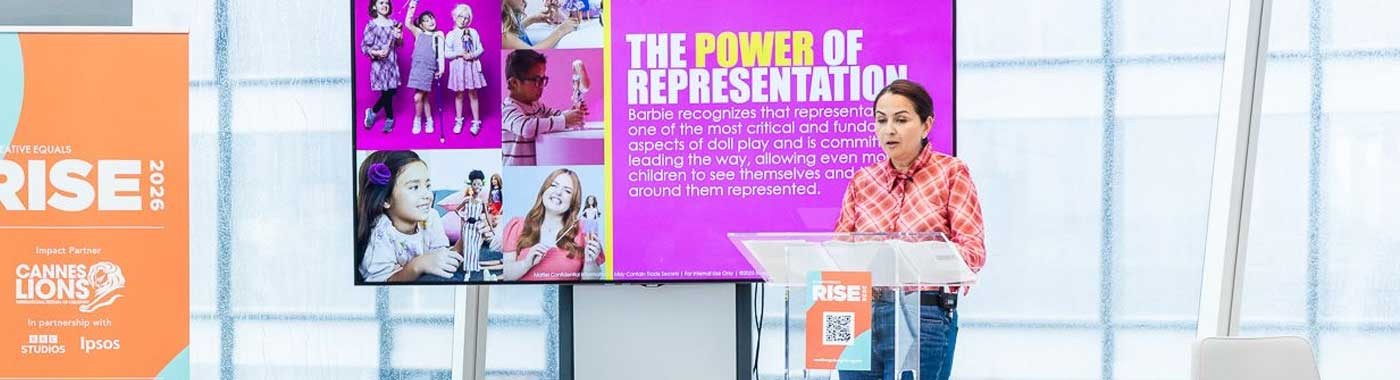
Speaking at the Creative Equals RISE conference, Amarilis Whitty, PR Director at Mattel, lifted the lid on Barbie’s ongoing drive to be the most diverse doll line in history.

Nicola Kemp
Editorial Director CreativebriefFor decades, Barbie had one type of brain. Until 2023, when Mattel launched Autistic Barbie, a doll that was two years in the making.
Amarilis Whitty, PR Director at Mattel, lifted the lid on the journey to the doll’s launch and the ethos behind it at Creative Equals’ RISE conference, held at Cannes Lions London HQ.
Whitty took the audience on a journey which touched on the brand’s legacy. From its bubble pink signature brand colour, to the enduring impact of its founder, Ruth Handler, who understood the impact of role play long before inclusion was even a conversation.
As Handler explained: “My whole philosophy was through the doll, a little girl could be anything she wanted to be.”
Barbie was an astronaut before men landed on the moon.
Amarilis Whitty, PR Director at Mattel
This ethos ensured that Barbie defied stereotypes. As Whitty explained: “Barbie was an astronaut before men landed on the moon.”
Pointing to Barbie’s global scale, reach and impact across the globe, Whitty shared that the Barbie brand never sits still.
“Barbie is a brand that has had to reinvent itself many times,” she shared, adding: “At the core of our brand is our doll. As a team, we recognise that representation is one of the most critical and fundamental aspects of doll play and we are committed to leading the way in allowing even more children to see themselves and the world around them represented.”
Building the world’s most diverse doll line
This commitment to representation is reflected in the brand’s commitment to being the world’s most diverse doll line. It is a commitment that means the brand is constantly a work in progress and challenging itself to do more.
As Whitty shared, listening to audiences is crucial to this diversity. “We constantly ask our audiences ‘What would you like to see next?'” she shared.
One in a hundred children globally is autistic. Whitty pointed to the fact that Mattel recognised that it was not for the brand to speak about autism, so it partnered with ambassadors, writers and content creators who could speak about their own experiences.
In addition, the brand worked in partnership with ASAN, a non-profit disability rights organisation run by and for autistic people that advocates for the rights of the autistic community.
Inclusion drives earned media
The doll was designed to fully represent and celebrate the autistic community. At the same time, the brand’s highly successful earned media campaign placed the lived experience of Autistic people in the spotlight.
“Statistics show young girls are undiagnosed or misdiagnosed,” shared Whitty, underlining why partnering with ambassadors who could raise awareness by talking about their own experiences was so important.
The press-led campaign was fully organic, with coverage spanning platforms including CNN, BBC News and The Sun. The campaign generated 800 national and online articles and created a global conversation on inclusion.
“It was one of the highest engagements we have ever seen on Reddit,” shared Whitty. ‘Autistic Barbie’ also ranked as a top search term on Google.
Stereotypes matter because they stop people from achieving their full potential. Autistic Barbie not only successfully sparked new conversations about inclusion, it reflected the lived experience of young girls who rarely see themselves represented.
Barbie’s drive to be the most diverse doll line in history underlines how inclusion can drive innovation, which in turn drives growth.
Photo credit: Bronac McNeill Photography