The business case for inclusive advertising
Industry leaders outlined that purpose and profit need not be at odds at the IPA Talent & Diversity conference.
Georgie Moreton
Deputy Editor, BITE CreativebriefStereotypes are one of the biggest barriers to gender equality, but the advertising industry has the unique ability to help change this narrative. Yet, at a time of DEI rollbacks, when purpose is placed at odds with profits, organisations are rolling back on inclusive advertising.
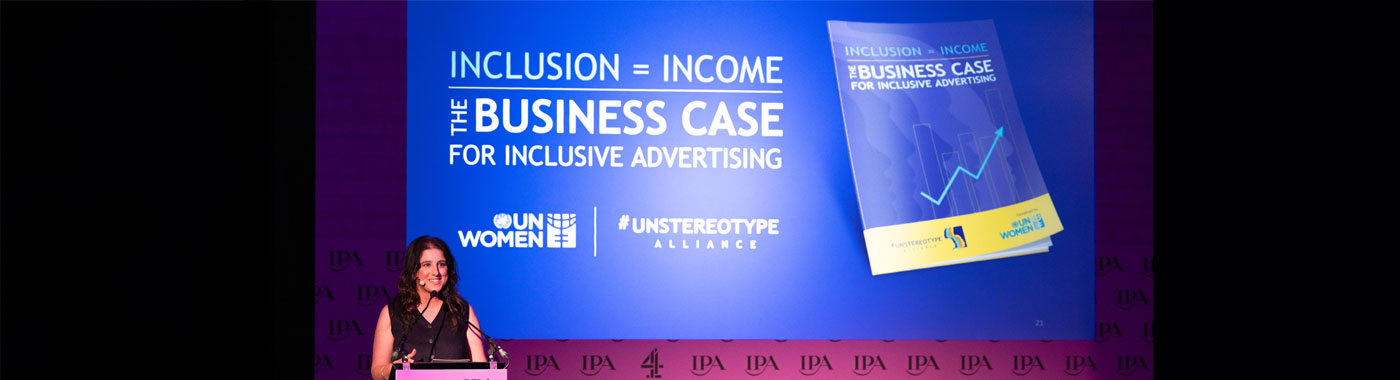
At the IPA’s Talent and Diversity Conference, Melda Simon, UK Lead at the Unstereotype Alliance at UN Women, shared Unstereotype Alliance research that underlined the business case for inclusive advertising.
The Unstereotype Alliance study showed that inclusive advertising actually drives profit. Brands that adopt more inclusive advertising practices, especially when it comes to gender, perform better commercially.
Analysis of 392 brands across 58 countries successfully proves the positive impact of inclusive advertising on business outcomes in both the short and long term, and across multiple metrics. It highlights several areas of performance improvement, including sales, financial performance, customer preference and loyalty, brand equity and market competitiveness.
A panel session with Sarah Fleury, Global Head of Digital and Data at Baileys at Diageo, Shelina Janmohamed, Director of Consumer Equality at Ogilvy UK, and Vicky Keenan, Marketing Director UKI at Bayer Consumer Health UK&I, explored the power of inclusive advertising, encouraging brands to be bolder in polarising times.
At a time when creating change has felt challenging, Janmohamed shared the importance of looking back to maintain momentum and progress. She points to the fact that 15 years ago, we did not have a language of DEI. Before the murder of George Floyd, research and knowledge in this area were close to none. Pointing to passion as a driver of change, now there is a surplus of research that underlines the power of marginalised markets. 2025 is a far cry from 2020. In 2020, our flurry of passion did not amount to as much as we would have liked; now, our disillusionment has left us with learnings. “This is a moment of optimism,” says Janmohamed.
Bayer and Diageo have both worked with the Unstereotype Alliance to drive better representation and change. Both brands use Unstereotype Alliance metrics and reports to show inclusion is a driver of income as well as social change. Keenan shares that the metrics have helped to bring in leadership and align business outcomes with brand values.
Diageo’s mantra is progressive marketing is just marketing. Promoting more inclusive and authentic portrayals has become part of the fabric of its advertising.
Guinness’ Six Nations campaign is an example of how Diageo used sponsorship to drive change. The campaign, ‘Never Settle’, has significantly driven coverage of women’s rugby.
The brand’s approach to progressive media buying helped to extend the reach of the women’s game. Guinness has successfully become the number one beer to drink while watching sport for men and women. This year, Diageo has released a women's rugby boot, something that has never been done before and will prevent injury and enhance performance for female athletes. Diageo’s work underlines that driving forward inclusion and representation in sport is powering sales.
The research and the real world use-cases underline that profit and purpose need not be mutually exclusive pursuits.