The Lucky Way: Opening doors to new talent
Lucky Generals' new talent scheme is breaking down barriers and creating space for creativity from all walks of life.

Kitty Munro
People and Culture Lead Lucky GeneralsPlenty of people in advertising have their story about how they “found” the industry.
That lucky moment where they stumbled into it, or met someone who explained what agencies actually do, and suddenly it all clicked - that advertising is a real job. A real world. A real possibility.
The sad reality is that moment doesn’t happen for most people.
A lot of those stories will be about a friend or family member already in the industry, opening a door for them. People who already live close to the industry, geographically or socially. People with the right networks, the right confidence, the right cultural references and the right safety net. And, more importantly, the “right fit”.
But mostly, people won't hear about it at all because outside of a very narrow pond, advertising only exists as something they see, not something they can be.
For years, the industry has had the same conversations about diversity, and we all know the stats.
- The All In Census 2025 (UK advertising) found working-class people make up 19% of the industry vs 40% of the UK population.
- In the All In Census 2025, nearly 1 in 4 Black respondents (24%) said they’re likely to leave the industry due to a lack of inclusion/discrimination.
It’s not that people are being actively rejected by advertising; it’s that advertising is simply invisible for most.
We all know the intentions are mostly good. We all know there are schemes and programmes and pledges and panels. But these are, in general, looking in the wrong places to fix the wrong problem. It’s not a pipeline problem, it's an access problem.
If we’re serious about changing the industry, it’s not enough to bring people in. We have to make it possible for them to stay.
Kitty Munro, People and Culture Director at Lucky Generals
That's why we wanted to try and find the right solution to the right problem and not just create “another scheme”. And to do this, we had to be honest with ourselves and ask ourselves honest questions.
What would happen if we stopped waiting for brilliant people to come to us, and went and found them instead? And, more challengingly, how would we do that?
So we created The Lucky Way.
At its core, The Lucky Way is a paid, four-month rotational internship scheme designed to find three brilliant interns - but not from the usual places.
We’re not looking for people who already understand the industry, already speak the language, already know how to act in an agency. We’re looking for raw creativity, curiosity, personality, and point of view. The stuff you can’t teach.
And to do that, we had to get out of our bubble.
So we literally started showing up in cultural spaces across the UK - comedy clubs, spoken-word nights, indie film scenes, grassroots venues, galleries, all sorts of places where brilliant creative minds already are.
Because if you want to reach people outside the industry and ask people to leave their comfort zones, you have to step outside of yours too.
What we learned the second we stepped out of adland
One of the biggest things we realised really quickly was how alienating the industry can be without meaning to be.
It’s not just about who gets hired, it’s all the little things we take for granted.
The way we write briefs.
The way we talk about “potential”.
The way we read confidence as competence.
The way we assume everyone knows what a strategist does, or what a creative team looks like, or what a pitch is.
When you only recruit from inside the ecosystem, you don’t notice how loaded the whole thing is.
But when you start meeting talent outside of it, it’s like… oh. Right.
We’ve built a world that makes total sense to us, and can feel completely closed off to everyone else.
A big part of this was the way we introduced it.
We didn’t want this to feel like a corporate recruitment campaign. Or something that looks like it belongs to an industry you already assume isn’t for you.
We wanted it to feel like something you discover. Something a bit strange. A bit exciting. A bit “hang on… what is this?”
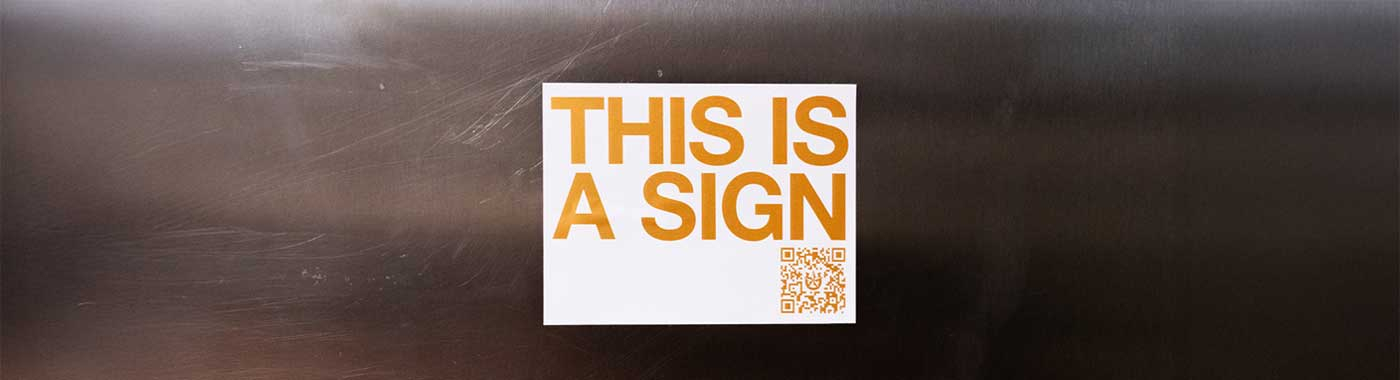
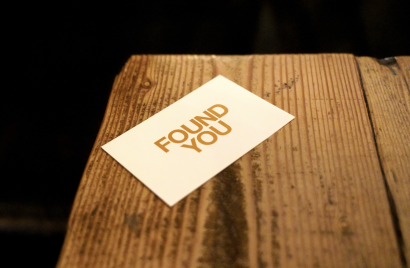
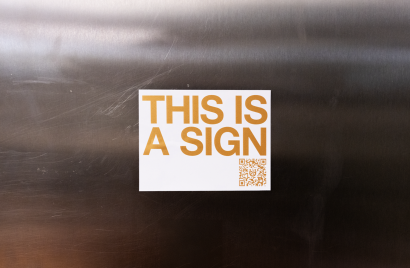
That’s why we decided to go down the route of physically going to the places listed above and leaving mysterious notes and stickers.
Little gold moments placed in the eyeline of creative people in their spaces - under a DJ booth, by a stage door, in a club, on a wall - with lines that feel oddly personal.
Because the whole thing is built on the specific idea that the Lucky Way isn’t about us picking them, it’s about them finding us.
And if you’re the kind of person who notices a weird golden sticker in the back row of a basement comedy club and thinks I have to know what that is… they’re already our kind of person.
Once they scan the QR code, they’re asked to respond to one of three briefs:
● Make rice captivating
● Sell the moon as a holiday destination
● Convince a billionaire to give up their money
We chose these because they can be answered in any way they want.
There’s no “industry correct” response. They don’t need insider knowledge. They don’t need to have done an advertising course. They don’t need a portfolio full of campaigns. They can submit a poster, a poem, a short film, a voice note, whatever. And many have.
And the quality and variety of them has been genuinely brilliant. Weird, funny, smart, unexpected.
Also… and this is important… it makes shortlisting a lot more fun than reading endless CVs. No one wants to do that. Not really. No matter how amazing they are.
The truth is, once you start doing something like this, you realise how many obstacles exist that aren’t talked about enough. It’s not just about opening the door, it’s about what happens when people walk through it.
If you’re coming into an agency from outside London, or the usual pathways or the usual social norms of this industry, you can end up carrying a lot: Impostor syndrome, feeling “othered”, feeling like you don’t know the rules, feeling like you have to change who you are just to belong. There are also practical barriers - money, travel, the cost of London, and the risk of taking time out of other work.
These are the things that can quietly push talented people out before they’ve even started.
That’s why The Lucky Way isn’t just about recruitment.
It’s built to support people properly once they’re in, not just with a smile and a welcome pack, but with real structures around them, such as a London Living Wage, travel cards and additional financial support available for those coming from outside London.
They’ll also have departmental ambassadors, someone who’s there for them beyond just the day-to-day workload. Because if we’re serious about changing the industry, it’s not enough to bring people in. We have to make it possible for them to stay. And we’ll be working with the excellent Commercial Break, who will be involved from the first induction day and then all through as external mentors for the interns.
If advertising wants different kinds of people in the room, it has to change how it shows up - where it looks, how it speaks, what it rewards, what it assumes.
The Lucky Way is our attempt to do that in a practical, real-world way. Not perfectly or with big claims, but with the belief that talent is everywhere - and it’s our job to go and find it.

About
Kitty is the people and culture lead at Lucky Generals. Having previously spent four years working in HR at Total Media, Kitty moved over to Lucky Generals early 2023 to build out the first in-agency P&C function. Kitty leads on many areas including wellbeing, Diversity Equity & Inclusion and Learning & Development, as well as looking after her fellow Generals day-to-day and ensuring the agency is the healthiest and happiest it can be.