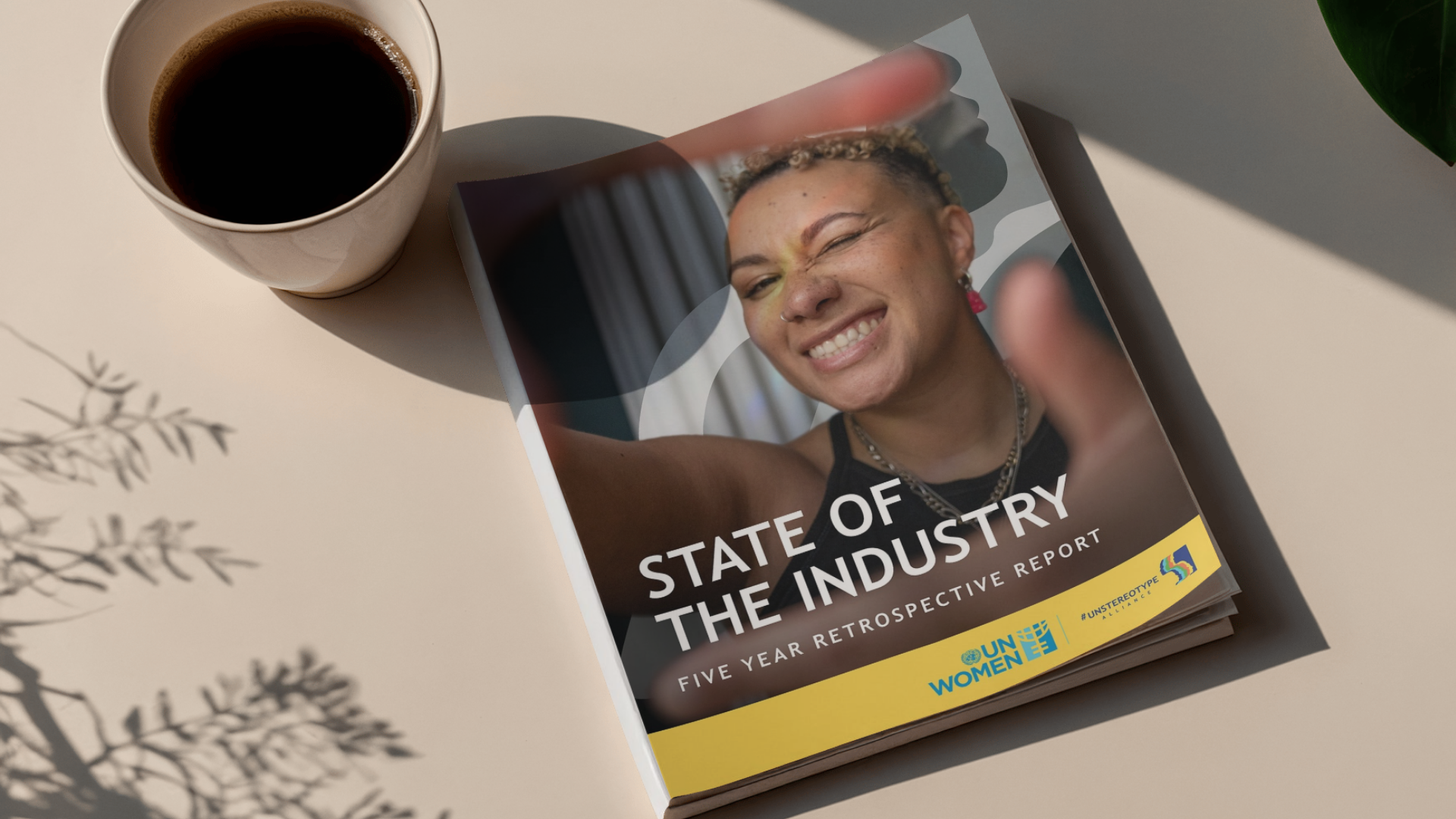
Unstereotype Alliance report highlights power of inclusion
The 2026 State of the Industry Report includes insights from brands including Diageo and Mondelēz International.

Nicola Kemp
Editorial Director CreativebriefIn a chaotic marketplace it is not easy for brands to play the long game, particularly when it comes to harnessing the power of inclusion to drive growth.
At a time when anti-DEI rhetoric and misinformation thrive, the Unstereotype Alliance has published a new report designed to help marketing leaders play the long game. The 2026 State of the Industry Report follows the publication of the first report in 2021.
Featuring thought leaders from Unstereotype Alliance members and allies, including AMV Group, Diageo, Lions, Mondelēz International, and The World Federation of Advertisers (WFA), the report makes a compelling commercial case for inclusive marketing.
Elspeth I’Anson, Interim Head of the Unstereotype Alliance, explained: “Nearly a decade in, the Unstereotype Alliance has helped transform inclusion from an aspiration into a commercial imperative backed by evidence. New forces such as AI, the creator economy, a shifting consumer landscape, are reshaping how culture gets made and who gets seen in it.”
She continued: “The strength of the Unstereotype Alliance has always been its collective reach and it’s through the scale and diversity of our global membership that we will continue to bring the industry together, driving the kind of progress that no single brand or agency can achieve alone."
Forces of change
The report examines the five forces that have most shaped inclusive marketing and advertising since the Unstereotype Alliance published its first State of the Industry Report in 2021.
These five forces are firstly unstereotyped content as a driver of brand volume, secondly shifting consumer expectations toward authenticity, thirdly workplace inclusion as a foundation for progress and fourthly the influence of digital and social media. The final force is the topic generating the most marketing headlines, namely, the use of AI and technology.
Inclusive marketing is good for business because it brings in more consumers and broadens media reach.
Gráinne Wafer: Global Category Director, Beer, Vodka, Liqueurs and Convenience at Diageo
The commercial case for inclusive marketing
While progressive marketers would be forgiven for believing the business case for inclusive marketing has been well made, in a polarising environment, the report is not short on proof points.
It successfully builds on the Unstereotype Alliance's landmark research with Saïd Business School at the University of Oxford, which demonstrated that brands with more inclusive advertising practices generate 3.46% higher short-term sales and 16.26% higher longer-term sales. They are 62% more likely to be a consumer's first choice, command 54% higher pricing power and enjoy 15% higher loyalty.
As Stephan Loerke, CEO of the World Federation of Advertisers, explains: "The reason members still prioritise inclusive marketing is because it drives business growth, and in fact has been one of the biggest drivers of growth in the last decade.”
This singular truth is articulated by Gráinne Wafer, Global Category Director, Beer, Vodka, Liqueurs and Convenience at Diageo, who added: “Inclusive marketing is good for business because it brings in more consumers and broadens media reach.”
Yet the report makes clear that progress remains uneven. While 2025 saw the biggest improvement in positive gender portrayals since 2021 with a 30% increase in Gender Unstereotype Metric (GUM) scores, representation of disabled people, LGBTIQ+ communities and older consumers continues to fall short. Only 3% of ads tested feature someone living with a disability, against a global population of 15%.
Inclusive marketing has been one of the biggest drivers of growth in the last decade.
Stephan Loerke, CEO of the World Federation of Advertisers
Diageo’s Wafer shared that the industry should feel very proud of the fact that it’s made such strong progress on gender and race in particular. Yet she emphasised there is more to do, particularly when it comes to the representation of LGBTQIA+, people with disabilities, diverse ages, and different body types.
While the commercial case for inclusive advertising is conclusive, the report underlines the importance of maintaining momentum.
Gül Şener, Associate Professor at Bahçeşehir University, explains: "In Türkiye, inclusive advertising is evolving. Women are increasingly portrayed in non-traditional and occupational roles; however, men continue to be portrayed in mostly traditional roles. A comprehensive transformation requires expanding progressive portrayals of masculinities alongside empowered femininities."
Authentic Influence
At a time when authenticity is one of the biggest aims of modern marketers, the report positions the creator economy as a critical channel for authentic brand building. Over half of marketers are increasing investment in online video, streaming, and influencer collaborations in 2026, while consumers use these platforms to hold brands accountable; 32% of Gen Z say influencers have increased their trust in brands over the past year.
Meghan Johnson, Vice President, Global Commercial Transformation and Excellence and Chief of Staff at Mondelēz International, explained: “Today’s consumers are diverse not only in demographics but in values, experiences, and expectations. They are more aware and more critical than ever of how brands show up – valuing authenticity above all. Held to this higher account by consumers, many brands are digging deeper to more fully understand the evolving needs of diverse perspectives and build stronger and more authentic connections with the communities they represent.”
AI: the industry's greatest opportunity and its most significant risk
The report underlines that Generative AI is the most promising and most urgent issue facing the industry. Research cited in the report found that 44% of AI systems demonstrate gender bias and 26% demonstrate both gender and racial bias, yet only 51% of marketers currently use human oversight to test AI-generated creative before release
Jacqui Stephenson, Global Responsible and Purpose Marketing Officer at Mars and Deputy Vice Chair of the Unstereotype Alliance, said: "Generative AI is being adopted at speed across marketing, but it’s still a burgeoning area and there’s a real gap in confidence in practically embedding inclusion. That matters, because GenAI can scale creativity and efficiency quickly, but it can also scale bias just as fast if we’re not intentional.”
She shared that under Mars’ stewardship, the Unstereotype Alliance has formed a working group dedicated to bridging that confidence gap: convening members to co-create practical guidance and help ensure this next wave of innovation delivers more representative, inclusive outcomes.
GenAI can scale creativity and efficiency quickly, but it can also scale bias just as fast if we’re not intentional.
Jacqui Stephenson, Global Responsible and Purpose Marketing Officer at Mars
This collaboration will be crucial to ensuring the next wave of tech innovation has inclusive foundations rooted in cross-industry relationships and human expertise. While industry headlines continue to declare that AI is coming for any given creative job, Frank Starling, Chief Diversity, Equity and Inclusion Officer at Lions, provided the calm thinking necessary in a chaotic market.
“Human creativity is unique for a reason,” he explained, continuing: “As AI becomes common, genuine representation – based on real cultural stories and a deep ethnographic understanding – becomes our strongest differentiator. What makes us human is exactly what leads to more meaningful and brilliant outcomes.”
To power those brilliant outcomes forward, the report also focused on what the industry must do next to continue to drive inclusive growth.
Xavier Rees, CEO at AMV Group, explained: "The conversation about representation in advertising has become more nuanced and sophisticated and that's a good thing. Among the advertisers and marketers that are getting this right, there has been a shift away from numerical representation towards more authentic portrayal, avoiding stereotypes and painting a more inclusive picture of the world."
“The brands that are great at advertising are making ads that feel more real in today’s world, and that comes straight back to inclusion, representation, and authenticity,” added Keith Weed CBE, Chair of the UK National Chapter of the Unstereotype Alliance.
When who makes the work shapes the work, the importance of driving diversity across the creative industries was also cited as key to driving inclusive work.
As Mondelēz International’s Johnson explains: “Ensuring creative teams are representative helps to bring diverse, layered perspectives to creative work, resulting in originality of insight and richness in storytelling.”
An insight which underlines inclusive marketing cannot be an afterthought.
The State of the Industry Report is available to download here.