Voices
In a world where DE&I is under attack, here’s what production can do to keep pushing
Dan Keefe asks how do we lash back at the backlash?
Jason Fletcher calls for greater diversity and inclusion in the production process as well as on screen

The advertising industry has made considerable leaps in securing a diverse and inclusive cast in front of the camera, but the same enthusiasm is lacking behind the camera to drive forward progressive change in the industry.
Our industry is all about ideas. Ideas that are made richer when working within a diverse team, talented people from different backgrounds. So, one of the solutions has to be including people with different life experiences.
Disabled people naturally bring very different perspectives on the world. Their experiences create a different outlook on life which in turn provides alternative views and ideas.
The work of creatives and creators with disability within the industry often addresses issues and emotions that a wider range of audiences can relate to.
A recent study by the Advertising Association found that 9% of disabled talent are employed in the ad sector, compared to 20% of the working population – there is undoubtedly a long way to go until these figures even come close to being representative.
So apart from the commercial logic, there now exists a moral imperative within agencies and hiring teams to ensure disabled talent is included. Agencies need to delve internally and start asking the question – how can we make sure that disabled talent is included in the hiring process?
One of the challenges agencies will face, is how to find disabled talent. The simplest changes to the way you search and how can make all the difference.
Our industry is all about ideas. Ideas that are made richer when working within a diverse team, talented people from different backgrounds
Jason Fletcher, Executive creative director, Merkle B2B
Making it very clear you are actively wanting to recruit a representative workforce and celebrate disability is paramount. Opening dialogues and eagerly communicating with these communities is essential, and at Merkle B2B we are already looking at how to include disabled talent in production teams for shoots as much as possible following our recent creation of an extraordinary national advertising campaign for law firm Irwin Mitchell.
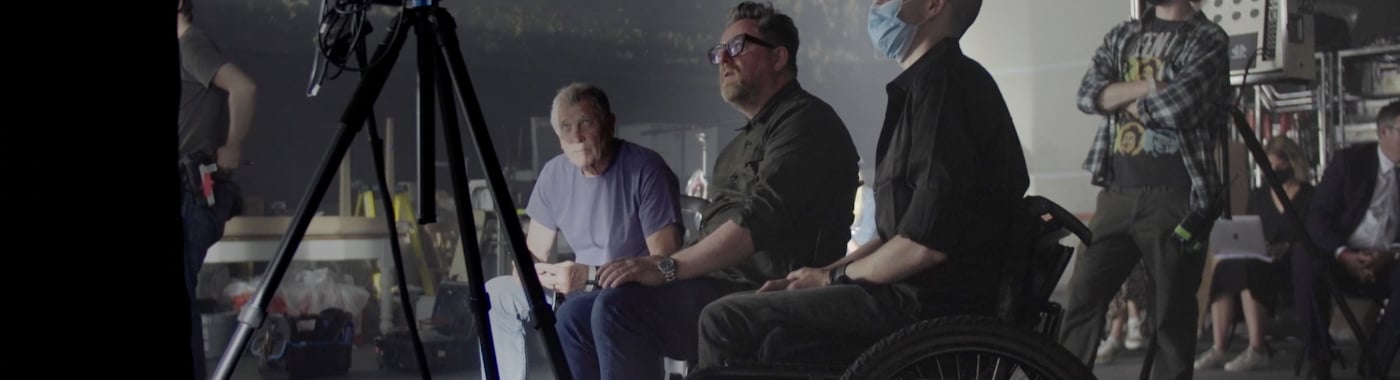
The brief we were given for ‘The Human Touch’ was to focus on inclusivity, featuring real clients sharing personal stories about the life-changing outcomes of their case. But we took it a step further. We reached out to disabled talent using a number of different methods and gathered a production team made up of 30% disabled talent, with 60% in senior roles - it turned out to be one of the most incredible shoots with very intelligent and skilled people.
Members of the crew included blind photographer Ian Treherne, who was mentored by award-winning photographer Rankin on set, behind-the-scenes statement film director and wheelchair user Owen Tooth, and musician Derek Paravicini, who is blind and autistic.
Finding this talent is not easy – it should be much easier. After making it clear early on that you are looking to hire disabled individuals for a shoot, services such as Zebedee can also be used to find disabled talent that may have missed recruitment campaigns.
Social media platforms such as Facebook are also a crucial search tool as they have multiple groups specifically focusing on getting disabled talent opportunities, projects and jobs.
In an already competitive industry, much of this talent struggles to find work and they often feel like they have to set their pay rate at a lower figure to others in an attempt to look more desirable to hiring teams. But disabled talent should not have to do this – their talent needs to be appreciated and their unique approach and level of expertise should be recognised in paying them industry rates.
The task of accommodating for different disabilities can be daunting for agencies, especially when there are already a lot of variables and elements to consider whilst on set – but it’s in fact incredibly simple.
When creating the Irwin Mitchell campaign the ability to cooperate and coordinate with the disabled team members was simply about minor preparation, and directly asking the talent themselves what they need to be able to make their best work. Whether that be understanding and careful planning for complex PTSD, or accessibility and mindfulness on set for wheelchair users – it fundamentally comes down to planning and preparation, stemming from meaningful conversations with the crew.
The change that is being so keenly pushed on screen now has to be sewn into the very fabric of the creation of campaigns
Jason Fletcher, Executive creative director, Merkle B2B
Agencies need to be prepared to be flexible – often shoots for advertising campaigns only last a day and are comprised of sets and equipment that can be easily built and operated. But with disabled talent on set, especially those with accessibility needs, time and adaptability is often the key to making the shoot work.
So it’s not only about the agency, it’s also about finding production companies who can help navigate the challenges that will be present. We were very fortunate to work with the team at Annex Films. There are other companies who can offer expertise, for example, 104 films is a BAFTA winning film production company that runs initiatives for disabled talent on both sides of the camera and Beacon Films, a production company for filmmakers with learning disabilities, autism and additional needs are production companies that are considering disabled people on shoots.
There’s a risk that the focus on DEI lapses into tokenistic projects designed to burnish images.
To make sure that disabled individuals within the advertising and creative industries find a permanent place they need to feel valued, respected and celebrated and they need to influence our industry culture.
We all know that our industry has a journey to travel before the issue of diversity has been cracked. So, we need to get multiple agencies to start hiring disabled talent.
I’d like to see a proactive dialogue between agencies and HR leadership, production companies and crews as well as brand marketers and other stakeholders to make this the norm within our industry.
The change that is being so keenly pushed on screen now has to be sewn into the very fabric of the creation of campaigns.
Jason is Executive Creative Director at Merkle B2B and has been helping brands create award winning campaigns for over 25 years. At MerkleB2B he likes to use the power of creativity to make the world of work, work. With a passion to making work that is as effective as it is creative. Using simple, powerful ideas that can live and work anywhere. Previous to his role at specialist B2B agency Gyro, now MerkleB2B, Jason was Group Creative Director at Publicis UK and Creative Director at TBWA London. He has worked with brands including Heineken, Lexus, Virgin, UBS, EE, Four Seasons, Nissan, and Harrods.
Looks like you need to create a Creativebrief account to perform this action.
Create account Sign inLooks like you need to create a Creativebrief account to perform this action.
Create account Sign in