How Diageo is embracing the AI opportunity
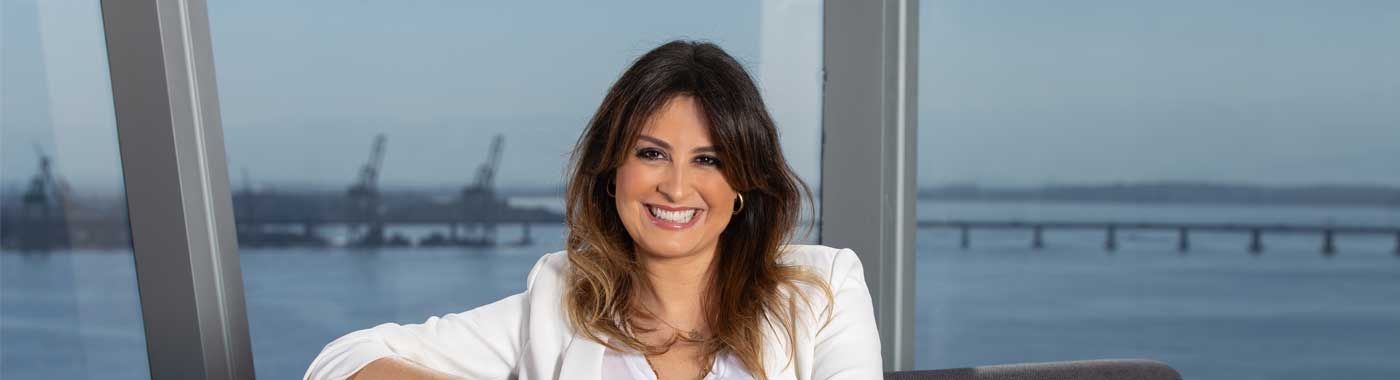
Patricia Borges, Global Managing Director of Gins and Rums at Diageo, on how AI is supercharging personalisation at scale.

Nicola Kemp
Editorial Director CreativebriefPatricia Borges, Global Managing Director of Gins and Rums at Diageo, has successfully built her career on creating her own path. She became Chief Digital Officer at L’Oreal without a traditional digital background and moved to Amsterdam to run Diageo’s global gin and rum business, fulfilling her ambition to run a global P&L.
In her role at Diageo she has successfully driven marketing culture by being at the centre of fashion, spirits and media. Her marketing ethos is rooted in her belief that challenges are where we learn the most, grow the most and get to be the most creative. As the industry moves to embrace AI, this positive perspective is at the top of her agenda.
From a consumer perspective, conversational AI works particularly well as it allows people to interact with our brands through natural, human-like, dialogue and helps us build personalised one-to-one relationships with them at scale.
Patricia Borges, Global Managing Director of Gins and Rums at Diageo
“AI has great potential to support marketing in fun and creative ways both from a consumer perspective and an internal point of view,” she explains. Diageo runs a Virtual Content Studio across its brands, which, according to Borges, enables its brands to create high-quality assets with ease and speed. “Other tools optimise testing for us and can reduce testing times for new assets from two weeks to two hours! This vastly shortens the time it takes for us to go from asset creation to seeing our content out into the world, enabling us to be much more reactive,” she adds.
AI is central to the brand’s strategy of driving personalisation at scale. She shares: “From a consumer perspective, conversational AI works particularly well as it allows people to interact with our brands through natural, human-like, dialogue and helps us build personalised one-to-one relationships with them at scale.”
Diageo recently launched an AI virtual assistant for Seedlip called Elli that helps guests plan alcohol-free cocktails for their parties or gatherings. “All you have to do is tell Elli the type of event you're hosting, along with some additional details like what you’re looking for, what you want the vibe to be, and she’ll take the information and curate a Seedlip based cocktail list for you,” says Borges.
She believes that just like any other form of marketing personalisation, in order to really work and resonate with consumers, the use of AI should ultimately benefit them in some way. She explains: “In terms of Elli, we know a lot of people are still learning how to use alcohol-free spirits to create delicious cocktails at home, so Elli taps into this and provides a resource for people to learn from.”
If there isn’t a perceived benefit by the consumer then they’ll start wondering what the point of the personalisation is.
Patricia Borges, Global Managing Director of Gins and Rums at Diageo
The opportunity of personalisation at scale
The challenge for brands is to successfully walk a tightrope between embracing personalisation and ensuring that customers don’t feel stalked by a product they do not want to buy.
Borges navigates this by always considering the consumer. She says: “I like to take a step back and look at the campaign or project from a consumer perspective. It’s important to ask yourself what will the end consumer get from this level of personalisation? Will it tailor a product or service to their preference, will it provide them with light humour or content to share with their friends - understanding what the consumer will get from it will help keep you on the right side of the line.”
At a time when many marketing leaders are arguably chasing technology for its own sake, Borges places people first. (Thoughts and prayers with the influencer marketing specialists fielding calls from brands who want an ‘AI influencer’.)
“As marketers, we always need to be thinking about the benefit we’re giving our consumers with every campaign, but that’s even more pertinent when we talk about personalisation,” she says. “If there isn’t a perceived benefit by the consumer, then they’ll start wondering what the point of the personalisation is.”
She points to the example of Tanqueray’s Cocktail of Dreams campaign, created by VML, which offered consumers the opportunity to taste a tailor made cocktail crafted based on their individual preferences. “This is an example where personalisation plays a clear role in offering consumers a more elevated experience they will enjoy,” she adds.
Closing the curiosity gap
This focus on elevated experiences extends to ensuring that internally Diageo’s marketing teams are constantly looking outwards for inspiration. She explains: “At Diageo, one of our core leadership behaviours is ‘external curiosity’ - and for me, that’s central to building a culture of creativity and innovation within the marketing team.”
She continues: “We actively encourage our people to look beyond our immediate category and seek inspiration from the world around us. That could mean studying breakthrough ideas from other industries, exploring shifts in culture, or simply asking better questions about consumer behaviour.”
Crucially this culture of curiosity is not left to chance. Instead, Diageo has a regular calendar of inspiration sessions where the team showcases bold, creative work, not just from beverage brands but from technology, fashion, entertainment, and beyond. “This keeps the team exposed to fresh thinking and challenges us to raise the bar,” she adds.
Building capability is built into the way the brand works and shared through its ‘Diageo Way of Brand Building’ framework, which is designed to place creativity at the heart of the work. Borges explains: “It’s not just about crafting big ideas but about building the capability to consistently deliver outstanding, culturally relevant work that grows our brands and creates real consumer connections.”
The power of widening the lens
“I like to broaden our perspective. Instead of saying I’m in the drinks business, I like to say that I’m in the business of celebrations and this has everything to do with experiences,” Borges explains.
She believes that the brand is built on socialising and the act of celebration, which makes experiences form the cornerstone of its marketing strategy and brand building model. “The ecosystem that experiences sit within are increasingly becoming more complex with their role forming part of a wider, more connected picture,” she explains.
The brand recently ran a partnership with The White Lotus for Kettle One and Tanqueray that saw it partner with actor Patric Schwarzenegger to create two limited edition cocktails that featured in the show. In addition to creating exclusive content, Diageo created consumer experiences by hosting viewing parties in bars so that people could sip on the cocktails and watch the show. The experience was further boosted by the creation of cocktail packs that contained recipe cards and everything consumers needed to recreate the experience at home, providing consumers with an immersive viewing experience.
“These experiences gave consumers the chance to get involved and experience the cocktails first hand, helping the partnership evolve into a more connected piece of marketing that encouraged consumer participation,” Borges adds.
Thriving in the age of continuous partial attention
Borges believes that the biggest challenge in marketing today is earning - and keeping - consumer attention in an increasingly complex and fast-moving landscape. She explains: “Consumers expect more: they want seamless, personalised experiences, and they demand relevance, authenticity, and purpose from the brands they choose. At the same time, attention spans are shrinking, and the sheer volume of content out there makes it harder than ever to stand out.”
She believes that technology and new platforms have transformed the way people discover, interact with, and buy brands. A transformation which presents huge opportunities, but it also requires marketers to move faster, be more agile, and think across multiple touchpoints in real time.
“The shifts in culture, technology, and consumer behaviour are happening at an unprecedented pace, and that means we need to be more creative, more curious, and more consumer-obsessed than ever before,” she explains.
To rise to this challenge, Diageo has been building its technology and tools to help it stay closer than ever to consumers. Its Consumer Choice Framework is its biggest-ever consumer data programme, powered by 200 million data points across 77,000 respondents in 40 countries. According to Borges, it provides the company with the most detailed and comprehensive view ever of how, why, where, when and with whom people socialise and drink today.
When done right, influencer marketing helps us build stronger connections with diverse audiences, drive cultural relevance, and bring our brand purpose to life in a more human and meaningful way.
Patricia Borges, Global Managing Director of Gins and Rums at Diageo
The influencer effect
This revolution in customer data is being backed by a significant shift towards influencer marketing. A transformation which is being seen across the industry as progressive brands seek to meet consumers where they are.
“Influencer marketing is one of the fastest-growing channels across my portfolio of gin and rum brands. I strongly believe in the power of personal, authentic communication - and working with creators allows us to connect with consumers in ways that feel more real, relevant, and engaging than traditional advertising alone,” says Borges.
Last year, the brand launched its first-ever YouTube series for Captain Morgan that was fronted by two creators. It was called Captain’s House Party and saw the duo undertake a series of challenges as they navigated typical house party moments.
“When done right, influencer marketing helps us build stronger connections with diverse audiences, drive cultural relevance, and bring our brand purpose to life in a more human and meaningful way”, explains Borges.
Making work that matters
Like many of the best marketing minds in the industry, Borges is equally passionate about the work and the people she gets to do it with. In an industry grappling with the sharp edges of AI anxiety, Borges is clear-sighted on the opportunity for the next generation of marketing leaders to thrive.
She explains: “Advertising today isn’t just about selling a product or service, it’s about storytelling with purpose and connection. If you want to build brands that move hearts, change minds, and shape culture - this is the right industry for you.”
“You’ll need resilience, curiosity, and a healthy dose of rebellion. But if you lead with empathy and stay close to the consumer, you’ll realise that we’re not just marketers - we’re meaning-makers,” she adds. A cocktail of experience which underlines that the most important skill for modern marketers in the age of AI is still human empathy. As Borges' approach underlines, your personal passion can be the ultimate differentiator.