
Trend
Listen to Rip
Claudia Wallace, Chief Client Officer at Neverland, on what Dutton Ranch’s Rip Wheeler teaches marketing leaders about the power of listening.
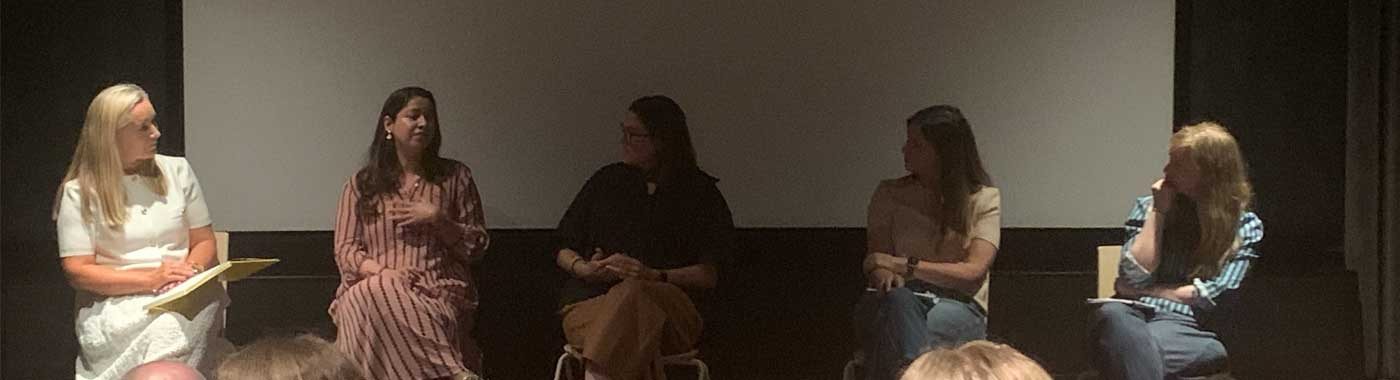
Industry leaders discussed the legacy of copywriter Ilon Specht and the power of L’Oréal’s iconic strapline to create new narratives of womanhood.

“Because I’m worth it.”
Ilon Specht was a young copywriter at McCann New York when she wrote the iconic tag line for L’Oréal Paris in 1973. It is a four word manifesto of self worth that continues to resonate with audiences around the world. With these simple words Specht revolutionised advertising and spoke to women everywhere at a time when women’s beauty was marketed to men.
The Cannes Lions award winning documentary from McCann, The Final Copy of Ilon Specht tells the story of Ilon Specht, a difference maker. It is a celebration of change and underlines the power of the female lens. Told by Specht’s step daughter, the heartfelt documentary shows what can be achieved when people feel seen.
“It’s not about advertising, it's about caring for people,” says Specht.
At a screening of the documentary, Nicola Kemp, Editorial Director at Creativebrief, sat down with Leila Siddiqi, Director of D&I at the IPA, Lucy Hudson, Managing Director at McCann Birmingham, Imogen Tazzyman, Executive Creative Director of McCann Manchester and Laura Simpson, Chief Intelligence Officer at McCann Worldgroup and President of McCann Truth Central to celebrate the legacy of Ilon and consider how we can continue to champion women’s voices and create the space for the next generations of Ilon’s to thrive.
The world that Ilon experienced in 1973 was no doubt very different from today, yet in a fast-moving world, the enduring power of the ‘Because I’m worth it’ platform underlines how relevant simplicity can be. Ilon’s words are so poignant because they hit on a universal human truth.
Where we’ve made progress has masked where we haven’t.
Lucy Hudson, Managing Director at McCann Birmingham.
While the feminist movement has ensured we have come a long way in many ways, Imogen Tazzyman, Executive Creative Director of McCann Manchester, pointed to the fact that women are still facing challenges, only now in other areas. There are still times when female leaders are still the ‘only’ in a room. While the toxic notion of ‘having it all’ has piled further pressure on women.
“Where we’ve made progress has masked where we haven’t,” says Lucy Hudson, Managing Director at McCann Birmingham. She noted that there is still a way to go until around the world all women have basic human rights.
Laura Simpson, Chief Intelligence Officer at McCann Worldgroup and President of McCann Truth Central, lamented the fact that in advertising, we still have to use phrases like ‘women hold the purse strings’ to remind people that women hold economic power. “We need to stop treating women as a niche opportunity,” she says, adding: “I will feel like we’ve fully succeeded when we aren’t sitting around thinking about how to authentically portray women and we are just doing it.”
The impact that women have on other women is priceless.
Leila Siddiqi, Director of D&I at the IPA
The Final Copy of Ilon Specht is positioned within a wider narrative of women supporting one another and the power of female role models. In the documentary, Specht’s stepdaughter, Alison Case, shares the positive impact Ilon had on her own life. Case explained: “She [Ilon] treated me like I mattered.” In turn, this empowered Case to believe in herself and go on to achieve her full potential.
“The impact that women have on other women is priceless,” says Leila Siddiqi, Director of D&I at the IPA. Championing the power of female role models and the importance of female friendships, Siddiqi urges women to uplift each other.
Simpson added that the power of role models also transcends gender and pointed to the fact that many of her biggest champions have been male allies. She shares that she was inspired the most by ‘people who can provide a different vision of leadership’ regardless of their gender.
Being one of the first women to hold her job title, Hudson shared that she feels a responsibility as a leader to be vulnerable and honest.
Rather than perpetuating the myth of having it all, Hudson is more honest about the realities of what goes into success in the workplace. An openness which allows other women to be kinder to themselves and achieve more. “Leadership comes with a real responsibility for vulnerability,” she explained.
In trying to reflect and represent women accurately and honestly, the advertising industry faces a double bind in both trying to challenge stereotypes, but also to not inadvertently add to the list of pressures that women face.
Tazzyman pointed to the importance of language. “We call women ‘working mothers’, yet we would never say ‘working fathers’,” she shared.
While a narrative of women ‘dropping out’ of the industry puts the onus on the individual rather than the structures that set women up to fail. On the opposite end, ‘Because I'm worth it’ gave a sense of self-worth that stuck with people and blazed a trail for different types of beauty. “We all win if we manage to extend the message out. Language is powerful,” says Tazzyman.
Hudson shared that at McCann, a dedicated group called the Margot Collective has been created to ensure that McCann's work is reflective of the lived experiences of real women. In a wider industry ecosystem in which advertising still depicts women running through parks at night or washing the dishes while husbands watch TV, change is needed. The Margot Collective aims to facilitate a safe space where women in the agency can reflect on whether work is hitting the mark.
It’s not about advertising, it's about caring for people.
Ilon Specht
The Margot Collective has also raised the challenges of new pressures women face. The danger being that advertising simply replaces one stereotype with another. Often women feel they have to present their best selves for fear of being a bad feminist. “I’d love some more raw honesty,” says Hudson.
Echoing the fact that the superwoman we see on screen is simply not realistic, Siddiqi shared her belief that the ‘Because I’m worth it’ tagline works so well because it has depth. “Now we are skimming the surface and covering a lot,” she says. Difference is key to connection on a deeper level.
Opening the lens and showing new narratives is key to better representation. Tazzyman reminded the audience that this also extends to men. Where The Final Copy of Ilon Specht is a rounded portrayal of Ilon, her work and her home life, she urges us to allow men to also live rounded lives that prioritise family if they choose. Taking away any stigma or shame from being a working father and speaking more openly is to the benefit of all.
In the powerful words of Ilon Specht: “Because we're all worth it, or no one is worth it.” Making room for new narratives and truly making all people feel seen allows brands to tell the honest stories that really reflect people and their true worth.
Looks like you need to create a Creativebrief account to perform this action.
Create account Sign inLooks like you need to create a Creativebrief account to perform this action.
Create account Sign in