Loading...
Loading...
Thought Leadership

Closing the action-intention gap

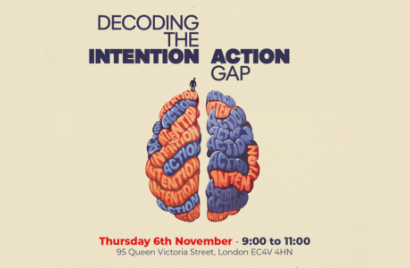
Industry leaders unpicked how brands and marketers can use behavioural science to help facilitate meaningful change at 23red’s Decoding the Intention-Action Gap event.

Georgie Moreton

Deputy Editor, BITE Creativebrief

Share


Be it a daily to-do list, a five-year plan or new year’s resolutions, consumers are constantly setting goals. Yet, good intentions don’t always lead to taking action.

A new report from 23red looks into the marketplace of ‘good intentions’ to decode the intention-action gap. It considers how marketers can engage with consumer behaviours to solve marketing challenges and how brands can play a role in setting people up for success when it comes to achieving their goals. 

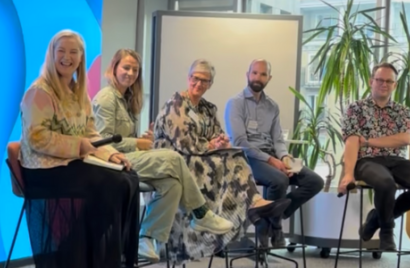
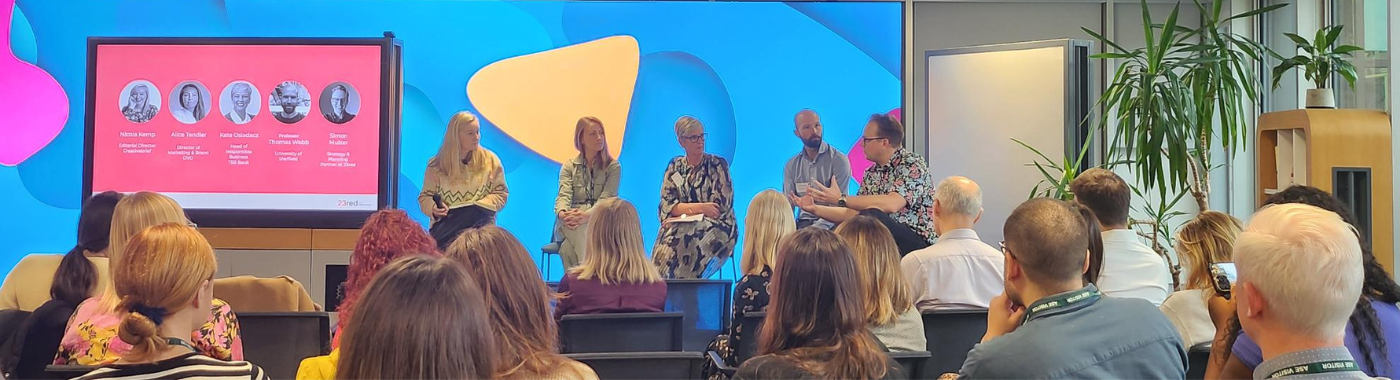
At 23red’s Decoding the Intention-Action Gap event, Simon Mutter, Strategy Director at 23red presented key findings of the report before Nicola Kemp, Editorial Director at Creativebrief sat down with Kate Osiadacz, Head of Responsible Business at TSB Bank, Alice Tendler, Director of Marketing and Brand at Ovo, Thomas Webb, Professor of Psychology at University of Sheffield and Mutter to consider what drives the intention-action gap.

Decoding the Intention-Action Gap

23red’s Decoding the Intention-Action Gap report surveyed people on 31 everyday good intentions in July, then checked back in August to see what they had achieved. It found that people have good intentions and wanted to achieve, on average, 16 of the 31 positive actions. These actions ranged from eating more fruit to going to bed earlier. The positive intentions spanned three categories: health, finance and sustainability. In August, the report found that 60% felt they had succeeded in their goals, while 40% felt they had failed.

When looking into why people failed or succeeded, the data found that the stronger the intention, the more likely people are to achieve the action they set out. They also found that the research aligned with the COM-B model of behaviour change, in which capability (C), opportunity (O), and motivation (M) are the three key drivers of change. The research found that when people failed in their goals, they blamed motivation, and they were more likely to succeed in goals that were positive. 

It's about enabling consumers to reach their goals and spurring them once they’ve achieved them.

Kate Osiadacz, Head of Responsible Business at TSB Bank

Across categories, the most popular intention was to use less energy. People were most likely to fail in finance goals due to competing priorities. In contrast, sustainability goals that had a double-edged financial benefit were often met.

Helping to close the gap

Understanding what drives the intention-action gap can help brands and marketers to help facilitate change. Pointing to the work 23red has done with Dry January, Simon Mutter, Strategy Partner at 23red, shared the importance of providing people with tools to help them act. For Dry January, the team found easy ways to give people prompts at the right moment to continue their commitment. “It's not just about communication, it's about the whole ecosystem,” says Mutter.

“Brands play a role in people's lives and also have deep insights into their consumers,” added Alice Tendler, Director of Marketing and Brand at Ovo. At Ovo, educating customers about energy-saving times has been a simple way to drive impactful change. 

Similarly, Kate Osiadacz, Head of Responsible Business at TSB Bank, championed finding simple ways to help customers. Within finance, she believes that confidence is at the centre of customers achieving their goals. She champions simple ways of starting to save, like the 1p challenge, where you commit to saving just a penny a day. “It's about enabling consumers to reach their goals and spurring them once they’ve achieved them,” says Osiadacz. She continued: “People who reach their financial goals tend to be happier in the rest of their lives”

Building momentum with positivity 

In helping people to achieve their goals, building motivation is key.

Commenting on the findings of the report, Thomas Webb, Professor of Psychology at the University of Sheffield, shared that generally the evidence suggests to get positive. “‘When people feel negative, their capacity to delay gratification is undermined and the priority is feeling better,” he explained.

“One of the most powerful motives is self-enhancement,” Webb added. Yet he warned: “Caution against people thinking they are doing something positive but trivial.” Pointing to the example of how people who cycle to work might feel as though that gives them permission to take more holidays or fly, he urges brands and marketers to ensure the change they encourage is worthwhile. 

Where possible, the panel agreed that we should strive to empower rather than patronise in communications and remove guilt. A strong example of this approach is This Girl Can, which shows the many different ways that people can keep moving and be fit through a powerful, vibrant celebration of womanhood. In short, positivity can help people to achieve their goals. “We should be thinking about how we can enable people,” says Mutter.

When working on This Girl Can, the team found supportive voices in communities via apps such as Strava, another key way to build motivation. Similarly, Tendler shared that Ovo has created products that offer rewards via its app that have both financial rewards and longer-term rewards, such as points towards solar panels. 

Webb added that ‘positive enhancements don't need to be tangible’, pointing to Strava’s digital badges as successful motivational tools in their own right. He added: “Feel proud, but make sure it's something worth feeling proud for.”
When people feel negative, their capacity to delay gratification is undermined and the priority is feeling better.

Thomas Webb, Professor of Psychology at the University of Sheffield

Empower with purpose

Knowing a brand’s position and its purpose can help determine the ways in which it can best empower its customers. 

For Osiadacz, at TSB, she is passionate about helping customers reach their financial goals, building confidence and reframing money. She shared: “The world is set up to make us spend. We have an emotional connection to spending.” Her goal is to help customers try to visualise saving in the same way and build the same emotional connection to saving in the journey to financial freedom.

Looking to the research and the ways in which sustainability and financial goals go hand in hand, Tendler shared the ways in which Ovo is adapting to shifting life priorities amid a cost-of-living crisis. Where once sustainability was seen as a privilege, it is actually a way to help save money, especially when it comes to saving energy. “Lean into individualistic motivations like saving money and understand that both can go hand in hand,” says Tendler, underlining how brands must adapt to their customers' changing needs.

Speaking on the research, Sharon Jiggins, Managing Partner at 23red, added: “We wanted to understand what really stops people from following through on their good intentions because until we do, behaviour change campaigns will only ever scratch the surface. This research gives us the evidence base to turn intention into action.”

By giving customers confidence and reframing the narrative, marketers and brands can build on behavioural science to help create an ecosystem of empowerment. Intention on its own isn’t enough; real change happens when people are supported.

decoding banner email.png
23red bite pic  (1).png

Related Tags

Event industry

Agencies Featured