


Trend
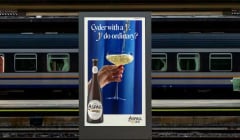
Asics brings emotion to marathon marketing
The pan-European outdoor campaign celebrates the mindsets that carry runners to the finish line.

Brands are searching for new ways to stand out at a time when budgets are shrinking.

Every marketing leader wants to make an impact, connect with audiences and cut through in their category. As budgets become more stretched and the media landscape grows more complex, more brands are deploying challenger tactics as a way to meet their goals.
No matter their shape or size brands are starting to think, look and act more like challengers in a diverse range of categories. But can brands win the strategic advantage of challenger marketing without truly knowing what they are challenging or why?
In a market where every brand wants to be a challenger brand, traditional challenger marketing strategies are at risk of becoming tired. With this in mind we asked industry experts to share their insights on what the key ingredients are to being a successful challenger brand.
![raquel chicourel pic[34].jpg.jpeg](/application/files/cache/17eb4f7e1cec0d9e4ea9e0fb74c2d712.jpeg)
Building a brand has never been harder. Change has always existed in the world but now change is exponential. Consumer needs, competitive landscapes and entire categories have changed more in the past 10 years than in the past century. At the same time, attention is more fragmented than ever. 67% of ads are skipped. Audiences are harder to win.
The way I see it, brands no longer have a choice. It is not about wanting to be a challenger.
Every brand now has to act like one.
The problem is how brands attempt to do this.
We are seeing the ‘Liquiddeathfication’ of brands, a rush to execution where companies believe a bold tone of voice or a shiny new identity are the answer. Others try to shortcut the process through acquisition. Buying challengers can inject new thinking and energy into a larger organisation. But, as history shows, even strong challengers can fade fast.
Critical to success is the understanding that being a challenger is a strategic decision, not an executional one. It’s not about rebranding or bolding up the tone. It’s about finding a truth about your brand, product or business that bottles the challenger essence, embedding a clear point of view into your positioning and letting it guide everything you do. It means finding an enemy that will help rally your audiences behind you. It means knowing what’s broken in your category and committing to fixing it.
Only when challenger thinking lives at a strategic level can brands win outsized fame and growth in a world where both are harder than ever to achieve.

Too many brands talk about disruption without understanding how the category actually works or where the big players are exposed. For me, the best challenger brands don’t just say they’re taking on the category. They’re really clear on where they’re taking it on and whether they can realistically win. The strongest challengers spot a gap that genuinely matters to people and that incumbents are too slow, too big or too comfortable to fix. That focus is what gives a challenger brand momentum. It's about knowing the one rule you’re breaking and doing it better than anyone else, rather than shouting louder or being provocative for the sake of it.
I’d say the second ingredient is one people don’t talk about enough: sales. Challenger brands don’t win on attitude alone. They win when they get distribution, volume and momentum. In categories like FMCG, having a great product and a strong brand is just the price of entry. You also need people who understand how the industry actually works. That often means bringing in experience from established brands who know how to navigate retailers, build relationships and understand what buyers really care about.
Ultimately, what separates great challengers from a flash in the pan brand is how it shows up day after day, scales with discipline, and builds a business designed to last.

If everyone is a challenger, nobody is challenging anything.
A true challenger needs a clearly defined status quo. Not just a market leader to take potshots at, but a set of conventions, behaviours or assumptions that deserve to be overturned. Without that clarity, being a challenger becomes an aesthetic characterised by a loud tone of voice and ‘braver’ ads, rather than a strategic choice.
That’s the irony. We created the label to give ourselves permission to be different and now challenger has become the new norm.
We don’t need more challengers, we need more ‘Breakaway brands.’ Brands that break away from the logic of the category altogether and start from a different premise. Oatly didn’t just attack dairy giants; it reframed what milk could mean culturally. Brittany Ferries don’t sell being the best ferry experience, they sell uncommon holidays. Liquid Death didn’t take on bottled water brands; it reinvented the codes of the aisle.
There are a few consistent ingredients when building a breakaway brand.
First, conviction. Real challengers commit across product, pricing, partnerships and communications, not just in their headlines.
Second, a sharp enemy. Not “the competition,” but a belief, habit or norm that feels outdated.
Third, the courage to alienate. If no one is uncomfortable, nothing has really been challenged and most likely nothing has been changed.
Ultimately, the boldest move isn’t to be an anti-leader reacting to the category. The boldest move is to start a breakaway.

When the world zigs, the challenger zags!
Being a challenger brand is arguably the only way that any brand starts life…unless you are fortunate enough to have uncovered and created a brand-new category.
Being a challenger brand implies there is already a brand leader - one that sets the standard for the category. The brand leader will also often own the explicit psychological goal or consumer need for the category - eg cars and reliability, beverages and refreshment. The challenger inherently and intentionally will set out to meet a different and distinctive goal for the consumer - one that is unmet by the leader or anyone else - a soft underbelly to challenge!
These brands starting life are inevitably constrained by resources - and therefore require enhanced creativity to stand out - which involves novelty, fresh thinking and disruption of some kind. This is ultimately what makes them remarkable.
The appeal of being your own boss has created an entrepreneurial movement - spawning a cluttered world of ‘wannabe’ brand creators. The rapid emergence of this self made class - often inspired by someone else’s story and funded by someone else’s cash looking for a speedier return - inevitably has led to a dilution of the talent pool of founders. In turn this has witnessed a sea of unimaginative sameness in their communication output. Hence the observation that challenger brand marketing has become vanilla.
It’s not that the challenger model is dead - it’s that its application needs skilful execution - which is where agencies like MATTA come in.

There’s no longevity in mindless challenge. Noise and unthinking subversion is easy, but won’t achieve long-term brand growth without understanding why you’re doing it, or having a point of view on which expectation to subvert.
Finding the strategic point of tension around what’s broken in the category and why that matters to consumers is the key here. A true challenger brand starts with a clear-eyed view of what’s broken in the category and a credible answer to it. It’s about subverting expectations and upending norms, yes, but with purpose. If you can’t articulate exactly what you’re challenging and why it matters, you’re not a challenger. You’re just contrarian.
Focus is everything. Monzo didn’t succeed because it was small or disruptive by default. It succeeded because it targeted specific failings in traditional banking: inertia in innovation and a lack of transparency. It recognised that people’s real financial lives, how they spend, save and manage their money day to day, weren’t reflected in legacy systems. The product, the tone of voice and the experience all lined up behind that tension.
Crucially, being a challenger also isn’t about size. Tennent's is the biggest lager brand in Scotland, and Irn-Bru dominates soft drinks there. Yet both behave like challengers. Why? Because they lean into a distinct cultural point of view that’s all about being the underdog and a refusal to accept the dominance of bigger players. Both use a tone of voice that’s punchy and different to others in their category. In many ways, Scotland itself plays the challenger role within the UK. That mindset of embracing difference, rejecting default norms and defending authenticity, gives these brands their edge.
And it’s important to remember that context is king. What counts as challenging in one category may be vanilla in another. The job is to understand the expectations around you and subvert them in a way that’s meaningful, not theatrical.
Ultimately, challenger status is a mindset. It’s about embracing tension and building a business that genuinely does something different, not just talking as if it does.
Looks like you need to create a Creativebrief account to perform this action.
Create account Sign inLooks like you need to create a Creativebrief account to perform this action.
Create account Sign in