Our industry tends to attract pattern-spotters – people who see connections early, notice inconsistencies quickly, feel when something isn’t quite right and channel the quiet discomfort that says, “There’s something here to explore”. But as we default to what’s proven, reach for the template and the first plausible answer, that instinct is being muted.
Which brings me to Dopamine – the name of the event I attended, where we discussed all of the above.
We think about dopamine as if it’s the reward chemical, the pleasure hit, the satisfaction of completion. But what I discovered from some mild Googling as I frantically collated my slides is that it’s actually not at all about this.
Dopamine is released in the pursuit, not the possession. It lights up when we lean forward. When we’re chasing something. When the outcome is just out of reach.
Creativity lives in that pursuit. And the moment we decide we know is the moment that pursuit stops. Certainty feels efficient. It feels safe. It feels productive. We, as agencies running on margins, love it. But biologically, it’s the opposite of what energises us.
Then along comes AI. Brilliant! An extraordinary answering machine of staggering capability compressing the past into predictions about the future faster than any of us. It can generate, summarise, refine and scale with almost frictionless ease.
We should embrace it. Actually, we need to. And the act of embracing is not actually all that new (and therefore not that scary). Because every generation has had its technological shift before.
The printing press scaled knowledge. Photography scaled realism. The smartphone scaled publishing. Each time, there was panic. Each time, there were headlines about decline. And each time, creativity didn’t disappear. It evolved!
When cameras could capture reality perfectly, painters stopped trying to replicate it. They interpreted it instead. When everyone became a publisher, storytelling didn’t die. It just decentralised.
The tool changed. Our human instinct didn’t. And that’s where I find reassurance.
AI can generate answers, predict probability and identify patterns at scale. But it doesn’t desire. It doesn’t (and can’t) have that original human intent. It doesn’t sit in tension. It doesn’t feel the itch of not knowing. It doesn’t care what’s around the corner. As humans, these things are ours to own.
I have a 15-month-old son. He’s brilliant. His world will look nothing like mine when he’s my age. I don’t know what jobs will exist. I don’t know what creativity will mean. I don’t even know what we’ll define as “work”.
Once, that felt destabilising. Now, it feels magical. Because if there is one thing I can be certain about, it’s that he will have more tools at his disposal to feed his curiosity than I ever did.
Change is inevitable; it always has been. The question isn’t whether we embrace it; we will.
The question is how we show up inside it. Do we become operators of increasingly efficient tools? Or, do we remain explorers?
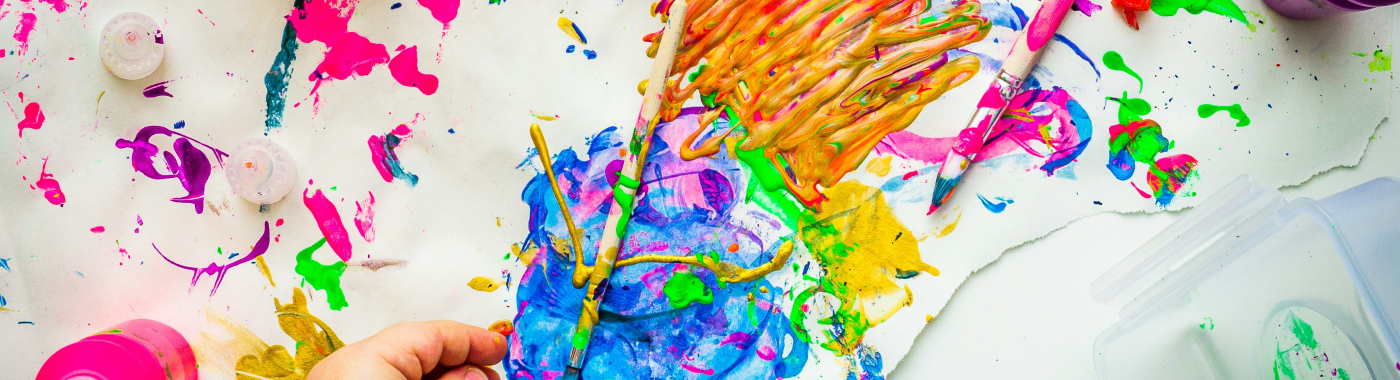
Curiosity is not something we learn; we are born with it. It comes as part of the basic package. Toddlers don’t need a framework to ask “why?” They don’t need permission to test, to prod, to question.
Yet somewhere along the line we become more comfortable answering than asking.
Now, as we get better (and faster) at producing answers, we have to be equally good – if not better – at questioning. That’s how we protect creativity. That’s how we embrace AI without surrendering judgement.
Instinct, taste and discernment remain stubbornly human. The tools will change. The expectations will accelerate. The messy middle may continue to compress. But the ability to ask a better question than the machine? That’s still ours. And under pressure, protecting that might be the most valuable thing we do.
So, stay curious – always.