Loading...
Loading...
Trend

Help marketers make the best work of their lives

Knowing when to use AI and when not to is essential in 2026.

Tristan Cavanagh

Creative Director 23red, part of Capgemini

Share


We are, according to some experts, just 6 to 12 months away from AI generated content being indistinguishable from live action shot on film. Indistinguishable as in even to the trained eye you won’t be able to see the join marks at all. Such is the speed at which the technology is accelerating, 2026 will most likely be the year when every brand, organisation and marketeer will be faced with a simple choice during any production process – to gen AI or not gen AI, that is the question.

If they haven’t already, production houses are launching their own AI divisions. Netflix is using Runway in its production processes. H&M is using AI digital twins in its ads. Coca-Cola is already heavily invested, with its ‘Real Magic AI’ being used for the latest iteration of ‘The Holidays are Coming’ Christmas ad, and its use stretching to product and co-creation too.

In the next six months, close to 80% of organisations have either already allocated budget or plan to do so to integrate generative AI into their marketing initiatives, according to the Capgemini Research Institute.

We’re using gen AI where appropriate in our production processes at 23red. When combined with a human/hybrid workflow, it’s speed, ease, flexibility and ability to streamline make it an obvious choice for certain projects. For our recent ‘Fire Kills’ campaign with The Gate for the Ministry of Housing, Communities and Local Government, we needed realistic fire and smoke in a real home to land the message. A traditional process would’ve required lengthy CGI, so with a shortened timeline gen AI, combined with human craft and decision-making, provided the perfect solution to iterate quickly. In many instances it’s just another tool we can lean on.

We’re also going to need to make conscious choices based on what our brands and campaigns stand for and ensure we’re being honest and truthful in our representation, regardless of how we make the work.

Tristan Cavanagh, Creative Director at 23red

But rather than simply being a production choice, what if authenticity and ‘analogue’ production was a conscious marketing decision to align with the end goals of the campaign? If a product or service needs to feel real, then shouldn’t it be done for real?

Apple’s recent ‘apple tv’ ident not only did things the traditional way, meticulously constructing and shooting with real glass and practical effects, but made sure they showed everyone exactly how painstaking a process it was. And they’ve doubled-down with their Critter Carol Christmas ad – leaning heavily into stop motion and cutesy puppet animals to promote the iPhone’s video functionality. The ‘behind the scenes’ is all over the creative corner of the internet, heavily emphasising its reliance on practical effects.  It can’t help but seem like a very considered choice to lean on human-centric craft, but also to promote the process at the same time. 

In the same way that owning vinyl has become a statement as much as a medium, or film cameras now adorn the necks of trendy tourists the world over, analogue production can reinforce certain brand values and align to the campaign objectives.

Creator-led social is absolutely killing it. Hermès commissioned over 50 individual artists last year to create original content for its social media channels as part of its ‘Drawn to Craft’ theme. And it’s working, with sales up and social engagement at its highest. It makes brand sense that a luxury product made by hand would also be creator-led in its marketing.

But it’s not just a means of distinction in some instances, because when our work is inspiration, inclusion, role modelling and storytelling, then the people and the story (in front of and behind) the camera matter more than ever before.

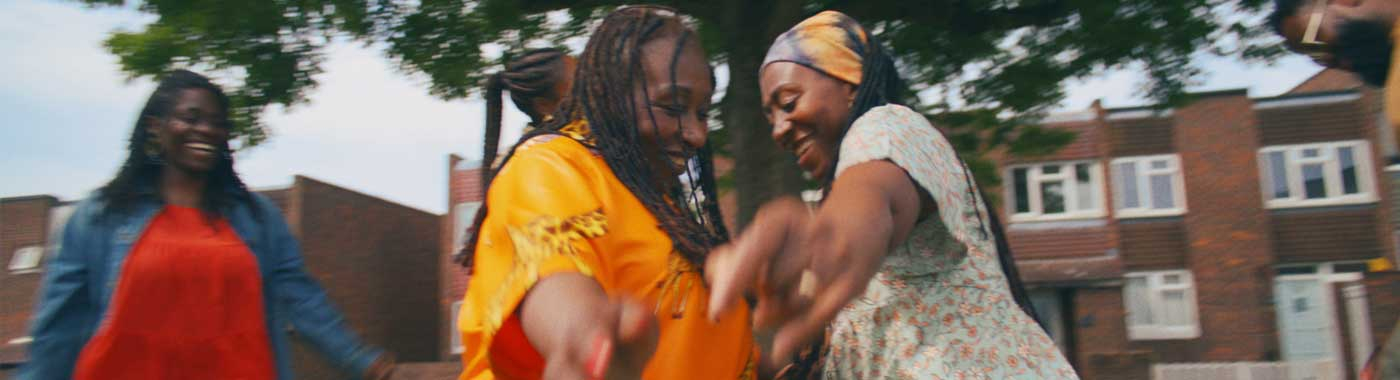
This is especially true for our TGC Collective client This Girl Can, which has built a trusted brand based on transforming the way women are portrayed when exercising and showing the realities of fitness, not the glossy lifestyle version. You can’t change representation if you’re not showing reality. Our women aren’t models; they’re real people with motivational stories that have the power to inspire others just like them. It’s vital those stories are surfaced, told and believed. For NHS England, casting real doctors, nurses and support staff in a campaign is non-negotiable.

In such a campaign, trust rests on credibility, so brands that rely on it are going to have to work harder than even before to ensure the creation process and people involved are front and centre in the minds (and feeds) of their audience.

We’re entering a new world where gen AI has the power to deliver realistic images and film to a level of detail, variation and speed we’ve never experienced before. It’s exciting and daunting, with limitless potential. However, we’re also going to need to make conscious choices based on what our brands and campaigns stand for and ensure we’re being honest and truthful in our representation, regardless of how we make the work. Marketeers have always had that responsibility, but now we’re going to have to make sure it’s clear, accurate and, crucially, seen – more than ever.  
Guest Author

Tristan Cavanagh

Creative Director 23red, part of Capgemini

About

Tristan Cavanagh is Creative Director at purpose driven creative agency 23red, part of Capgemini, having joined as an Art Director way back in 2006. Proof that if you hang around somewhere long enough, it might just pay off. After almost 30 years in the advertising industry, he remains doggedly uncynical and is still passionate about the power of marketing in making the world a better place. He’s spent the last nearly two decades working on behaviour change campaigns within the not-for-profit sector, including innovative, award-winning work for NHS Blood & Transplant, Network Rail, Migrant Help and Sport England’s This Girl Can. He’s also been an industry judge for, amongst others, the Purpose Awards, D&AD New Blood and the Ocean Outdoor Digital Competition. In his limited spare time he’s a mentor for the Octavia Foundation, enjoys failing to solve cryptic crosswords and frequently being the oldest person at gigs.

Related Tags

AI Creativity

Agencies Featured