Changing the game for young men
The advertising industry has a role to play in shaping the future of masculinity.
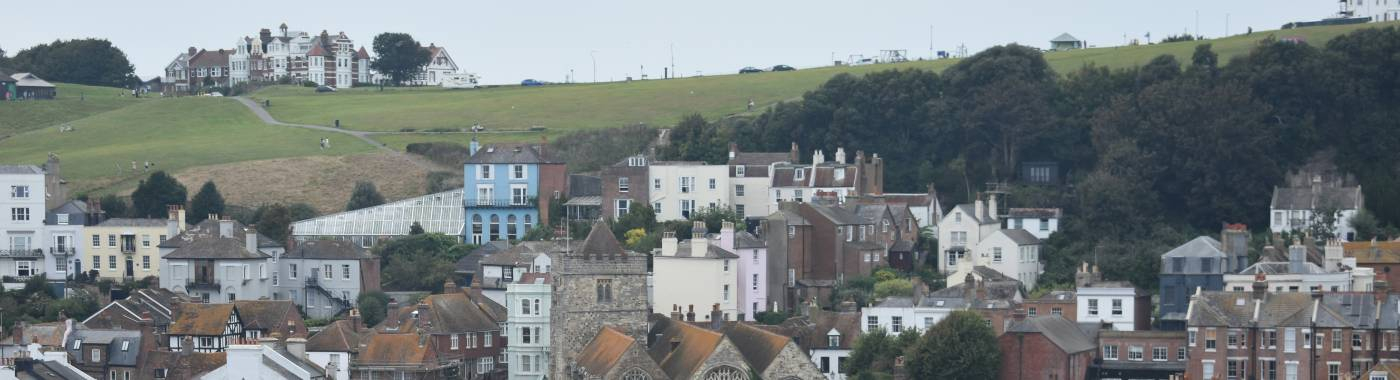
The Shaping The Nation report is a deep dive into location to facilitate better representation of audiences across Britain.
I spent Easter break in the Lake District. Total gluttony, even without the chocolate. Four days drinking in scenery and fresh air by the gallon and gorging on local delicacies.
Kendal Mint Cake? Yum. Sarah Nelson’s gingerbread? You bet. Hawkshead Relish? Stockpile me up.
That I don’t feel remotely guilty sharing this is thanks to a finding from GroupM and Mindshare’s Shaping The Nation report. This research, which we launched across April at events and roundtables in London and Manchester, is a deep dive into location. Or rather, place.
Representation is part of it. People told us they hate it when we get accents and place names wrong. And they told us what to feature more – namely, natural landscapes and local food and drink.
You’re welcome, Lake District. Glad to do my bit.
Local differences count, and we’re missing the mark.
James Caig, Strategy Partner, Mindshare
But don’t all greenlight that local heritage campaign at once. The real message of Shaping The Nation is this: less formula, more listening. Nuance. Local differences count, and we’re missing the mark. Sure, we can handle a store opening. We seemingly all have the button marked ‘grating, faux-friendly copy’ (I live in Bristol – please, stop trying to make “hello Brizzle” happen). But that’s not representation.
Anybody who has lived anywhere knows local differences are gnarly, nebulous. What to do, for instance, now we know the third most popular thing people want represented is local businesses? Can we really do what half of respondents want, and represent the ‘values’ of communities and locations in our brands’ content? Capturing this stuff is hard.
Nevertheless, knowing it is important. Context – the lived experience of our audience – shapes how communication is received. Lived experience is largely local, because everyone lives somewhere. For most people, that somewhere is not London. You cannot say the same of our industry.
But representation isn’t even the half of it. Nor is regionality. There’s at least as much difference between different types of places within regions (cities, towns, villages, coastal areas) as there is between regions themselves. Just because a place is part of your identity (because you love it there, or don’t; because you chose it, or didn’t) doesn’t mean you feel you belong there. Only 7% of people are living in their dream location – your buyers are likely in the 93%, worrying about healthcare and housing, increasing crime and traffic. The state of things. The macro and micro. Life.
This we do need in our briefs.
Travel the UK and you’ll encounter very different energies. The Northwest is “embracing change” and “future-focused”. The West Midlands is “downbeat” and “looking to the past”. A shared UK narrative feels very far away, as does the prospect of economic prosperity. Every place feels left out.
Shaping The Nation shows us this up close. A view that is granular and grassroots, tribal. One respondent described people living two streets away as being ‘not like us’. We have always been a patchwork nation, stitched together economically, politically and socially. But right now, we’re fraying slightly. Horizons are narrowing. Shutters coming down.
But here’s a thing, a glimmer – something on the inside of those shutters. The closer to home an issue is, the more upbeat we are about it. Local narratives are strong, part of us – ours to influence. If home is where the heart is, local’s where the agency is. There’s never been a better time to tap into the diversity of the UK, to understand what makes a place a place.
Luckily, we’ve just surveyed 10,000 respondents and conducted 60+ qual interviews to do just that. We spoke to TV, radio and newspaper editors, too. The research can fuel activation as well as insight, because we worked with media partners and their data – Reach, Sky, JC Decaux a,nd Channel 5; Blis, Captify and Mobsta. This is a data set with real depth and potential. You should take a look.
Like us, you might conclude that ‘local media’ deserves a re-think.
As we slowly accept the limitations of 1st party data, a new model is emerging, built on geography. Geo unlocks it all, behaviour, attitude, purchase data – life – and makes a common currency across media. It’s compliant. In this model, ‘local’ is not an afterthought or upweight, but a foundation – a bottom-up way to think about people and their world. Local media itself is diverse, organic, participatory, community-driven. It flows across traditional and digital, is spaces and products and people. Networks, not just channels.
It’s the Ulster millennial using TikTok to follow Kneecap, the Teesside couple who don’t trust national news outlets and rely on a Facebook page for news, the Southwold shop owner who considers independent stockists ‘the original influencers’. This is a patchwork vision of media for a patchwork nation.
Such are the opportunities out there for brands who really want to shape the nation. To shape the way we shop, dress, eat and socialise. And if that’s your aim, ‘out there’ is where you need to go.
Twenty years ago, on my first visit to the Lake District, a shop owner asked where I was from. It was London, then. “I’ll tell you the best thing about London,” he said, pausing for effect. “The road out.”
I took umbrage, but also his point. Today, our industry should take that road. In Shaping The Nation, we have our map.
James is a communications strategist with experience in media, advertising, and digital agency strategy teams across networks, indies, and clients, including both public and private sectors. Currently, he is a Strategy Partner at Mindshare, specialising in Government Communications. He also teaches comms planning through APG courses and hosts a forum called Life Sentences for strategists who write.
Looks like you need to create a Creativebrief account to perform this action.
Create account Sign inLooks like you need to create a Creativebrief account to perform this action.
Create account Sign in