Loading...
Loading...
Trend

Britain is a remix

We must get better at understanding and representing modern Britain, writes Lameya Chaudhury.

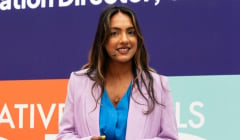
Lameya Chaudhury

Head of Social Impact and Client Partner Lucky Generals

Share


Half a million people turned up to the Together Alliance march in London recently. 

If you work in advertising and missed it, that’s not a media failure. It’s a useful insight. 

Because what was on display that day wasn’t ‘diversity’ as we tend to package it. It was something less tidy and more truthful: a version of Britain that refuses to sit still long enough to be simplified. 

Which is awkward, because simplification is a large part of what we do. 

Advertising likes clarity, clean narratives and recognisable roles. The problem is that modern Britain isn’t especially interested in cooperating. It’s a country shaped by migration, empire and reinvention. 

In other words, a remix. 

And like most remixes, it doesn’t resolve neatly. 

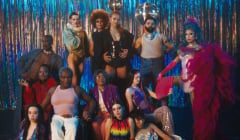
At the march, that was obvious. There was a mix of histories that rarely make it into our work, references layered on references and cultures overlapping rather than taking turns.  

At one point, it tipped into a rave. House Against Hate, powered by the teachers’ unions. With the music cutting through the chants, people dancing with placards still in hand with protest and joy occupying the same space in an unedited Britain.  

Then you go back to the average ad, and it feels heavily edited. 

While we’re good at signalling inclusion, we’re less good at reflecting reality because, for numerous reasons, we have built ourselves a reliance on reducing people to cultural shorthand. It’s not malicious – the pressure to turn around more work faster is pouring down on everyone, but it is reductive. 

I wore a sari that day, partly because it felt right, partly because of the Sari Squad. South Asian women in the 70s and 80s who were abused in the street and kept showing up anyway. There’s a particular kind of stubbornness there which is not performative but persistent. 

Britain’s cultural identity has never been pure or fixed. It’s borrowed, blended, argued over and reassembled over time.

Lameya Chaudhury, Director of Social Impact at Lucky Generals

You don’t see much of that in advertising. 

Instead, we turn entire communities into moments in the calendar. Ramadan, Diwali, Black History Month. Yes, these are important times but this approach means they become treated like pop-ups rather than the baseline of people’s lives. 

You see the festival version, the wedding version and occasionally the “breaking barriers” version, but you rarely see the lives in between. Not the everyday contradictions. Not the reality that you can grow up on Irn-Bru and Bollywood, mosque and MTV, school discos and Eid, and none of it cancels the other out. 

Riz Ahmed’s TV show Bait has been picking up near-perfect reviews for a reason. It doesn’t present identity as neat or easily consumed. It resists that instinct and sits in the gap between how people are seen and who they actually are.  

Much of what we produce still sits on the wrong side of that gap. We look for representation that fits the frame, rather than questioning the frame itself. 

The result is work that feels technically correct but slightly detached. A version of Britain that exists, but only in parts as if the country is a series of well-behaved segments rather than something more entangled, which is odd, because the entanglement is the point. 

Britain’s cultural identity has never been pure or fixed. It’s borrowed, blended, argued over and reassembled over time. From the tea we drink to the music we move to, it’s always been shaped by what it absorbs and remakes. 

And yet, in our work, we treat that complexity as something to smooth out rather than lean into. 

The Together Alliance march was a reminder that the country doesn’t need simplifying it needs observing properly, that we should be taking the time to notice how people actually live.  

You don’t learn this from a deck or a Pinterest board. You learn it by showing up at marches, raves, weddings, markets, group chats. Where culture is lived, not labelled. 

Modern Britain isn’t hard to understand, it's just hard to simplify. 

That’s the brief. 

Guest Author

Lameya Chaudhury

Head of Social Impact and Client Partner Lucky Generals

About

Lameya (La-mee-ya) has been working with global brands for over a decade now, helping them connect social impact to their business and create meaningful change. Her client list includes Team GB, the British Army, Google, Aldi, Disney, Sport England, Amazon, Premier League, and Public Health England. She originally cut her teeth with a master's in Human Rights and International Law and was en route to becoming a barrister before realising it was possible to make a difference and be creative. She jumped ship to work in government at the British Council. Her following stints include working agency-side at EdComs and then global tech giant Blackbaud as their Head of Marketing and Communications before joining Lucky Generals in 2023. Lameya is committed to diversity and inclusion, taking part in PR Week's first BMEPRpros scheme, and is a trustee at the Lyric Hammersmith Theatre, supporting their work in getting young people into the arts.