Truth seems to be a rare commodity.
The ‘post-truth’ label has been stuck on this society and the ‘denying of truth’ we can often see on a world stage seems to be more shocking than ever. With the rise of AI, the gap between what’s true and false also seems to be widening.
But it’s an ever-changing brand and marketing landscape, truth and honesty seem to be being valued once more.
I’m not specifically talking about fact checking, but in relation to a human insight seen in adverts, brands or marketing as well as brands behaviour is viewed as being genuine or called out as being inauthentic.
Firstly a human truth is something that resonates deeply with us, interests us, an emotion, perhaps a relevant story we can see ourselves in. There is a reality about truth.
It isn’t a new concept, parables were once told to explain deep human truths, stories are the way we have passed on learnings/insights for centuries and have always been a connector for all humans. Interestingly, ‘storytelling’ has become a buzzword of marketing campaigns and pitches.
“Stories possess a spark, a power: to comfort, connect, destroy, transform – and even to heal… to make a story unforgettable, you need to find that one image that connects with the audience, that Aha! Moment.’ — Bobette Buster, Do Story
So, it’s not a surprise that the brands connecting most are those that don’t just push a product or service, but aim to appeal to a clear human truth, to be emotionally resonant.
"Emotion – is what we're all buying into...it's about communicating stories and feelings with depth.’ — Nikolaj Hansson, Founder of Palmes, Interview in Monocle Forecast 2025
Secondly, the rise in words such as authenticity, relatability and unfiltered, especially amongst Gen Z audiences, is helping drive marketing and perhaps brand behaviour that is more truthful. This audience is leading the charge in craving transparency from companies they admire. They only want to associate with brands that are true to their purpose, are consistently genuine and which demonstrate that they share similar values.
82% of consumers buy from brands that align with their values or beliefs. — Edelman Trust Barometer
Brands such as Adidas have had to step in when audiences have felt that truth has been lacking in their ambassador choice in campaigns. Levis and H&M have faced criticism over using AI models. Jaguar’s latest rebrand created confusion amongst loyal customers and lack of understanding around its true identity. But in some instances, brands have been able to take potentially harmful narratives such as disingenuous ‘quick fix’ weight loss and subvert them to focus more positively on movement and mental well-being such as Asics’ ‘Body Positivity’ campaign.
Visually, another industry buzzword, ‘authenticity’, is reflected in some of the most downloaded imagery on Stills.com. The report shows an emphasis on imagery that is candid, captured, and real. Perhaps a reaction to the recent rise in over-polished, over-staged, or insincere images.
“Truth is the prime ingredient. If you remove truth it becomes a matter of taste.” — Sir John Hegharty
It’s been surprising to see how well this truth is identified and shown by FMCG brands.
The sharing of the pickle between an older couple in McDonald’s where inaudible words are exchanged, ‘The Gherkin Transfer’, feels relatable to any audience because it’s so real. The Cadbury’s Dairy Milk Bars that speak the devastating truth of individuals in various scenarios such as the group chat, the holiday organisers or ‘the ones who cook, who clean and who eat’. Burger King's ‘Bundles of Joy’ adverts show the first bite of a burger by new mums after giving birth. And out of category, JD’s Family campaign shows their audiences Christmas realities, not the perhaps cliched, disingenuous ones often seen at that time of year.
All the above are born out of relevant, rough, realistic, approachable and killer insights for an audience – truth becomes powerful.
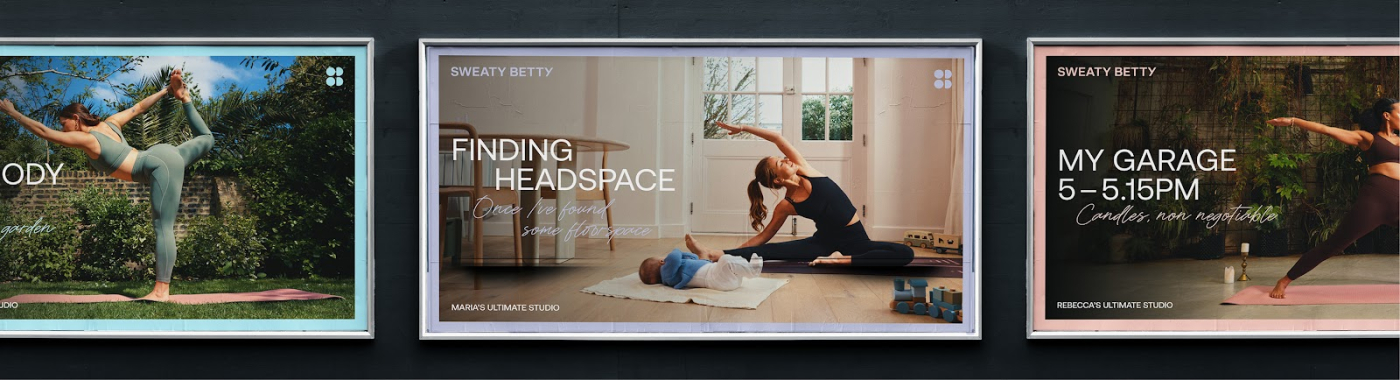
With our latest campaign for Sweaty Betty’s ‘Ultimate Studio’ Yoga Collection, it could have easily fallen into a trap of launching a collection which leaned on product insight only. But we wanted to explore what ‘ultimate’ means today for those that practice Yoga daily. In an industry that can project an untruthful image of the perfect poses or handstands and ‘golden hour’ studio lighting – we wanted to tell a ‘real reality’.
Whether you’re a new mum finding some headspace between your child’s naps or a mum and daughter who have become closer through their practice, these are true stories that aim to explain how everyone’s ‘Ultimate Studio’ is different. The time of day, the place, and the people that surround you are what make that ‘studio’ an ‘ultimate’ space.
“Ultimate doesn’t mean the best, it means the best I’ve got today,” Maria says in one of the films. This honest statement and ‘gleaming’ detail drove the essence of the whole campaign.
Truth often hits hard, it’s hard to find, it’s personal, it takes bravery to tell, but it’s worth finding as it will always connect hearts.
‘Beauty is truth, truth, beauty.’ — John Keats, extract from Do Build