
Voices
Inclusion isn’t a comms line, it’s a creative process
Embedding inclusion into the way we work is essential to creating genre-defining work.
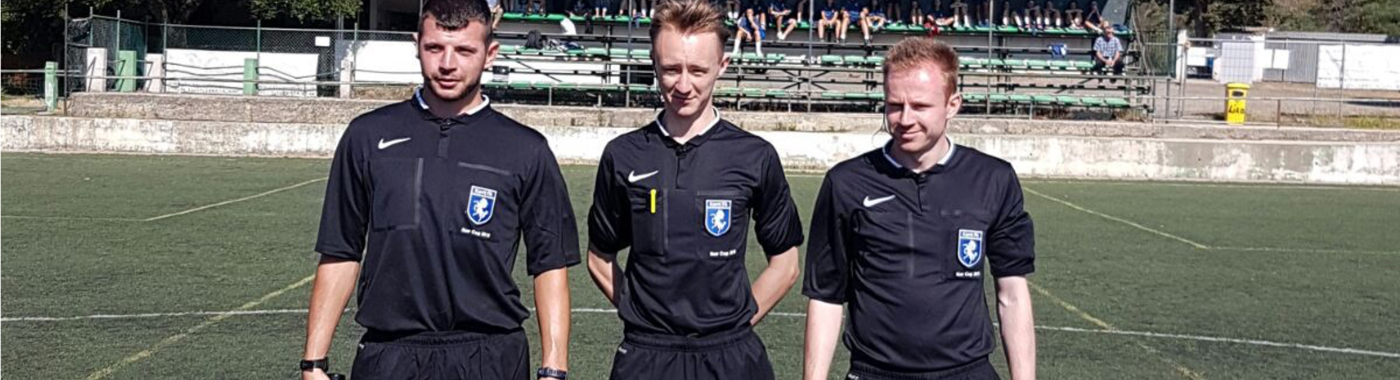
Football has always criticised referees, but we are in danger of creating pantomime villains writes Nick Fruin, Founder of Spike.

Have we reached football’s tipping point on referee abuse?
Football has always criticised referees. That’s part of the game.
But what we’re seeing now, more than ever, is moving into degradation.
As a former semi-professional referee who eventually walked away, I’ve watched the language used about match officials shift from disagreement to open contempt. And with the reaction to Chris Kavanagh’s performance at Villa Park this weekend, it feels like we’ve crossed a line.
There will always be mistakes; referees are human.
But the language is telling.
‘I would like the officials to do their job properly. It’s not too much to ask, is it?’ said Alan Shearer on Match of the Day.
‘This is one of the worst decisions I’ve ever seen,’ added Wayne Rooney, a man who once called for a referee to be “banned and fined” after a mistake against his team. Notice the framing. It’s catastrophic.
Shearer went further, suggesting officials looked ‘petrified’ to make decisions without the ‘safety net of VAR.’
Petrified. Worst ever. It’s all fan-baiting theatre and match officials are the pantomime villains.
We want unachievable perfection. We want referees to be invisible and flawless.
Nick Fruin, Founder of Spike
Football demanded VAR because it couldn’t tolerate human error. Every missed offside was a scandal. Every marginal penalty a conspiracy against your team.
Now VAR exists, and the same voices complain it’s ruining the game.
So, which is it?
We want unachievable perfection. We want referees to be invisible and flawless. Authoritative, but not authoritative enough to upset us.
No other elite profession is scrutinised with this level of moral outrage for split-second human judgement.
If a striker misses an open goal, it’s poor finishing.
A manager gets tactics wrong, it’s a brave decision that didn’t come off.
A referee makes a marginal call? Disgrace. Accountability. Investigation needed.
Why is the language different?
When pundits describe referees as incompetent, arrogant, or overwhelmed, it legitimises that tone everywhere else.
Nick Fruin, Founder of Spike
The problem is that what’s said in the studio doesn’t stay in the studio.
When pundits describe referees as incompetent, arrogant, or overwhelmed, it legitimises that tone everywhere else. On social media, in Sunday league parks, and to supercharge parents that are desperate for their kids to win in youth football.
At grassroots level, referees turn up alone. It’s like being the kid that’s picked on in the playground. Most will give you a faceless nod or perhaps make a comment like ‘not you again’, even if you’ve never made a contentious decision towards that team. It’s just ‘lad’ football culture but when there’s no team behind you it’s isolating and intimidating. Why would anyone want to give up their weekend to do that?
In my experience, I’ve been spat at, abused for my appearance and even told that my mum doesn’t love me (harsh). But the narratives that are shared on social media by players, describe refs as ‘arrogant’ that they ‘want it to be all about them’ and sometimes ‘ruin the game completely’. How can this be right?
Those that defend match officials often talk about pundits and players at the top level causing a trickle-down effect to grassroots, perhaps this is that in action.
From school playgrounds to terraces, authority figures are easy targets.
Nick Fruin, Founder of Spike
There’s something cultural at play.
From school playgrounds to terraces, authority figures are easy targets. Football grounds, historically outlets for tribal frustration, amplify that instinct. The referee becomes the symbolic authority in a stadium of 60,000 people who believe they’re wronged.
But symbolic authority is still human.
Referees train relentlessly. They pass fitness tests most wouldn’t attempt. They manage egos, dissent, and chaos in real time. The recent referee-cam footage shows the cognitive load required, constant scanning, communication, positioning, de-escalation.
We rarely talk about that skill. Instead, we reduce them to punchlines.
The consequences are already visible.
Grassroots refereeing numbers are under pressure. Abuse is one of the primary reasons officials quit. Without referees, there is no game, not at elite level, not at grassroots.
And yet the discourse grows more hostile.
Criticism is fair. Debate is healthy. Accountability matters.
But there is a difference between analysis and vilification.
When pundits who have never officiated speak with disdain about ‘doing their job properly,’ it sends a message: referees are fair game. They shouldn’t be.
Just as I wouldn’t claim to understand the technical demands of executing a bicycle kick like Rooney or coaching a title race like Arteta, perhaps it’s time those who’ve never held a whistle recognise the complexity of the role before questioning the competence or character of those who do.
Football demands better from its officials every week.
It’s time it demanded better from itself.
Nick launched Spike in October 2025, as a new agency within the W Communications Group, dedicated to delivering smart and culturally connected sport partnerships. Nick started out at the W Group in 2018, with the last few years focused on for developing W’s Sport & Entertainment division, resulting in award winning-work for both rights holders and sponsors across clients including England Rugby, Sky Sports, Fireball, Camden Town, Chelsea FC and Jaguar as well as community-focused projects with Grenfell Athletic FC.
Looks like you need to create a Creativebrief account to perform this action.
Create account Sign inLooks like you need to create a Creativebrief account to perform this action.
Create account Sign in