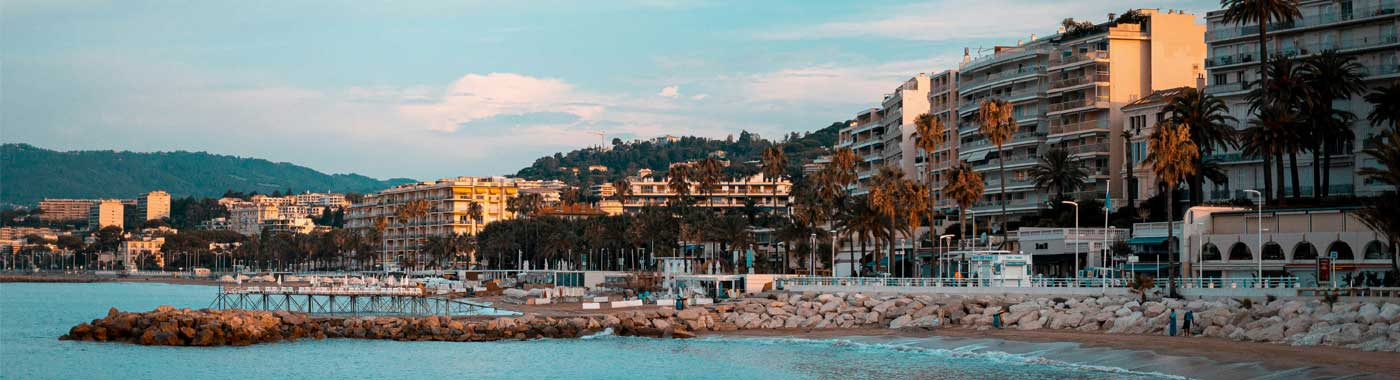
This year there has been no shortage of commentary about what Cannes has become. Depending on who you ask, the festival has moved away from celebrating creativity and towards AI, business transformation, creators, commerce and celebrity. Others have pointed to the disappearance of DEI from the official programme altogether.
There's truth in all of these observations. But while this commentary has focused on what has disappeared from the Palais, I found myself paying attention to what has been quietly built around it.
Four years ago, people measured progress by visibility. This year I'm measuring it by infrastructure.
One of the most encouraging things I saw this year wasn't a panel discussion. It was hearing more about the work the Cannes Lions team have been doing over the past three years to make the festival a safer place for people from minoritised communities. The strategy is called “Care at Cannes Lions”. I was part of one of the first roundtable conversations that informed this work and it’s been refreshing to see this build over time. I felt a tangible difference in the atmosphere around this year’s festival due to the safety measures that have already been implemented. No hyper-scrutiny at checkpoints and on doors. No harassment from security for trying to enter a space I had been invited into. No being ignored by staff while white people were fast-tracked to the front of the queue.
That doesn't mean visibility no longer matters. It absolutely does. Representation on stage still matters. Whose work is celebrated still matters. Who gets invited into the room still matters. But visibility on its own has never been enough.
The other thing that struck me was how much of the most meaningful work seemed to be happening on the fringe.
I missed Inkwell having their own beach this year. It was never just another branded activation. It was a place to showcase meaningful action, a place to find community, a place for minoritised folks to talk about their work without compromise or caveat. It was a visible reminder that Black marketers, creatives, entrepreneurs and leaders belonged at Cannes. And while Empower and Female Quotient both had a much bigger presence this year (and both were great), they didn’t fill this gap.
Yet Inkwell didn’t disappear after losing its beach. Founder of Inkwell, Adrianne C. Smith of Cannes Can: Diversity Collective, pivoted, running pop-up events in multiple spaces across the Croisette. And each one of these events still very much centred and celebrated people doing the work of equity and justice.
This year there were few, if any, panels talking about diversity and inclusion. But I didn’t miss the performance of DEI where brands congratulated themselves for doing the bare minimum. Because on the fringe, I discovered spaces that were dedicated to people doing the work of equity, not talking about it. Whether this was World Woman Foundation’s two-day conference rethinking creativity for solving complex problems affecting women and girls or the People Like Us flagship event at the FT Nikkei Teahouse, to mention just two.
Celebratory community moments were still very much part of the Cannes party scene too. I attended Campaign’s World Cup England vs Ghana watch party with Word on the Curb and Canva’s amazing Pride party and both events brought me back to the joyful energy of my first Cannes in 2022.
These spaces weren’t just about representation. They centred and celebrated the communities showing up and doing the work, no matter what.
These spaces were built through partnerships between brands and organisations led by and accountable to minoritised communities. They provided platforms where people from minoritised groups could talk about our work in an industry which often renders us invisible and/or less than.
And this matters because these communities don’t just create visibility.
Communities create accountability.
It's one of the reasons we launched Join Our Table, a community for Black British women in 2023. We were frustrated by the lack of representation of Black British women in our industry - a frustration that Cannes brought into particularly sharp focus. We didn't want to create another event. We wanted to build a community that would exist long after the festival ended. And our community is still going strong, three years later.
That's why organisations led by and accountable to minoritised communities matter. They don't simply create space for conversations about representation. They create the relationships, trust and accountability that make lasting change possible.
The spaces I kept coming back to recognised this. They weren’t asking, "How do we reach this community?" They were asking, "Who is already doing the work, and how can we partner with them?"
Nothing demonstrated this better than the brilliant Grand Prix winner of the Glass: The Lion for Change “Too Good - Paid Sick Leave for Cows” - the first Grand Prix for Kenya ever by The Partnership Agency, Nairobi - showing how creativity can drive systemic and sustainable change.
Meaningful change doesn't happen because of yet another panel discussion about diversity. It happens when organisations invest in the people and communities doing the work, and continue to support them long after the spotlight has moved on.
Four years ago I asked whether Cannes was ready for change.
Today, I’m looking at where change has its deepest roots. And I found it in an advertising festival that treats care as a strategic priority. Organisations built for and by minoritised communities that continue to show up despite backlash and defunding. Brands choosing partnership over performance.
The headlines tell us companies are rolling back DEI. The real question is whether they're also walking away from minoritised communities.
The organisations that gave me hope at Cannes weren't talking more. They were investing in relationships and partnerships with minoritised communities.
For leaders who want to build trusted brands, that's the work.
Not who you invite onstage, but who you choose to build with.