Voices
Time for some new age thinking
At the IPA Talent and Diversity Conference, the IPA revealed new research to urge the industry to overcome generational stereotypes.
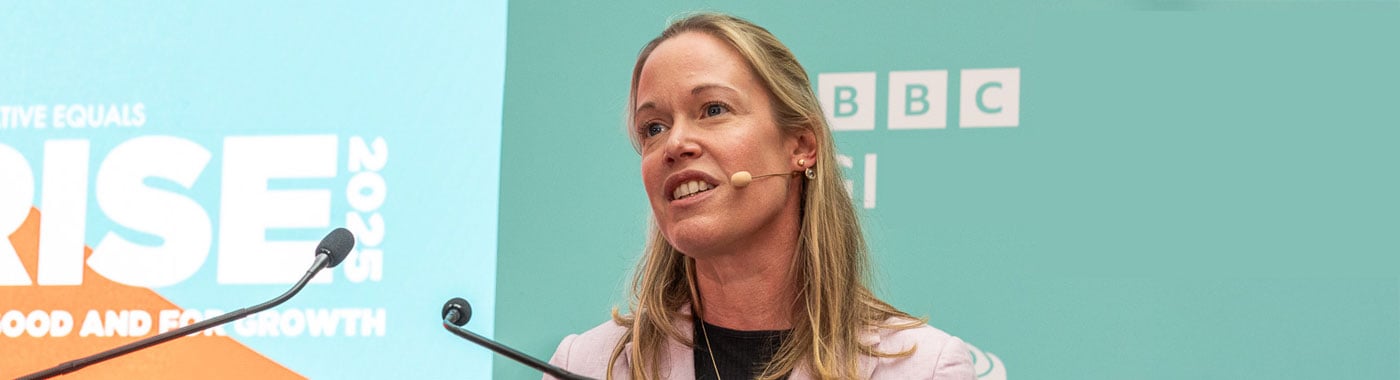
Louise Cohen, Corporate Marketing Lead at Haleon, believes outdated attitudes to age are holding the industry back.

Our ageist attitudes to getting old, not the biological impact of ageing, is making people live shorter, less fulfilling lives.
This was the killer insight delivered by Louise Cohen, Corporate Marketing Lead at Haleon.
Speaking at Creative Equal’s RISE conference, Cohen lifted the lid on how the brand is successfully tackling ageism in its work and shared the impact of ageism on society.
One of the single most important factors in how long we live is how we feel about ageing.
Louise Cohen, Corporate Marketing Lead, Haleon
In a wide-ranging and thought-provoking talk, Cohen shared the fundamental truth that ageism is part of the fabric of everyday life.
Sharing a personal experience of ageism, she shared that when she went on a weekend break that included hiking, her mother pulled her up, asking if she was concerned that she was ‘too old to do it.’ A story that underlines how well established an ageist narrative is in everyday life.
She shared: “In reality, we think these things all the time. Am I too old to wear this short skirt? Too old to go on this bike ride? The reason we ask these questions is not about capability, it is about how endemic ageism is.”
She urged the audience to read Breaking the Age Code, by Dr Becca Levy. Dr Levy explains that one of the single most important factors in how long we live is how we feel about ageing. Not social background or gender.
“For better or for worse, the images that are the products of our cultural diets become the script that we end up acting out,” she explained.
As we get older, our negative age beliefs can stop us from managing our self-care effectively.
Louise Cohen, Corporate Marketing Lead, Haleon
Pointing to Dr Levy’s research, Cohen revealed that our beliefs about age can add or detract seven and a half years to our lifespan. Pointing to research showing one out of two people are ageist and 94% of older US people have experienced ageism, she urged the audience to think about how to better challenge ageist stereotypes.
She explained: “Age beliefs impact our health and can quickly become internalised and impact your sense of self.”
She pointed to the truth that if you make common mistakes like losing your keys in your sixties, you think you are losing your memory. While you would barely bat an eyelid to make such a mistake at a younger age.
“In reality, most people have good health and good cognitive abilities in their later years,” she added.
According to Cohen, age beliefs impact our health psychologically, biologically and behaviourally. She explained: “As we get older, our negative age beliefs can stop us from managing our self-care effectively.”
The stereotypes of age can cause real world harm. With the danger being that older people stop looking after their teeth, stop taking medication and stop taking vitamins. The rationale being, what is the point of these acts of self-care if age is automatically a slippery slope to inevitable determination?
“None of this is inevitable,” explained Cohen, pointing to the ways in which Haleon has addressed this challenge in both its creative work and product design.
“Older adults are hugely important to our business, 15% of the global population is over 60 and that is due to grow.” She explained.
Yet advertising continues to ignore older people in advertising. According to CreativeX, only 1.4% of characters in adverts are over 60. Cohen believes that there is an opportunity for brands to step up and tell more positive stories about ageing.
“When we enjoy life we recognise that our age isn't stopping us, our attitudes are,” she added.
Photo Credit: Bronac McNeill
Looks like you need to create a Creativebrief account to perform this action.
Create account Sign inLooks like you need to create a Creativebrief account to perform this action.
Create account Sign in