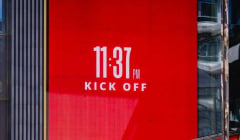
Tennent’s dreams of Scotland’s World Cup
The campaign celebrates Scotland’s participation in the men’s World Cup group stage for the first time in 28 years.
In an increasingly progressive era of sports marketing, industry experts share how brands can make the most of rugby’s Six Nations.
While the celebration of blood, sweat and tears in rugby marketing increasingly belongs to a bygone era, is there more to be done to elevate rugby as a platform for progressive brands?
In 2025, the Guinness Men’s Six Nations was watched by nearly 130 million fans globally, signalling a 6% increase in audience compared to the previous year. This year also brings the experiential opportunity of a Thursday night fixture, but are brands even in the starting blocks?
The stereotype of hordes of bankers in red chinos at Twickenham undoubtedly fails to recognise the inclusiveness and character of grassroots rugby across the UK. While women’s rugby continues to be a blueprint for resilience, commercial growth and imaginative marketing, there is more to do.
Research from the Women’s Sports Trust, funded by the RFU and O2, revealed that while the Red Roses have won the past six consecutive Guinness Women’s Six Nations tournaments, 63% of rugby union fans aren’t yet able to name a player on England’s women’s team. Yet, ask yourself honestly, how many men’s players can you name?
But just as we stereotype the chaps in the stoop week after week, it is equally easy to stereotype the brands in play: finance, automotive and of course, Guinness. While the addition of TikTok highlights the growing influence of social media, is the truth of the good, the bad and the rugby that it has had one foot in the past for far too long?
With this in mind, we asked industry leaders: In the age of progressive sports marketing, has the Rugby Six Nations run out of steam as a marketing platform?
The beauty of mainstream sporting moments like the Six Nations is that they are mainstream. These moments reach beyond ‘rugby fans’ and find more casual supporters who enjoy the occasion more than the sport itself. It’s an opportunity to socialise, to scream a national anthem (shout out Flower of Scotland!), to boo along without knowing the rules, and dare I say, enjoy the sight of huge men running into one another. In short, it’s an excuse to meet up with your friends and consume - and therefore an opportunity for brands.
For many brands, especially including alcohol, these moments represent a massive category entry point, allowing them to reach beyond fandom. It’s a broach reach moment which carries an emotional charge which brands can work with. You’re not looking to spark loyalty in these moments, but to reach new consumers.
That’s not to say that grassroots sports and the women’s game aren’t also opportunities: they are simply different ones, which should run in tandem to fulfil different aims.
The Six Nations doesn’t lack energy, but brands dilute it when they treat it as inventory rather than entertainment.
This is a tournament built on ritual, rivalry and release. As the backlash around scrum-time ads showed, fans are highly sensitive to anything that breaks the drama. In emotionally charged environments, interruption isn’t additive. It’s the equivalent of interrupting a Glastonbury headline set at the chorus for a sofa warehouse clearance. Or pausing Line of Duty mid-“Mother of God” for a comparison site meerkat.
Technically possible. Socially unforgivable.
Properties like The Six Nations aren’t media platforms to badge. They’re worlds to play within. Six unions, centuries of rivalry, cities that change personality on matchday. It’s a living entertainment universe. The opportunity isn’t to interrupt the climax. It’s to create stories that belong in the world around it.
TikTok points in the right direction: creator-led, culturally fluent, designed around how younger audiences actually experience the tournament, through personalities, memes and moments beyond the 80 minutes.
The shift is simple. From buying space to building entertainment.
Coming from New Zealand, I see rugby through a different lens. Here, the Six Nations can still feel like heritage on repeat: pale, male and stale — a traditional, beery boys’ club.
Sure, rugby’s beery in NZ too. But it’s also electric, because it belongs to everyone. Every kid wants to be an All Black. Ruby Tui started playing rugby with the boys at school because that’s just what you do. Rugby in NZ is as widespread and inclusive as football is here.
That’s the opportunity for the Six Nations: stop selling rugby like a museum piece and start treating it like what it can be — a modern cultural product. Community-first (built from the grassroots up), values-led (grit, determination, belonging), and genuinely inclusive.
I’ve felt that future firsthand. I was lucky enough to watch Bristol Bears v Saracens Women at Ashton Gate and the atmosphere was unreal — not sneery, jeery, beery and judgy, but a proper carnival: kids everywhere, noise, warmth, joy. The same energy you see in women’s football. A positive community, not a gated one.
Rugby hasn’t run out of steam; it’s evolved. Now it just needs to ditch the old cloak of outdated masculinity and step without any reserve into the new world it’s already growing into.
I should caveat from the off that I am probably what marketeers could call “rugby core”. I may not own a pair of red chinos, but I know people who do and may have once called Twickenham “HQ”.
Do I think the Six Nations has run out of steam as a marketing platform? Short answer – no. Could the organisation, unions, sponsors, etc., do more to help market the game better, in a more progressive way, as seen in other sports? Probably.
But in rugby there is also an argument for letting the sport do the marketing itself. Wales aside (sorry Wales), international rugby has never been in a stronger position. High scoring, unpredictable and featuring the best athletes from any sport. PREM Rugby has leant into this well, amping up the confrontational nature of the sport, with strong results.
Rugby often – sometimes unfairly – gets compared with football. Against a sport that sits at the crossroads of fan culture, fashion, music, gaming and broader social issues.
But look at the Red Roses and the way the team and their personalities were marketed by England Rugby during the Women’s World Cup, or the content adidas produces with France Rugby. Rugby is moving into these spaces but doing it in a way that is authentic to the sport.
I think there is a misconception that progressive marketing, using new channels and attracting different brands to the sport, means replacing traditional sponsors and media. But isn’t there room for both? A challenger brand trying to draw in new audiences working side by side with more established partners, serving traditional audiences and their lovely red chinos.

The Six Nations has not run out of steam as a marketing platform. But perhaps rugby’s core audience has.
Recent progressive marketing moves such as the Thursday night kick-off, Guinness’s 0.0% sponsorship, sponsor-funded halftime light shows, ITV’s in-game ads, and Netflix’s Full Contact all show clear intent to attract new fans and grow the game commercially.
The real barrier is not strategy or execution, but resistance to change within rugby’s traditional community. Almost all the above examples have been criticised almost as a point of principle. Even the standout superstar-in-waiting, Henry Pollock, is pilloried and a victim of tall poppy syndrome.
Borrowing from Byron Sharp, to continue to grow, the Six Nations must reach the widest possible audience, which will mean facing criticism from its Barbour-wearing loyalists.
Without continual innovation and broad targeting, rugby risks losing relevance in the face of (more snackable) global sports and entertainment competition.
My advice to marketeers in this space: hold your nerve, embrace Rugby’s wonderful grassroots community, ignore the naysayers, and keep innovating!
Rather than running out of steam, the Six Nations is entering a phase of reinvention that makes it increasingly compelling for brands.
In an attention economy where live sport remains one of the few reliable drivers of mass reach, the tournament’s sizeable and growing audience signals continued cultural relevance. In the UK alone, Six Nations fixtures attract peak TV audiences of 6–8 million per match, while social video views continue to grow year-on-year as younger audiences increasingly engage through short-form platforms, including tournament sponsor TikTok.
The notion that rugby’s audience is narrow or outdated is also being challenged. RFU data shows over 2.5 million people now play rugby in England, with women and girls’ participation growing by more than 30% since 2017. Women’s rugby audiences have also surged, with the Women’s Six Nations delivering double-digit growth in broadcast and digital viewership in recent seasons, broadening the tournament’s cultural footprint.
Crucially, research consistently shows that sports sponsorship delivers higher recall and emotional engagement than standard digital display. At the same time, the Six Nations is embracing more innovative media spaces, including enhanced in-game advertising, broadcast integrations and digitally enabled placements that allow brands to align with key moments of drama and emotion in real time.
Awareness gaps remain, but these represent opportunity. For brands prepared to invest in a sport rooted in community and ‘rugby values’, the Six Nations offers rare scale, trust and emotional depth.
The tournament has not peaked as a marketing platform - its potential is still being realised.
Looks like you need to create a Creativebrief account to perform this action.
Create account Sign inLooks like you need to create a Creativebrief account to perform this action.
Create account Sign in