Trend
Sport and the CSR shift
CSR is shifting and long-term brand action is winning over PR moments

System1 uncovers the secrets to Aardman’s success in new book, Putting On a Show.

From Wallace and Gromit to Shaun the Sheep, animation studio Aardman knows a thing or two about creating characters that audiences adore. For 40 years, Aardman has developed iconic films as well as commercial work for brands, introducing characters such as Lurpak’s Douglas, Maynard’s Scotsman and the Thatchers family.
Upon discovering that campaigns made by Aardman vastly outperform the average ad, we at System1 decided to dig deeper to uncover the secrets to Aardman’s success, sharing the insights in our joint book Putting On a Show.
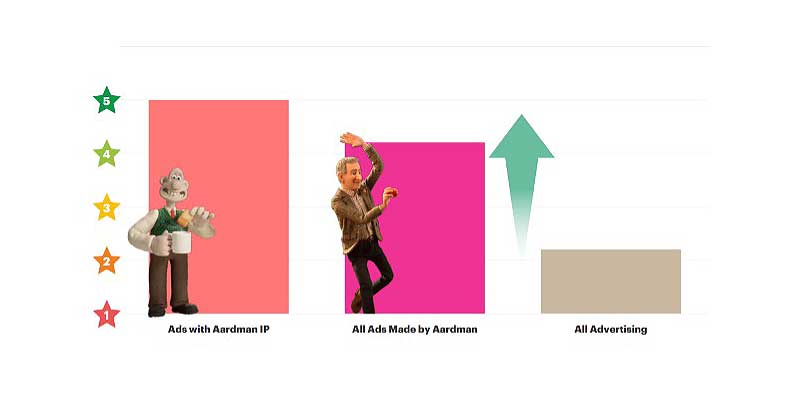
Aardman approaches characters in advertising in several distinct ways. Each strategy is effective at driving short- and long-term effects.
1. Leveraging familiar faces
Aardman allows brands to borrow its famous IP, infusing stories with characters that are already widely recognised. In the best cases, like Barbour, the brand commits to leveraging the same characters over the long term so that they become consistent, fluent devices, appearing in numerous scenarios.
In 2023, Barbour employed Shaun the Sheep and the Farmer to showcase its high-quality wax jackets. The characters were the perfect fit for the narrative and didn’t overshadow the brand, which can be a risk when borrowing well-known IP. In testing, 88% of viewers correctly attributed the ad to Barbour.
Great advertising begins with a story, and the most effective ones put characters at the heart of these narratives.
Andrew Tindall, SVP, Global Partnerships, System1 and Beth Marchant, Senior Strategy Manager, System1
A 2024 follow-up brought the characters back once again for more antics on the farm. Both ads scored ‘Exceptional’ on long-term brand-building potential, with the first iteration landing the maximum 5.9-Star score in System1’s testing and the sequel at 5.6-Stars, along with strong short-term sales potential. Characters deliver on both the long and the short when used thoughtfully.
2. Creating your own character
Another approach is developing brand-owned characters that can be featured again and again. Aardman’s iconic 90s Lurpak campaign introduced Douglas, a man made entirely of butter. In one ad, Douglas’s spirited personality and humorous interactions with a refined female narrator showcased Lurpak’s fresh taste and premium quality with a playful, satirical twist.
The true genius of the ad and the wider campaign lies in its character design and animation. Aardman’s craftsmanship shines through, with Douglas’s playful expressions and exaggerated movements embodying the fresh, light-hearted nature of the brand. His witty interactions with the towering, elegant narrator serve as a clever metaphor for Lurpak’s ability to bring joy and a touch of indulgence to everyday moments.
3. Updating characters with Aardman’s style
Lastly, there’s the approach of reviving familiar brand characters through the studio’s distinctive animation style, as witnessed in work for Nestlé’s Chocapic.
Aardman’s skillful claymation puppetry brings Pico, a fluent device familiar to audiences for over 30 years, into a new light. By reviving him from 2D animation to claymation, the ad creates a wave of nostalgia, reminding viewers of childhood memories and the original magic of Chocapic, all while keeping the product central to the story. The ad achieved 4.2-Stars (‘Strong’ brand-building potential) in testing and ‘Exceptional’ short-term sales potential.
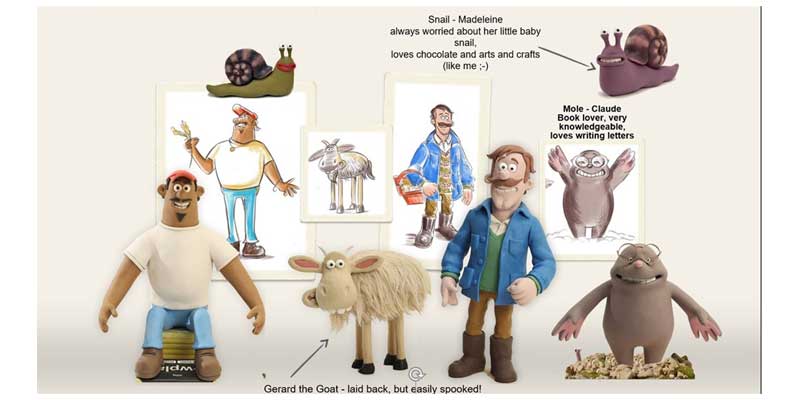
Great advertising begins with a story, and the most effective ones put characters at the heart of these narratives. They give us someone to care about, root for, or laugh with. As Orlando Wood explains in his book Look out, characters are not just decorative; they are emotional anchors that draw us into the world of the story. They connect with the right side of our brain, the part that understands relationships, empathy, and emotion.
Strong characters are full of agency and vitality. A character with agency actively drives the story forward, making choices, solving problems, or reacting to the events around them. Vitality is what makes characters feel alive. They move, express, and interact in ways that resonate. Orlando Wood calls this unique essence quiddity, the specific traits that make a character stand out. It could be a memorable gesture, a particular way of speaking, or a look. Quiddity gives characters their individuality.
Equally important is the betweenness of characters, the way they interact and connect with others. Advertising that shows characters interacting, through a shared glance, a humorous exchange, or even a moment of conflict, feels richer and more compelling. These connections amplify the emotional pull of the story, making it feel authentic and human.
Characters are also the drivers of drama that engages audiences. Stories come alive through moments of action and change. These incidents are the turning points that propel a narrative forward, revealing character and evoking emotion. They capture our attention by creating tension, surprise, or resolution, keeping us hooked as the story unfolds.
Whether you choose to lean into famous assets or develop your own characters, they should employ unique characteristics that will capture attention and drive positive emotion. And to maximise their commercial impact, don’t forget to let your characters charm audiences across a variety of channels and campaigns. There’s magic (and effectiveness!) in entertainment.
Putting On a Show is System1 and Aardman’s joint book that celebrates the magic of advertising with character, story, humor, and craft – and shows how putting on a show, as Aardman so often does, delivers lasting business impact.
For more information about System1, the Creative Effectiveness Platform, visit system1group.com/. For more information about Aardman, an independent, multi-Academy Award® and BAFTA® award-winning studio, visit aardman.com.

Andrew Tindall is SVP, Global Partnerships at System1 and Beth Marchant is Senior Strategy Manager at System1
Looks like you need to create a Creativebrief account to perform this action.
Create account Sign inLooks like you need to create a Creativebrief account to perform this action.
Create account Sign in