
Hot Pick
Tennent’s dreams of Scotland’s World Cup
The campaign celebrates Scotland’s participation in the men’s World Cup group stage for the first time in 28 years.
When brand creative experiences use creative storytelling the result can be art.

Offended by art and retail being in the same sentence? I don’t blame you. One deals vehemently in meaning, the other in margins, but like it or not, they’ve been working together for over a century. In 1901, Designer Lady Duff Gordon staged the first ever catwalk, complete with scenery, lighting, and live music, proof that even then, they knew that to sell you must borrow from theatre, romance, and story to create impact.
The catwalk shows of today represent some of the highest form of creative product storytelling and can be a beautiful example of art and retail done right. For Louis Vuitton Men’s Fall/Winter 2026, Pharrell Williams staged the collection within a striking midcentury-inspired set-like structure titled the ‘Drophaus’, developed in collaboration with a Japanese architectural studio. The show unfolded to a live orchestra and choir, resulting in a cinematic and immersive experience blending architecture, sound and spectacle into a cohesive environment that extended beyond a traditional runway format.
Maybe the physical space can provide something that online can’t, and maybe that’s linked to art, experience and immersion.
Gaby Watson, Senior Creative at Syn
Further down the retail pipeline, where money changes hands with the consumer, this care in storytelling and creativity seems to get a bit lost. Immediacy and convenience seem to be the priority for both retailer and consumer, pushing commerce online. As of late 2025, around 28% of all UK retail sales were made online, up significantly over the past decade, according to the Office for National Statistics (ONS). So how do we pull the consumer back into the store and save the high street? It’s not as though the consumers aren’t willing to play their part, with 81% of Gen Z and 78% of Millennials (‘The Harris Poll’, February 2025) wanting to disconnect from devices. A recent study found 79% of Gen Z want retail destinations to offer more than just shopping (American Express and the future consultancy trajectory), maybe the physical space can provide something that online can’t, and maybe that’s linked to art, experience and immersion.
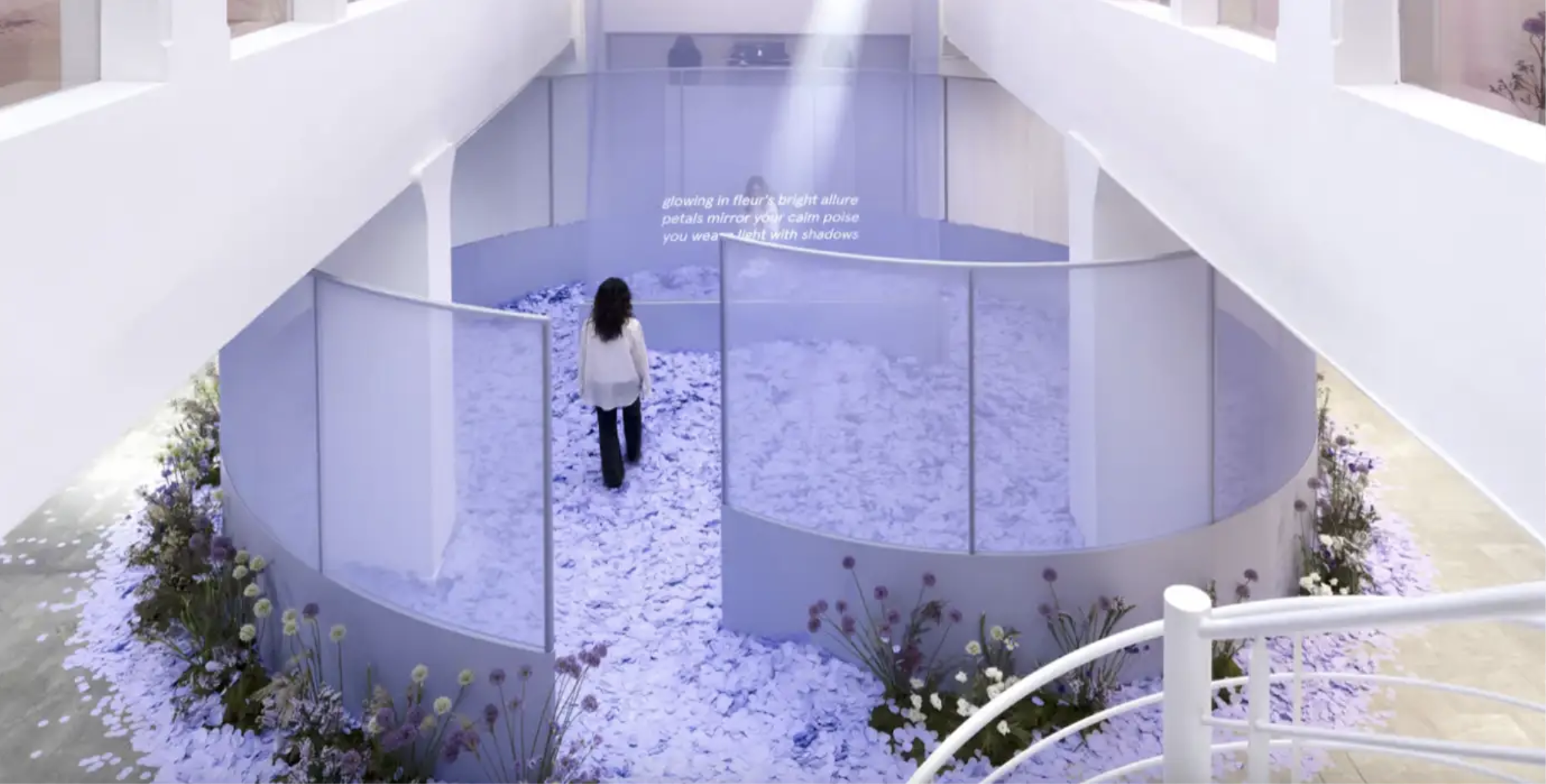
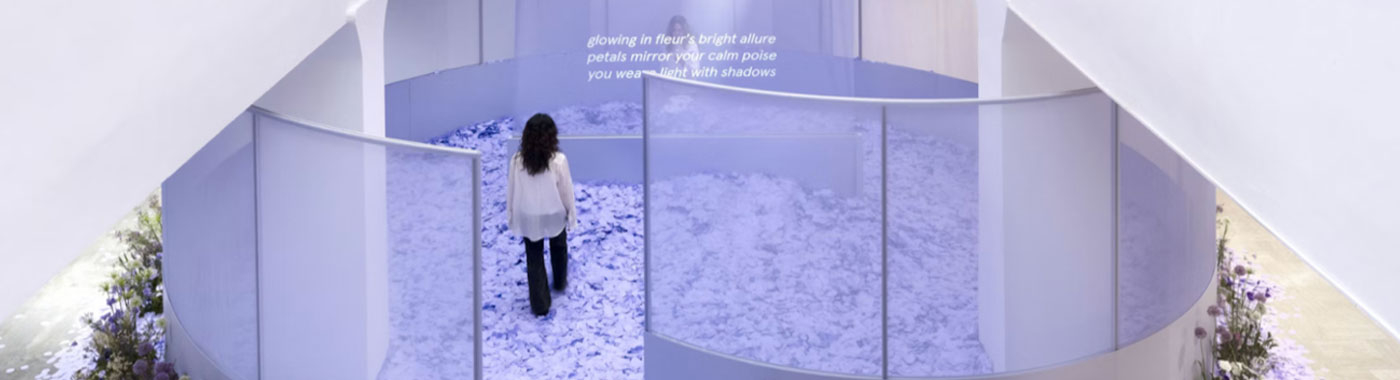
Glossier's product launch for their Fleur fragrance last year is a beautiful example on how the partnership of Art and Retail can create a stir. Set in a beautifully designed immersive space, the experience includes a hidden sensor that detects the bottle being lifted, triggering a choreography of light, sound and projector that casts the visitor’s silhouette and a poem written and read by an AI voice. Some may argue that this is a lot for a simple product launch, but investing effort, care and budget into less obvious avenues of the consumer experience builds an unforgettable connection to product and brand that you just can’t get with a simple window banner and product plinth. The design and the emotional impact led to a ripple effect across socials, with some wishing they could’ve attended and those who did proudly showing off their experience.
And that’s not to say that these experiences have to be emotionally and ethereally deep to reach their audience. There are as many types of Art as there are brands. Each must take an approach that feels suitable for its audience. Jellycat recently transformed their Harrods shop-in-shop into ‘Jellycat Airlines’ with full themed set design, live actor interactions, themed photo opportunities and bespoke packaging and gift-with-purchase – driving organic, viral attention.
These immersive spaces can also provide more than just an experience for the consumer. The Nike ‘House of Innovation’ in Shanghai is a best-in-class example of how to be visually impactful whilst also educating on both product and brand history. Heidi O’Neill, the then President of Nike retail, was clear about the space’s purpose, saying ‘we believe we could reinvent retail by making it experiential, by elevating the power of our brand and by bringing storytelling to shopping in a way that other retailers hadn’t done’. So they did, crafting 6 levels of engaging customer experiences to connect with the world of Nike.
At Syn, we get the opportunity to create these physical spaces for clients. Each project we deliver needs a purpose for the consumer alongside the experience, a reason for them to be attracted to the space, engage and share content, as well as build a connection with the brand that will foster a loyalty that keeps them coming back for generations. Recently, the team was tasked with creating a space to launch a product, inspired by rain. This cultivated in an immersive piece for Dr Martens Oxford Circus store that included a 360 wet-look infinity mirror in which the consumer could play, accompanied by rain sounds and smells. The highlight was a 7.5m² reactive video floor featuring the product logo surrounded by puddles and raindrops that reacted to movement.
All these impressive examples show the exciting possibilities of the physical space, and by combining retail and art experiences, we can more effectively connect the consumer brand and product. I have hope for the physical space in relation to retail but maybe I’m biased because it’s what I love to design.
So is brick and mortar retail on its way out? I certainly hope not, it's where I plan to put my art.
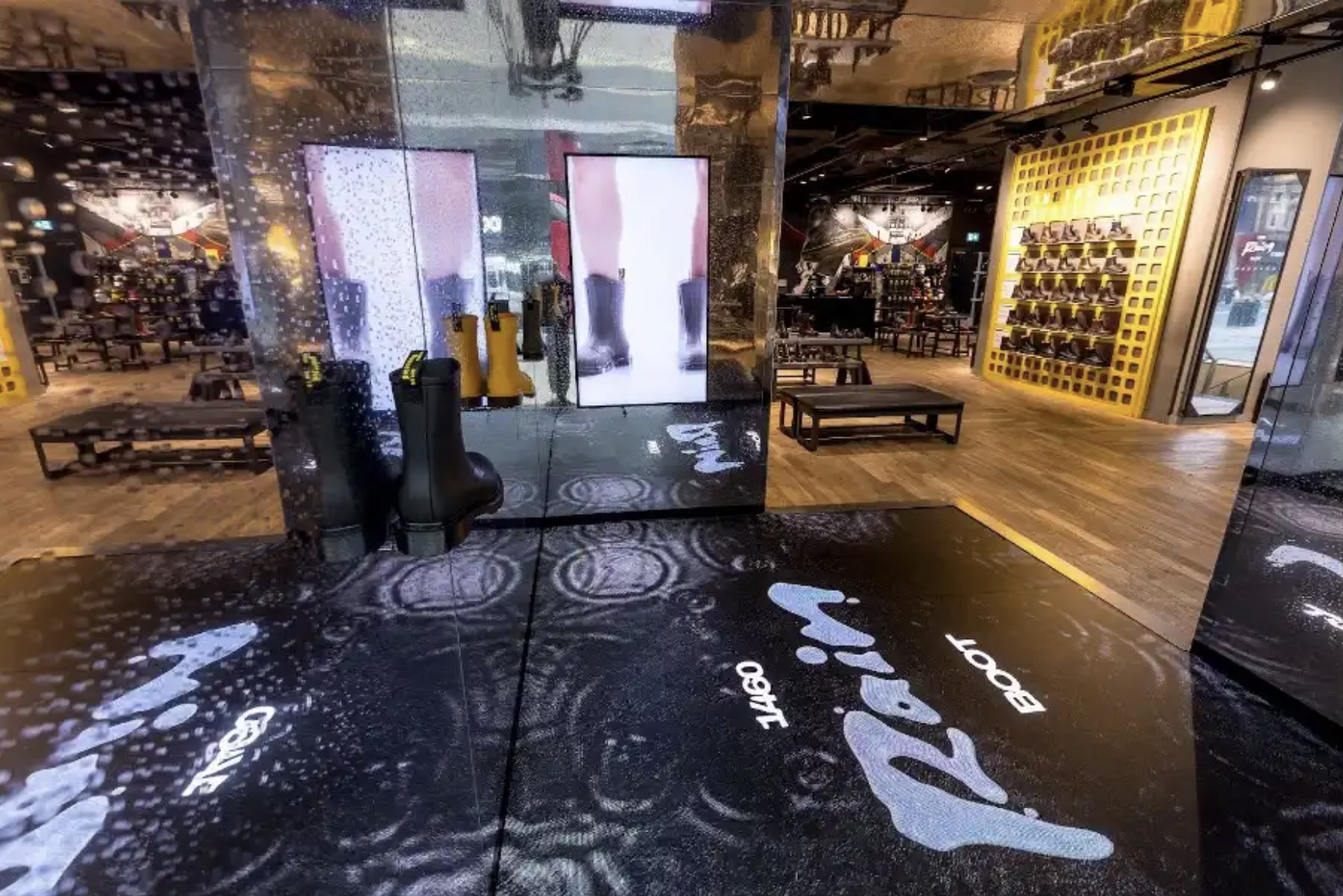
Dr Martens launch for Rain 1460. Immersive 360 Rain Experience created by creative agency, Syn
With over 14 years in the industry, Gaby has worked across a broad range of installations, art features, stage designs, storyboards, window displays and store environments. Collaborating with brands such as Dr. Martens, adidas, Eastpak, Holland & Barrett, the BBC and HB Reavis. Much of Gaby’s work sits at the intersection of art and retail, exploring how experiential displays can draw attention and create lasting, memorable moments within commercial spaces. Her thinking reflects the diversity of the projects she has been involved in, allowing her to move fluidly between concept development and spatial execution. Gaby is particularly interested in the process of working through creative problems and developing considered, innovative responses that connect ideas to physical form.
Looks like you need to create a Creativebrief account to perform this action.
Create account Sign inLooks like you need to create a Creativebrief account to perform this action.
Create account Sign in