Hot Pick
Tennent’s dreams of Scotland’s World Cup
The campaign celebrates Scotland’s participation in the men’s World Cup group stage for the first time in 28 years.
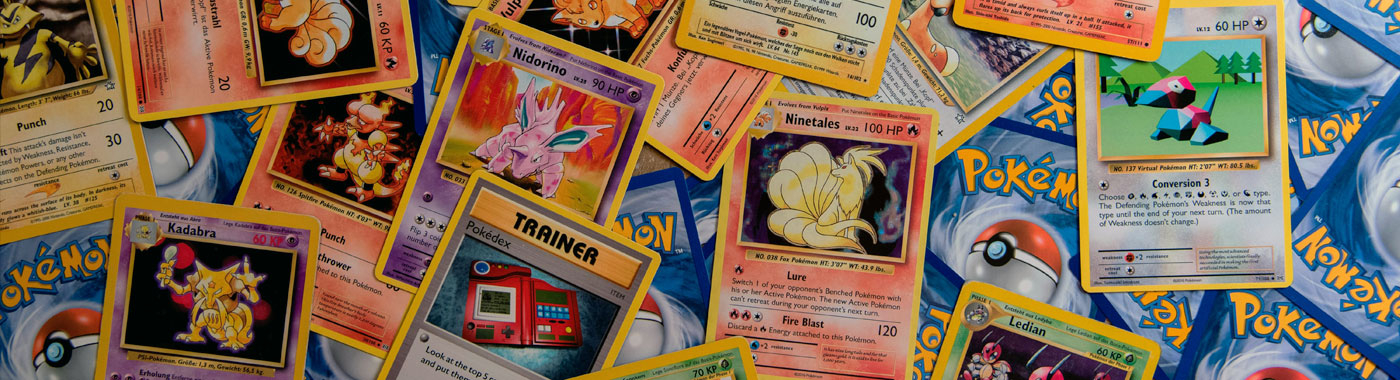
As Pokémon celebrates its 30-year birthday, Rah Bhatt reminisces on what makes the brand great.

Growing up in Mumbai in the late ’90s, Pokémon arrived in bits and pieces - through Cartoon Network, Game Boy cartridges shared among friends, and a sea of neon-yellow stationery emblazoned with Pikachu. Its presence felt scattered, unofficial even, yet magnetic
Years later, I watch my eight-year-old and her classmates trade Pokémon cards with the same intensity I felt racing to catch them on screen. In fact, her school even banned the cards at one point because they were too distracting - a modern testament to how seriously kids still take this world.
What strikes me most is how little things have changed. From the obsession, to the quest for rare finds, it all forms Pokémon’s shared language which has been passed down across decades, continents and technologies.
Even in an era of multiple screens, the rituals remain largely centered around real-life experiences; trading, collecting, showing off rare finds, much like they were when Pokémon first spread through playgrounds.
Pokémon’s magic lies in its participatory nostalgia. Unlike many classic IPs that lean on memory alone, Pokémon invites repeated engagement across formats and generations. Its sonic identity - iconic riffs, creature sounds, and theme music - plays a central role. Pikachu’s electrifying “Pika!” is instantly recognisable across generations. Even Jigglypuff’s lullaby evokes shared experiences: a mix of delight, frustration, and community laughter.
For those like me, who first encountered Pokémon in the ’90s, these sounds are memory triggers. But for today’s kids, they are discovery points, guiding new play and social connection. Regardless of the generation, we have all shared the same feeling of community around the franchise. Pokémon’s sound has become the bridge between generations, collapsing time and turning a brand into a shared experience rather than a dated reference.
Pokémon’s sound has become the bridge between generations.
Rah Bhatt, Creative Strategy Director at MassiveMusic
This intergenerational appeal is no accident. Pokémon’s sound design exemplifies what modern brands often struggle to achieve - consistency that adapts. Its modular sonic system is designed to be flexible, so it can be adapted for games, TV, merchandise and apps like Pokémon Go. No matter the version, it still clearly sounds like Pokémon. It’s not a single jingle repeated ad infinitum, but a dynamic, scalable auditory ecosystem.
Science gives us a framework for why this works. In 2019, Stanford researchers discovered that adults who played Pokémon as kids developed a unique pattern within a part of the brain called the occipitotemporal sulcus, which sits in the visual cortex and exists to help us recognise objects. For people who played Pokémon when they were young, part of this region responded more favourably to Pokémon characters than to other images. In other words, those early experiences left a visible, lasting mark on the brain.
But the visual footprint is only one side of the story. Our brains also connect sight and sound. When we repeatedly saw Pokémon characters and heard their sounds at the same time, especially during childhood, when the brain is highly flexible, those experiences became tightly linked. Because these sounds were consistently paired with imagery, over time, the brain built a strong bridge between the sounds and the emotions tied to them. This connection is rooted in science.
Therefore, when you hear a familiar theme, like Pokémon’s, it triggers autonoetic consciousness - your brain’s ability to mentally “time travel” back to a past moment and relive how it felt. This is reinforced by Music-Evoked Autobiographical Memories (MEAMs), which happen when a song brings back personal memories. As your brain anticipates the familiar melody, it releases dopamine, giving you that familiar, exciting or magical feeling again.
The franchise has forged a connection so deep that its familiar melody can transport us back to the moment the world first captured our imagination - a private homecoming that stays with us for life.
Beyond the individual, these brain responses can scale into a shared experience through social mirroring. This shared state turns an individual's nostalgic trip into a communal bond, allowing fans of all ages to experience a unified sense of wonder. This powerful mix of personal memory and collective emotion creates an intergenerational sync, turning Pokémon’s music from simple game assets into lasting cultural instruments.
From YouTube covers to viral TikTok trends, these moments move the franchise beyond passive consumption into a world of active creation. Even brand collaborations tap into this participatory cycle - heard in the original composition crafted by the MassiveMusic Tokyo team for the landmark Oreo x Pokémon campaign. By building a sonic world that invites such a heightened level of engagement, Pokémon has created a brand identity that remains open, flexible, and culturally alive.
What Pokémon ultimately reveals is the power of a thoughtfully built sensory ecosystem. Its sounds are not relics. They are active threads weaving through the lives of children and adults alike: proof that music can be both memory and medium, nostalgia and participation, history and an ongoing story.
Over 17 years, he has shaped how brands like Google, Disney, L’Oréal, and Samsung differentiate through sound and music. Working alongside agencies including McCann, JWT, Ogilvy, and BBDO, he turns abstract brand ambition into emotionally resonant sonic systems built for recognition, growth, and longevity.
Looks like you need to create a Creativebrief account to perform this action.
Create account Sign inLooks like you need to create a Creativebrief account to perform this action.
Create account Sign in