Fuel Your Imagination
Sainsbury’s pop-up challenges overcomplicated wellness fads
The concept store shows that healthy eating doesn't need to be complicated.
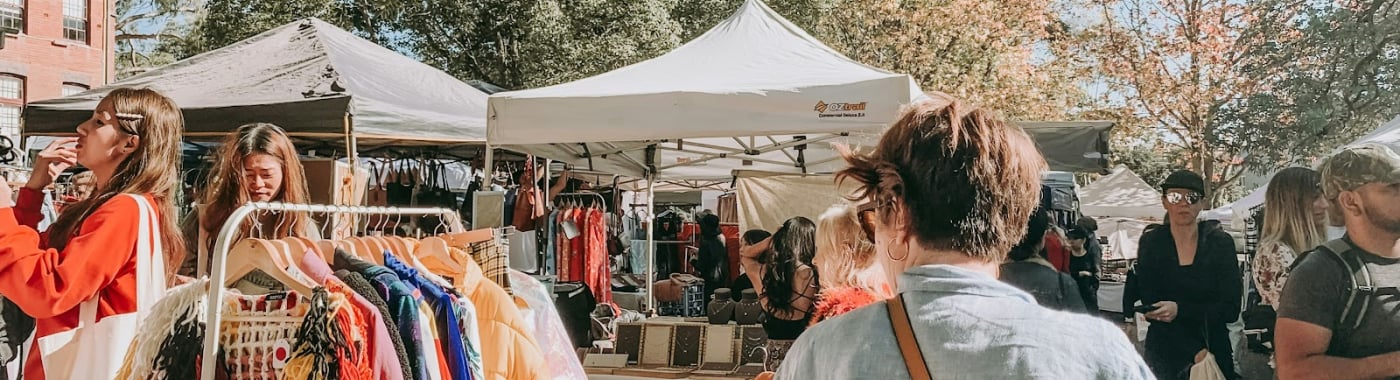
Real-world engagement is essential to building meaningful connections with audiences.

In an era dominated by AI-generated content and ever-accelerating digital experiences, it may seem counterintuitive for brands to lean into physical activations. Yet, it’s precisely this digital saturation that’s fuelling a resurgence of something deeply human: the desire to connect, to feel, and to belong. The return to real-world engagement isn’t just nostalgic, it’s strategic.
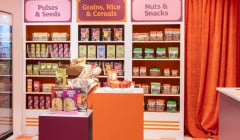
Take Setting Up Shop, our recent activation, which coincided with the inaugural SXSW London. Nestled in the heart of East London, a neighbourhood steeped in cultural history and home to generations of creatives, we created an experience that didn’t just occupy space but belonged in it. We took over a local corner shop, not to overshadow it, but to amplify it. The shop became a studio, gallery and clubhouse, with a spotlight on football, fashion, music and community. An eclectic mix of local and international stars took part, from Brentford FC Women and Hackney Wick FC; Grime MC Wiley; Actor Amrit Kau; to the Jamaican High Commissioner; and many more including our partners GenBTV. In addition, there were workshops, merch drops and live music, all taking place among the narrow aisles of the store. The shop remained open throughout, the original shopkeeper behind the counter, locals popping in for milk or a chat, shoulder-to-shoulder with visitors exploring the curated installation.
The return to real-world engagement isn’t just nostalgic, it’s strategic.
Margaux Bang, Strategist at Sparks EMEA
There was no velvet rope, no QR code to join a waitlist—just a space that invited people to linger, browse, talk, and connect. A space that didn’t interrupt community but became part of it. That’s something AI can’t replicate.
As SXSW and indeed other events, not least Cannes Lions which we attended again this year, have long proven IRL activations unlock serendipitous encounters between industries and individuals. From tech founders to fashion editors, musicians to marketers, these unexpected crossovers spark new ideas and lasting partnerships. And increasingly, brands are waking up to the truth: in-person experiences are no longer a nice-to-have, they’re a business imperative.
Experiential marketing is now the fastest-growing segment in advertising, with the global brand activation market projected to surpass $100 billion by 2026, growing at a CAGR of 10.1%. In 2025, 91% of businesses are expected to compete primarily on customer experience, outpacing product features and pricing.
Why? Because it’s all about sensorial connection.
Digital channels, for all their reach, lack tangibility. IRL activations offer a full-spectrum brand encounter. From the smell of fresh coffee to the texture of packaging, from live music to spontaneous conversations, real-world experiences engage all five senses. This sensory immersion leaves a lasting emotional imprint, far stronger than a digital impression ever could.
In a world increasingly defined by algorithms, these statistics tell a different story: people crave meaning, not just messaging. And meaning is best delivered in person.
Let’s be honest, there’s also a viral edge. Today’s best activations are inherently shareable, blending immersive real-world environments with digital layers like AR filters or Instagrammable setups. This hybrid journey creates powerful user-generated content and peer-to-peer advocacy:
Setting Up Shop wasn't just a moment; it became a movement across platforms, organically extending our reach. And beyond metrics, it sparked real conversations about place, community, and what it means to belong.
It’s not just consumers who benefit. Brand activations are live test labs for innovation and storytelling. Whether trialling a new product, rethinking packaging, or collecting live feedback, real-time interactions offer invaluable insights:
These aren’t just activations, they’re accelerators.
In a post-COVID world, we saw an undeniable boom in IRL experiences. It wasn’t just about "returning to normal"; it was a collective reawakening. People need people. Aristotle said it best: “Man is by nature a social animal.” This fundamental truth doesn’t change with time or technology.
Margaux is an experiential strategist at Sparks based in London, and has a dual MSc in International Business and Management from Ivey Business School and a degree in Journalism and Design from Parsons The New School for Design. She has experience working across various industries including luxury, fintech and FMCG with a portfolio of global clients including L’Oréal, HubSpot, and P&G.
Looks like you need to create a Creativebrief account to perform this action.
Create account Sign inLooks like you need to create a Creativebrief account to perform this action.
Create account Sign in