

Hot Pick
Tennent’s dreams of Scotland’s World Cup
The campaign celebrates Scotland’s participation in the men’s World Cup group stage for the first time in 28 years.
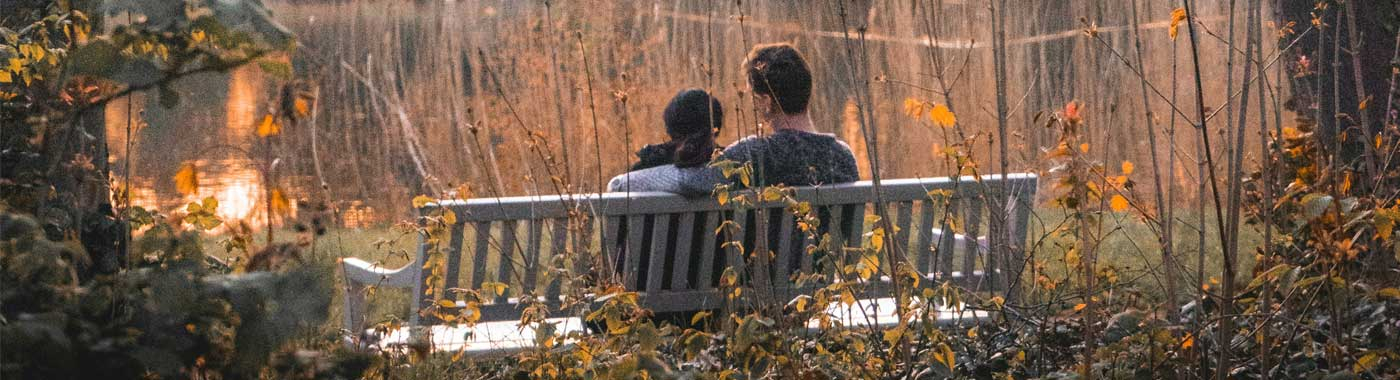
Swiping may be going out of fashion for a generation that champions authenticity.

We talk non-stop about Gen Z craving real connection. Private spaces. Deeper intimacy. And all of that is true. But this is also a generation raised inside systems designed to keep them moving: scroll, swipe, refresh, repeat. Life in fast-forward.
Dating apps behave in exactly the same way. Endless choice. Minimal context. Don’t linger, there’s always someone sexier, funnier, more perfect just one swipe away. Hinge literally has to stop users and say, “too many people are waiting on your reply”, as if people are unread emails being hoarded in an inbox.
The result is a fear of sitting still long enough to actually feel it.
Across the industry, signs of swipe fatigue are mounting. The traditional mechanics of dating apps, endless choice, surface-level interaction and performative profiles, are starting to feel exhausting rather than exciting. For Gen Z, this isn’t about being anti-dating. It’s about dating apps no longer reflecting how connections actually unfold in their lives. This gap is where platforms are losing relevance.
Having grown up in a digital world shaped by algorithms and artificiality, the novelty of a pristine online persona has worn off.
Gen Z strongly desires a deeper emotional connection.
Sam Carrick, Creative Director at Coolr
Instead, there’s an increasing openness to conversations that were once sidelined: life uncertainty, mental health and non-traditional relationship dynamics. That shift is already visible in the dating landscape, with the rise of apps like Feeld that focus on ‘openness and exploration over rigid labels’.
The takeaway for dating platforms? Stop selling an idealised version of love.
Rather than prioritising outcomes like dating apps are used to, Gen Z want to use apps that focus on the process, reflecting the reality of the early days of dating.
That’s why straightforward success stories no longer land in the same way. ‘We matched online and got married’ feels less compelling than narratives that acknowledge those awkward moments, ambiguity and growth.
And yet, a paradox sits at the heart of this generation’s dating behaviour. Research shows that while Gen Z strongly desires a deeper emotional connection, many feel hesitant to express it early on. There’s a fear of being too much, too honest, too intense. Platforms have trained them to keep moving, not to sit with discomfort or possibility.
This is where dating apps could, and should, be doing more.
For a generation that’s been raised online, it’s telling that Gen Z feel more comfortable forming relationships on social platforms than on dating apps themselves. Social media is Gen Z’s safe place afterall, with TikTok, Instagram and Reddit dominating young people’s screen time.
These spaces are where emotions, chemistry and connections happen naturally and organically and yet many dating platforms still operate by a dated format, as if swiping is the main event.
Flirtation now starts in TikTok comment threads. DMs carry more weight than opening lines. Voice notes create intimacy faster than texts ever could. These spaces have become the modern meet-cute. Messy, unscripted and emotionally charged. And that’s exactly why they work.
Dating apps, however, still operate as if attraction exists in isolation. Many are detached from the social spaces, even though this is where Gen Z already spend most of their time and form those emotional connections. Resistant to integrating these behaviours, wary of losing control of the user journey.
In not doing so, dating apps risk feeling outdated to a generation that expects fluidity between platforms, formats and feelings.
Looking ahead at 2026, dating apps are at a recoupling moment and there’s a real opportunity to evolve.
Social doesn’t need to be another pressure point, showing everyone else getting married or winning at life. It should do the opposite. Slow things down. Normalise real moments of connection. Encourage people to sit with something a little longer. Let it linger.
Even technology, often framed as the problem, is part of the solution. Gen Z is notably open to AI in dating. However, not as a substitute for real human connection, as a confidence-boosting wingman. Whether it’s helping phrase a message, ease anxiety or sense-check tone, AI could be used to reduce the most awkward parts of the early days of forming a connection.
Winning over Gen Z in 2026 will happen when dating apps understand where connection already lies and design with that behaviour in mind. Borrowing the emotional intelligence of social platforms like TikTok and Instagram. Recognising that chemistry doesn’t just live inside closed systems anymore.
Sam Carrick is a Creative Director at Coolr, specialising in social-first creative strategy and brand storytelling. He has over a decade of experience across agency and in-house roles, working with major global brands on impactful digital campaigns. Previously, he held senior creative and strategic roles at agencies including Born Social and Fold7. Sam is known for combining strong strategic thinking with bold, culturally relevant creative ideas.
Looks like you need to create a Creativebrief account to perform this action.
Create account Sign inLooks like you need to create a Creativebrief account to perform this action.
Create account Sign in