Hot Pick
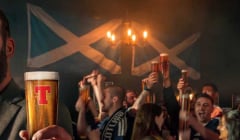
Tennent’s dreams of Scotland’s World Cup
The campaign celebrates Scotland’s participation in the men’s World Cup group stage for the first time in 28 years.

Clara Mulligan, European Head of Design and Managing Partner at Anomaly, reveals what marketing leaders need to know today about the future of women’s football.

A new era of football is here. An era that is unapologetically elite, deeply cultural, and uniquely its own. As the Women’s Super League steps into independence with the launch of WSL and WSL2 and a bold new identity, it signals more than structural change.
It is a shift which is about much more than a change in identity. It marks a profound change in how women’s football is perceived, positioned, and powered — and for brands, it opens up an opportunity that’s both commercial and cultural. Of course this is nothing new; if you follow culture at all, the growth of women’s sport is palpable, propelled by big global moments like the 2022 Women’s Euros to the Paris Olympics. The momentum is visceral and it will only get stronger.
The truth is, women’s football is not the ‘female version’ of the men’s game. It’s different in kind; in how it plays, how it’s led, how it connects with fans, its level of investment and how it’s shaping its future. Brands who see this, and act with authenticity, invest in innovation, and have respect for the game’s unique DNA, stand to gain far more than exposure, they become part of a legacy that will shape the culture of sport forever.
The truth is, women’s football is not the ‘female version’ of the men’s game. It’s different in kind; in how it plays, how it’s led, how it connects with fans, its level of investment and how it’s shaping its future.
Clara Mulligan, European Head of Design and Managing Partner at Anomaly
Too many brands have viewed women’s football as an extension or adaptation of the men’s game. Now, that behaviour is no longer good enough. Now, brands have the opportunity to step up to the opportunity of a new era, and to genuinely create beautiful experiences that propel the sport forward. Meaningful action should be rooted in understanding three key shifts.
Firstly, the Barclays Women’s Super League is a new competition. The most competitive, entertaining and distinctive competition in the world. This is epic football and elite athleticism, combined with a wider entertainment promise by attracting the very best players around the world. Creating a competition that truly lives at the intersection of culture, entertainment and sport.
Secondly, brands have the opportunity to tap into an entirely new inclusive community where fans and rivals are truly connected. There is a unique energy and community to the women’s game which affords marketers new opportunities to build brand love and loyalty with a diverse audience.
Lastly, brands have the opportunity to build a new culture in football fandom. A culture rooted in a gorgeous hodgepodge of coming together. A space where fashion, food and fan experience seep out into culture beyond the stadium and give fans a much richer experience.
The next chapter of women’s football is expressive, fast-moving, and full of flair.
Clara Mulligan, European Head of Design and Managing Partner at Anomaly
What’s emerging now is a sport built on different foundations: community, inclusivity, innovation, and swagger. The game is faster, more open, more expressive, more fluid. Less stoppage, less dives, more shots on goal, more exciting play. The culture is more intimate, more fan-led, and more collaborative. It’s a place where brands have the opportunity to shape the future, not just sponsor the present.
The recent BWSL rebrand is proof of that. Developed in partnership with players, fans, and EA Sports, the identity is not just a logo — it’s a living system built from the movement of elite female athletes. Literally. Their patterns of movement derived from motion captured footage. Transformed into a brand system based on the exact thing that makes the game different — the players, their physicality and style of game play. The new identity is playful, inviting fans to create their own emblems through the force of individual kicks. It honours the players who’ve driven the game forward and reflects the vision of a sport building its own rules.
Embracing this once in a generation opportunity isn’t just about capitalising on a fleeting ‘moment’ for women’s football. It’s building upon a crescendo of momentum that’s been building for decades and will continue to long into the future. The brands that show up with purpose, creativity, and vision will not only make an impact on the game, but on culture at large.
The next era is already in motion. The only question is: will your brand keep pace?
Five rules to build a new playbook for the new era of marketing in women’s football.
1. Be different. Not derivative. Don’t replicate. Elevate. Approach women’s football on its own terms. If your brand wants to engage, look at the specific rituals, values, and aesthetics that define the women’s game — not as a dialled-down version of men’s football, but as its own cultural force.
2. Invest in the long game. This isn’t a seasonal trend or one-time sponsorship play. Growth in women’s football is accelerating commercially, socially, and culturally. The fans are loyal and growing. The players are stars. The stories are rich. Brands that commit now, with consistency and creativity, will be the ones who shape how the game evolves.
3. Collaborate with players and fans, not just clubs. Progressive brands should choose transparent interaction over staged opacity. The women’s game is deeply human. It thrives on access and authenticity. Players are creators, leaders, and cultural icons in their own right. Work with them as collaborators and co-creators, not just endorsers, and your brand will earn credibility and connection.
4. Match the energy. The next chapter of women’s football is expressive, fast-moving, and full of flair. It’s about the future of football, and your creative needs to reflect that. The WSL identity, with its motion-captured emblem, dynamic wordmark, and fire-filled colour palette, sets a new bar for how the women’s game shows up visually. Brands need to bring that same level of craft and ambition.
5. Show up beyond the pitch. Women’s football is about more than 90 minutes. It lives in music, fashion, community, and culture. If your brand wants to belong, think beyond matchday. Create experiences. Tell stories. Spark conversations. Be where the fans are, even when the ball’s not rolling.
Clara Mulligan is European Head of Design and Managing Partner at Anomaly, and a design and creative leader with over 20 years of experience building brands that move culture via brand design. She leads design strategy and brand innovation across Anomaly’s European offices, partnering with some of the world’s most ambitious companies to define and express their next chapter. Passionate about sport, design, and cultural storytelling, she recently helped lead the full rebrand of the Women’s Super League. Her work spans industries and disciplines, underpinned by a form-agnostic, strategically driven approach that blends craft with impact. Clara is a vocal advocate for equity in the creative industries and for the power of design to drive lasting change. Her work has been recognised by D&AD, Cannes Lions, The One Show, Fast Company, and Creative Review.
Looks like you need to create a Creativebrief account to perform this action.
Create account Sign inLooks like you need to create a Creativebrief account to perform this action.
Create account Sign in