Women’s sport needs brands the most in the quiet years
Brands that show up for women’s sport year-round will have the most significant impact, writes Annabel Cave.

Annabel Cave
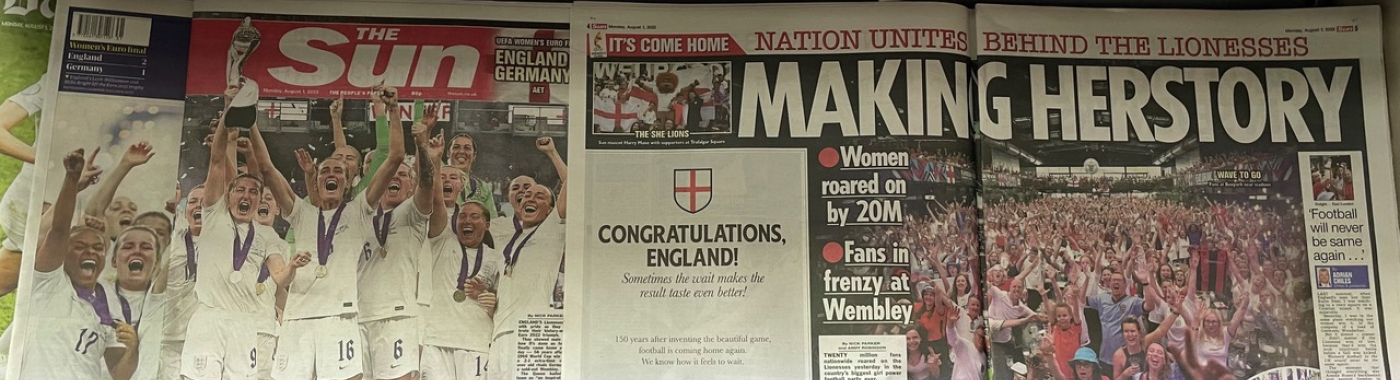
Senior Account Manager JOAN CreativeWomen in Sport’s ‘Let Her Dream’ report lands with a sad contradiction. Even after a summer dominated by the Lionesses and Red Roses, who delivered some of the most-watched TV moments of the year, girls’ sporting ambition has dropped to its lowest level since reporting began.
Just 23% of girls now dream of reaching the top in sport, down from 38% in 2024. That’s compared to 53% of boys. Meanwhile, 45% of girls agree that “people think sport is for boys and doesn’t matter for girls”.
Clearly, visibility in those big, headline-grabbing tournament moments isn’t enough on its own to sustain or grow women’s sport. Progress on the pitch doesn’t automatically translate into belief off of it. Without the right structures, environments and cultural support, those peaks fade quickly, and the impact doesn’t last.
For brands involved in or interested in women’s sport, this context is crucial, whether they realise it or not.
As an athlete myself (and a former New Zealand sailing champion), I’m passionate about how brands can genuinely support women’s sport. As a marketer, I see the significant creative and commercial opportunity for brands that choose to engage authentically. But while it’s easy for brands to tack a campaign onto women’s sport when it’s in the news, those that truly make a difference will be the ones who show up even when the headlines are quiet.
A quieter year reveals who’s really invested
What women’s sport needs now is consistency: in support, in investment, and in visibility beyond tournament cycles. And that responsibility doesn’t sit with governing bodies or broadcasters alone. Brands shape culture every day, through the platforms they build and the stories they choose to tell.
While it’s easy for brands to tack a campaign onto women’s sport when it’s in the news, those that truly make a difference will be the ones who show up even when the headlines are quiet.
Annabelle Cave, Senior Account Manager, JOAN Creative
That means 2026, despite being a much quieter year for women’s sport than 2025, is arguably going to matter even more. Because when the calendar empties out, brands face a choice. To pause activity and wait for the next big moment, or prove they’re in it for the long run.
From a brand and creative perspective, this choice is critical. Fans notice who disappears when the spotlight fades. Athletes feel it too. Consistency isn’t just a media strategy, it’s a signal of intent.
Why consistency is a commercial advantage
There’s a lingering misconception that supporting women’s sport outside major tournaments is a values-led decision rather than a commercial one. The data doesn’t support that.
According to the Women’s Sport Trust, 86% of sponsors say their investments in women’s sport have met or exceeded ROI expectations. Audiences are engaged, loyal and growing. Crucially, they’re paying attention to who shows up, not just what they say.
For brands, sustained presence builds something short-term campaigns can’t: credibility. When you invest beyond the headlines, you stop looking like a guest and start becoming part of the ecosystem. That depth pays back over time in trust, affinity and long-term brand equity – amplifying impact when the next major tournament inevitably arrives.
This is where creative teams have real influence. Not by producing louder work, but by designing smarter, longer-lasting ways for brands to belong.
How to get involved meaningfully
Instead of one-off activations, brands should view women’s sports as an ecosystem they can actively help to build.
Long-term sponsorships with teams, leagues or athletes are still incredibly powerful – they provide financial stability and visibility where it’s needed most. But meaningful involvement doesn’t start and end with logo placement, and it doesn’t require Super Bowl-level budgets.
Creative teams should be asking broader questions, like how can this brand make participation easier? And how can it make women feel like they belong?
That can mean backing grassroots clubs and local communities, where drop-off is highest and impact is most tangible. It could mean using brand platforms and partnerships to celebrate different definitions of femininity and take sport into traditionally female spaces, which Maybelline did brilliantly when it partnered with rugby star Ilona Maher. The ‘Only in Matte Ink’ campaign demonstrated the resilience of Maybelline’s lipstick even through tough tackles and sideline sips of water, and by extension, showed that beauty and sport can and do go together.
It could also mean shaping the physical and cultural spaces women move through, such as by funding safer running routes, or improving access to post-natal facilities like breastfeeding spaces.
None of these ideas rely on a tournament calendar. All of them build year-round relevance.
The creative opportunity hiding in plain sight
Big moments will always matter. Attention will always spike around finals, trophies and record-breaking audiences. But women’s sport still lives in the margins between those moments – in training grounds, local clubs and early mornings.
This is where brands can do their most meaningful work. And it’s where creative teams can move from campaign thinking to culture shaping.
Women’s sport doesn’t need more brands that arrive for the party and leave when the music stops. It needs partners willing to stay when the stands are half-full and the cameras have moved on. Because these are the years that decide who keeps going, who drops out, and what the next generation believes is possible.
Showing up in the quiet seasons isn’t a nice extra. It’s the work.

About
Annabel is a Senior Account Manager at JOAN Creative and an active member of the Women’s Sport Collective in London. A former New Zealand National Champion in yachting, she qualified for six Yachting World Championships and was selected for the Yachting New Zealand Podium Programme, charting a path toward an Olympic campaign. Growing up around a family deeply embedded in women’s sport, with parents supporting New Zealand teams at Olympic and Commonwealth Games, she has lived and breathed this world from the very start. Today at JOAN, Annabel brings a genuine, athlete-rooted perspective to the conversation around women’s sport. She is committed to guiding brands to invest in, elevate, and celebrate women and girls in sport, championing visibility, equality, and the power of storytelling to shift culture.