Loading...
Loading...
Voices

Brands can’t afford to misunderstand neurodiversity

Mainstream culture continues to default to outdated stereotypes when it comes to representing neurodiversity, writes Luke Trower.

Luke Trower

Design Manager Purple Goat, part of WPP Media

Share


The neurodivergent community is larger than most people realise. Up to 20% of people now identify as neurodivergent, quite a dramatic rise from just 6.7% identified in 2000. This shift reflects evolving public awareness and better recognition across gender, ethnicity and socioeconomic backgrounds, with research showing sharp increases in diagnosis rates among women and marginalised groups.

Yet, despite these demographic changes, much of mainstream culture continues to default to outdated stereotypes. The recent Saturday Night Live sketch about Tourette’s was the latest reminder of how quickly a neurological condition can be reduced to a punchline, revealing how deeply ableism is ingrained in society, which the general population then experiences through media.

But where culture stagnates, brands have an opportunity and crucially, a commercial imperative, to lead. The campaigns we make can have a lasting impact on society and can reach a growing audience in the right ways.

The long shadow of outdated narratives

As an autistic person, I’ve observed the changing landscape of autism awareness and representation in media and culture. But public understanding of neurodiversity is still shaped more by myth than accuracy.

The early‑2000s vaccine scare has left a legacy of suspicion and stigma long after it was debunked. At the same time, entertainment produced its own narrow tropes. TV shows and films repeatedly portrayed neurodivergent characters as either savant‑geniuses or socially inept caricatures, limiting public perception rather than broadening it.

If society misunderstands a community, brands will struggle to speak to them authentically.

Luke Trower, Design Manager at Purple Goat, part of WPP Media

And even the focus on neurodivergent males in culture has had a lasting impact on awareness and negatively reinforced what a ‘typical’ autistic person looks like. Today, the gender ratio is understood to be far closer to parity in adulthood, but a generation of autistic girls, women and non-binary people have disappeared into the gaps that these narratives created.

These depictions have their consequences. They shape how the public understands neurodivergent people, how educators respond, how employers behave, and ultimately, how we interpret the world around us.

This creates a challenge for brands: if society misunderstands a community, brands will struggle to speak to them authentically. But it also creates an opportunity, because brands can move faster, listen better and shift narratives more effectively than traditional media.

Inclusivity delivers for brands

There is still a tendency to treat inclusion as an ethical add‑on rather than a creative or commercial advantage. But brands that prioritise inclusive design and representation consistently produce stronger, more resonant work. Campaigns grounded in real insight, shaped by lived experience and designed with neurodivergent consumers aren’t just the right thing to do, but actually perform better according to data from the Unstereotype Alliance.

Our campaign with Tesco to provide sensory support boxes is a clear demonstration of this. Developed with autistic people to support customers who may be overwhelmed by the sensory intensity of stores, the initiative went beyond symbolic inclusion and recognised a real barrier in the shopping experience and provided a practical solution. Tesco didn’t just support neurodivergent shoppers; it strengthened its relationship with a broader customer base that values empathy and accessibility.

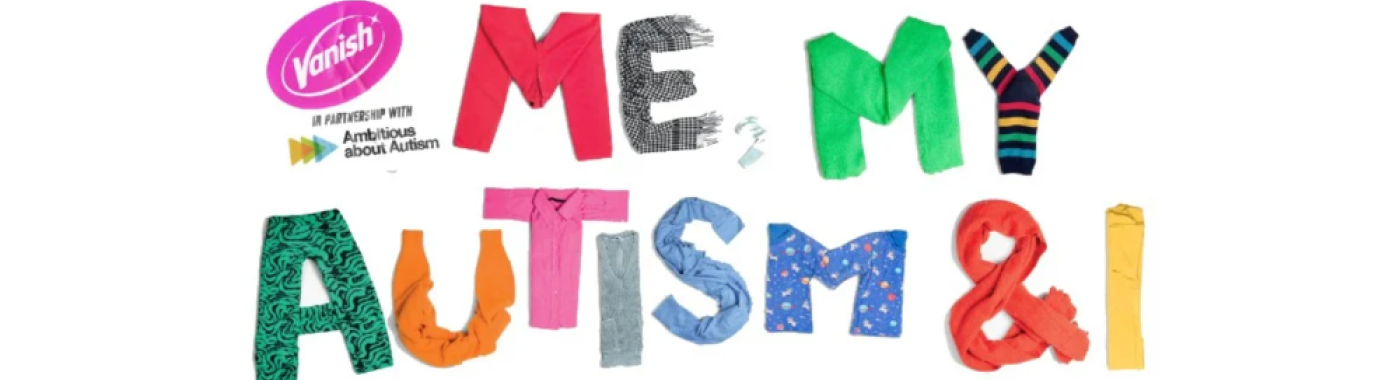
Another example is Vanish’s “Me, My Autism & I” advert, which was widely praised for its authentic representation of autism, particularly in girls, earning the Channel 4 Diversity in Advertising Award. It focused on an autistic teenager and her sensory relationship with clothing, aiming to challenge misconceptions and widen public understanding.

This is the type of inclusion that delivers measurable benefits. When brands collaborate with neurodivergent people early in the creative process, the output becomes clearer, more intuitive and more authentic. Inclusive campaigns resonate because they feel genuine, grounded in the complexity of people’s lives rather than reliant on stereotypes. And importantly, these campaigns widen the audience rather than narrowing it.
The cultural landscape is shifting rapidly. The online world may amplify current stereotypes and tropes but brands have the scale, agility and influence to set new norms.

Luke Trower, Design Manager at Purple Goat, part of WPP Media

The chance to lead… and the cost if they don’t

If brands want to get neurodiversity right, they must understand that no single portrayal will suffice. Neurodivergent experiences vary widely based on gender, ethnicity, locality and support needs. With diagnosis and self‑identification rising, particularly among marginalised groups, the idea of a “typical” consumer is becoming obsolete. Brands still building campaigns around outdated assumptions are designing for a world that no longer exists, or never existed at all.

The cultural landscape is shifting rapidly. The online world may amplify current stereotypes and tropes but brands have the scale, agility and influence to set new norms. They can present neurodivergent people as they are. And they can design experiences and campaigns that acknowledge the needs of a community that is growing both in number and in visibility.

Failing to adapt means missing out on relevance, loyalty and significant commercial potential. Neurodivergent consumers are not a marginal audience. They are a substantial part of the UK population, and their influence on culture and consumption is only increasing.

The business case is undeniable. Brands that lead on inclusion now will define the next era of advertising - creatively, culturally and commercially.

And those that don’t will be left behind.

About

Luke Trower is the Design Manager at Purple Goat Agency (Part of WPP Media). He has spent his career studying and implementing efforts to improve knowledge and understanding of Inclusive graphic design. He has worked with some of the world’s largest companies, helping them make their work more legible for disabled audiences. Diagnosed with Autism (formerly Asperger’s Syndrome) at three years old, he combines lived experience with industry expertise and speaks regularly on accessibility and design.

Related Tags

Diversity/Inclusion