Five learnings from the IPA Talent and Diversity Conference
Industry leaders share the importance of prioritizing talent at a time when DEI is under threat.

Georgie Moreton
Deputy Editor, BITE Creativebrief
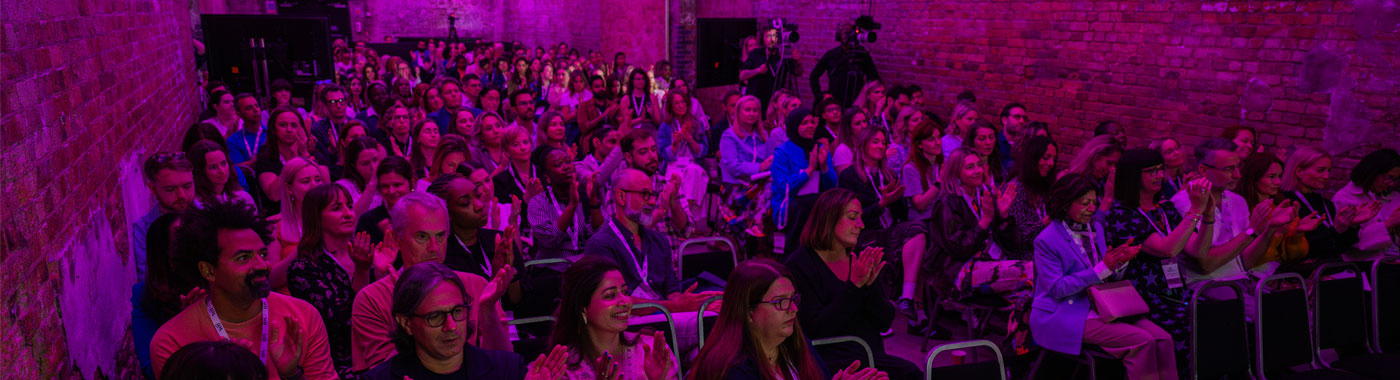
The IPA’s talent and diversity conference saw industry leaders gather to consider how to do things better and prioritise talent at a time when DEI is under threat.
The myriad of headlines attacking DEI have come hand in hand with the ‘sunsetting’ of initiatives. Opening the conference Leila Siddiqi, Director of D&I at the IPA remarked that DEI may be under threat, but as she explained: “DEI is part of natural evolution as we become more aware of what is happening in the world around us.” She continued: “It is not the word diversity that is important, it is the idea behind it.”
Diversity and inclusion is an issue for everyone. TV shows like Adolescence puncture through culture and bring everybody into the conversation, reminding us that diversity and inclusion is as pressing as it ever has been.
From the importance of protecting talent in polarizing times, to embracing diversity to facilitate more creative thinking, here are five learnings from the IPA’s Talent and Diversity conference.
1. Diverse talent is essential to creative thinking
When new IPA president, Karen Martin, CEO at BBH, was sworn in at the end of March, her leopard print rally cry championing creativity left the industry enthused. Her focus for the year to spotlight creativity, drive value and champion talent was reinforced in a session with Julian Douglas, Group CEO, VCCP and Felipe Serradourada Guimaraes, Executive Creative Director at BBH London on the importance of nurturing creative talent. “Attracting diverse talent is essential in an industry of storytellers,” says Martin.
At a time when creativity hinges on culture, Guimaraes shared the importance of engaging with talent embedded within it. ‘Bringing lived experience in allows us to tell stories with a bit more truth in them,” says Guimaraes.
Adding that ‘if we all have the same tools we get to the same answers’, Douglas pointed to the importance of creating a culture of openness and curiosity that allows great work to be made. “Creating an environment that tolerates, or even rewards, risk,” he says, allows us to create great work. Such great work in turn makes the industry more appealing to talent. Creating an ecosystem where we nurture top notch talent who are passionate about creating something good.
2. It’s time for some new age thinking
Only 8% of people in advertising are over 51, compared to 33% of the working population. A statistic which makes it clear that the industry has a problem with ageism. The IPA’s new report, Time for Some New Age Thinking, serves to unpick the ageism that exists in the advertising industry and challenge unconscious bias.
At a time when brands are looking to cut budgets, Jamie Elliott, CEO at The Gate warned that age is an investment not a cost. “The danger is if we don’t think consciously about saving costs and save from experience, we hollow out the industry very quickly,” says Elliott.
Age based stereotypes are holding back talent at every life stage. From chatter that avocado toast is stopping millennials from buying houses to Gen Z being lazy in the workplace, people talk about generations without talking to them. Mercy Abel, Impact and Marketing Lead at John Doe, shared: “Intergenerational conversations are essential to learning from our different experiences.”
3. The bottom line is inclusion is good for business
Fear of backlash may be holding brands back from being creatively bold, but brands like Bayer and Diageo have worked with the Unstereotype Alliance to drive better representation and facilitate societal change without sacrificing the bottom line.
Unstereotype Alliance analysis of 392 brands across 58 countries successfully proves the positive impact of inclusive advertising on business outcomes in both the short and long term, and across multiple metrics.
Guinness’ Six Nations campaign is an example of how Diageo used sponsorship to drive change. The campaign, ‘Never Settle’, has significantly driven coverage of women’s rugby. At the same time Guinness has successfully become the number one beer to drink while watching sport for men and women. Purpose and profit need not be placed at odds.
4. We might not get it right first time
Not saying anything for fear of getting things wrong was certainly not the strategy for Channel 4 when it came to the Paralympics. Amber Kirby, Marketing Director at Channel 4, took to the stage to share how the broadcaster has played the long game and embraced a mindset of adapting and learning.
In 2012 when Channel 4 first became involved with the Paralympic games, its research found that just 14% of UK viewers said they were going to watch. Fast forward to 2025 and 79% of viewers say the Paralympics was as exciting as the Olympics.
This was not achieved overnight or without criticism. From the Superhuman campaign that garnered backlash around unrealistic expectations to ‘It’s rude not to stare’ which polarized audiences with bold language, over the past four games Channel 4 embraced feedback to push forward the narrative and challenge societal perceptions of disability. The broadcaster is constantly on a journey of learning in its work to champion accessibility and inclusivity in sport.
5. Talent is our most precious resource
In an industry where creativity is our output, talent is our most precious resource. A keynote speech from David Harewood, Actor, Presenter and President at the Royal Academy of Dramatic Art and a fireside chat with Meera Syal CBE, English comedian, writer, playwright, singer, journalist and actress, underlined the importance of sharing stories of success to inspire future generations. As Harjot Singh, Global Chief Strategy Officer at McCann and McCann Worldgroup so eloquently put it, there is ‘power in seeing yourself in someone else's light’.
It is no secret that times are tough for talent. Sue Todd, CEO of industry charity, NABS, pointed to a ‘perfect storm of continuous change’ where a lack of control can leave us feeling helpless. At a time when people are strained and marginalised communities are under attack, advocacy can be draining. Outvertising’s Advocacy Playbook provides actionable and tangible ways to support employees or colleagues, no matter your role.
“Understand, doing something is always better than doing nothing,” says Natalie Bell, Chief Executive Officer at Manning Gottlieb OMD. It is our collective responsibility to prioritise wellbeing, look after one another and help shape the industry we want to be a part of. Positive change is possible.