

Trend
What Arsène Wenger can teach CMOs about winning with culture
Arsenal's sucess is the result of decades of commitment, writes Masibu Manima.
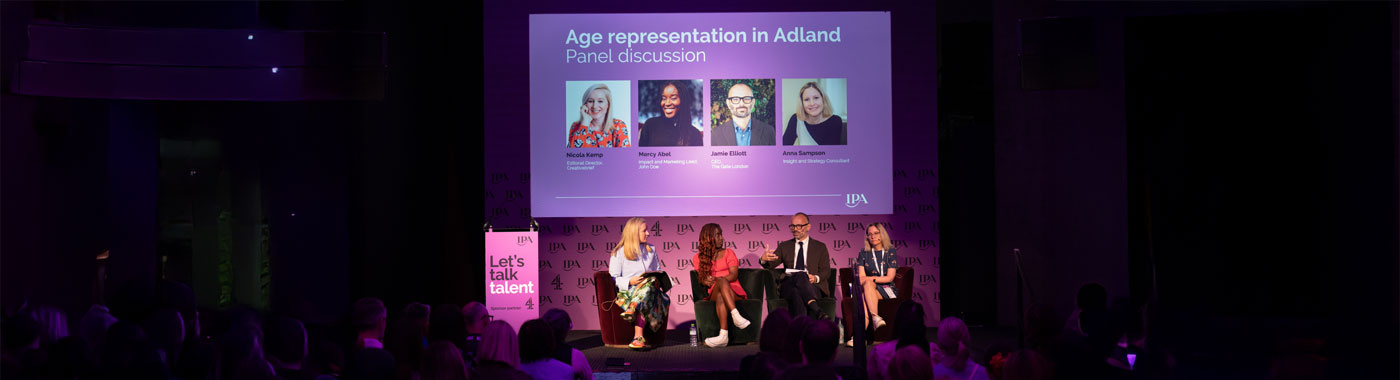
At the IPA Talent and Diversity Conference, the IPA revealed new research to urge the industry to overcome generational stereotypes.

Only 8% of people in advertising are over 51, compared to 33% of the working population. If who makes the work shapes the work, a red thread could exist between the lack of representation of older people in adland and generational stereotypes in the work.
The IPA’s new report, Time for Some New Age Thinking, aims to unpick the ageism that exists in the advertising industry. The report explores ageism through a new intergenerational and intersectional lens. As well as striving to understand why and where older employees go when they leave the industry.
Speaking at the IPA Talent and Diversity conference, Serhat Ekinci, Managing Director of Unite at OMG, revealed the findings of the report and outlined how ageism is rooted in assumptions. Serhat reminded the audience that we all have unconscious bias.
In a challenging context of budgets, older, experienced talent is getting cut. Bias and commercial realities are acting in tandem against older talent, but the reality is that ageism lies in unchallenged beliefs.
Older talent brings a wealth of experience. Skills and strategies that would benefit the industry, particularly in such testing times. Yet, where 70% of women want to advance in their careers rather than go sideways or down, the industry has created an ecosystem without senior female leadership, and that is incompatible with the needs of older talent.
The report uncovered a wealth of stories about older talent being told to remove information about their age in recruitment processes or in the workplace. Treating age not as a sign of experience, but as a badge of shame. The report also identified skill gaps where companies fail to invest in training.
Intergenerational conversations are essential to learning from our different experiences.
Mercy Abel, Impact and Marketing Lead, John Doe
The industry must address its bias, invest in initiatives and review policies and practices that leave older talent pushed out and neglected. Tackling ageism will unlock new ways to embrace cross-generational creative thinking. It's not just about inclusion, it is a competitive advantage for businesses.
To support the industry to move from awareness to action, Nicola Kemp, Editorial Director at Creativebrief, sat down with Mercy Abel, Impact and Marketing Lead at John Doe, Anna Sampson, Insight and Strategy Consultant and the report’s author and Jamie Elliott, CEO at The Gate, to consider the impact of ageism in adland.
“When we ignore or place bias on people of a generation, we lose the opportunity to learn,” says Sampson. She pointed to the fact that AI is often discussed as a new technology, and older talent is tarred with the brush that they don’t understand. Such a sweeping generalisation is losing insight and skills. As she explained, older people can ask different questions and bring different skills that may contribute to a more nuanced level of understanding.
The danger is if we don’t think consciously about saving costs and save from experience, we hollow out the industry very quickly.
Jamie Elliott, CEO, The Gate
Age-based stereotypes are used to hold back people of all generations. From avocado toast stopping millennials to buying houses to Gen Z being lazy in the workplace, people talk about generations without talking to them. As Abel explained: “Intergenerational conversations are essential to learning from our different experiences.”
“As with many biases, the age bias is largely invisible,” explained Elliott. He shared his view that this is not just played out at the leadership level, but in the middle of an agency. Where older talent can be more expensive, middle talent can feel increasingly squeezed. In a tough business environment, Elliott urged the audience to consider where to save. “The danger is if we don’t think consciously about saving costs and save from experience, we hollow out the industry very quickly,” he says. Pointing to the fact that older talent have brains, skills and experience with digitalisation that is essential in difficult times. While older generations are not digital natives, they are skilled in the art of business transformation.
The report acknowledges the cost of older talent, but also the cost of not having older talent. There is a red thread between the lack of older talent in the industry and the barrage of ads that stereotype women and tell them to fight the signs of ageing. “If we haven't got that variety of lived experience on the creative floor, we are going to have tropes of ageism in the work,” explained Sampson.
Intersectionality is vital to the debate, with Kemp pointing to the exodus of women from the industry as evidence that women appear to become disproportionately more expensive post-50. “Women walk an impossible tightrope from being too young to have an opinion, to being too old to be relevant. Leaving them with a 5-day window in which they can thrive in their careers,” says Kemp.
Sampson pointed to the fact that presenteeism and return-to-work mandates are contributing to a lack of flexibility that is holding back diverse talent. “If we want to create an environment where we can combat ageism, we need to create a space where we can go further, not just faster,” adds Kemp.
Trusting talent, creating a workspace that takes into account the needs of talent of all ages and making space for squiggly careers allows people to carve out their own path. Creating a talent-first culture is crucial for creativity that transcends age.
To download the Time For Some New Age thinking report from the IPA click here.
Looks like you need to create a Creativebrief account to perform this action.
Create account Sign inLooks like you need to create a Creativebrief account to perform this action.
Create account Sign in